
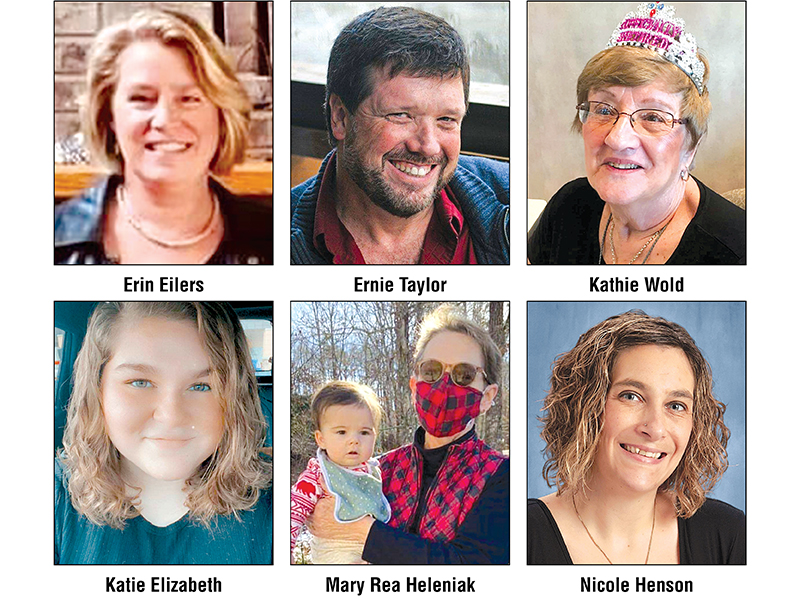
Kathie Wold was initially shocked when a caller representing Medicare told her over the phone if she didn’t accept a “limited time” service she could lose her coverage.
“They called two or three times on my phone, two times on the house phone, and once on Chuck’s (husband) phone,” she said. “It says, ‘Hi, my name is so-and-so, and I’m a Medicare advocate. We are offering for a limited time a cancer pre-screening, and you have the option of opting out, or just hanging up. But if you do that and you don’t take advantage of this, your Medicare cannot be guaranteed to take care of you if you have cancer in the future.’”
Wold, a local retired realtor, responded to two questions recently posted on the Times-Courier’s Facebook page: “Have you been solicited by what you believe were fraudulent emails and/or phone calls? How did you handle it?”
She continued, “I was like, ‘What? First of all, Medicare is going to send a letter, they’re not going to call me.’ The person said, ‘We can transfer you to someone who can explain this further.’ And I said, ‘Uh-huh, no,’ then hung up.”
Wold said she was “surprised” she got so many calls on the Medicare cancer coverage scheme.
“I’m kind of active on Facebook and in the Chamber and the Optimist Club,” she explained. “I worked in town here for 15 years. So I know a lot of people, but I don’t know where (the scammers) got my name and number. But they went from my cellphone to my house phone to my husband’s phone. That’s weird.”
Wold is worried “about someone who’s older and somebody who gets all nervous and believes this, and gets pulled into it.”
“Not that I’m the youngest person, but I’m fairly intelligent and (the calls) were like someone waved a red flag,” she said. “Then when I saw the post on (the Times-Courier) Facebook about that, I thought I’m just going to say something because of the six calls in one day.”
She believes many seniors in the area are being targeted.
“It just seems strange — that they were that insistent,” Wold pointed out. “And the other one that drives me nuts is the ‘car shield’ thing, (where they tell you) that you haven’t extended your warranty on your car. If you’re under 150,000 miles, your warranty has expired and you need to take advantage of this. I mostly hang up, but there is no place to opt out, and there must be five different companies that call (offering) it.”
Wold said the scams have not arisen on her computer.
“I use PC Matic and another protection on my computer, and on my phone I never do anything that involves a credit card,” she said. “I also never check my bank balance on my phone. I don’t want people getting any more information.”
Mary Rea Heleniak noticed a disturbing new call.
“(The scammers’) cell indicated they were (originating) from our home landline phone number, while we were at home!” she said. “(We were) obviously ‘spoofed,’ so we ignored them.”
Spoofing is a type of scam in which “criminals attempt to obtain someone’s personal information by pretending to be a legitimate business, neighbor or some other innocent party,” according to investopedia.com.
Ernie Taylor said he and his wife receive scam phone calls “on almost a daily basis.”
“(Such as your) auto warranty has expired, your Social Security number is being fraudulently used, you owe money to the IRS, etc.,” he specified. “Depending on how busy we are — or our frustration level — we hang up, ask them if their mother knows what they do for a living or play along to waste as much of their time as possible.
“I got a call (the other week) saying there has been some illegal activity on my Social Security number, and if I don’t call right away they are going to suspend my Social Security number.”
Nicole Henson said she was called by a woman “fixing to cuss me out for scam calling her from the Social Security office.”
“She asked who I was and then explained someone had used my number to pretend they were the Social Security office,” she detailed. “She said she was calling the number back because they hung up on her. Be careful because evidently they can use actual people’s phone numbers somehow to make scam calls.
“Sure, I was really stunned when she told me what she did. I thought goodness, if a person actually gave information or someone was scammed out of money, how could they prove it wasn’t me since it was my number? It’s scary what people can do.”
Katie Elizabeth posted that someone keeps calling her “telling me I’ve won a $100 Walmart gift card, but they need my card info (to charge) $2 for shipping. Yeah, right.”
Erin Eilers pointed out there are scams popping up on Ellijay-related Facebook page.
“There’s so many of them, (such as) get paid to put a Coke sign on your car, etc.,” she said. “Another one says, ‘We are still giving out a payment of $1,500 to $3,500 to the first 30 persons to comment CASH, just like we did yesterday. The offer starts now.’”
Dana May offered a quick response: “Well, you can scream as loud as you (want) into the phone if you’re alone so you don’t scare everyone or you can simply block the phone number.”
Linda Edwards Wood said she “usually blocks their number” on her phone.
“But I noticed I’ve had a few that had multiple numbers needing to be blocked,” she said.
Those who work in the field of identity theft and scams advise hanging up if a call seems suspect, or using caller ID on a landline and not answering if you don’t recognize the number. Government agencies primarily use mail to contact recipients of services — not calls over the phone.