
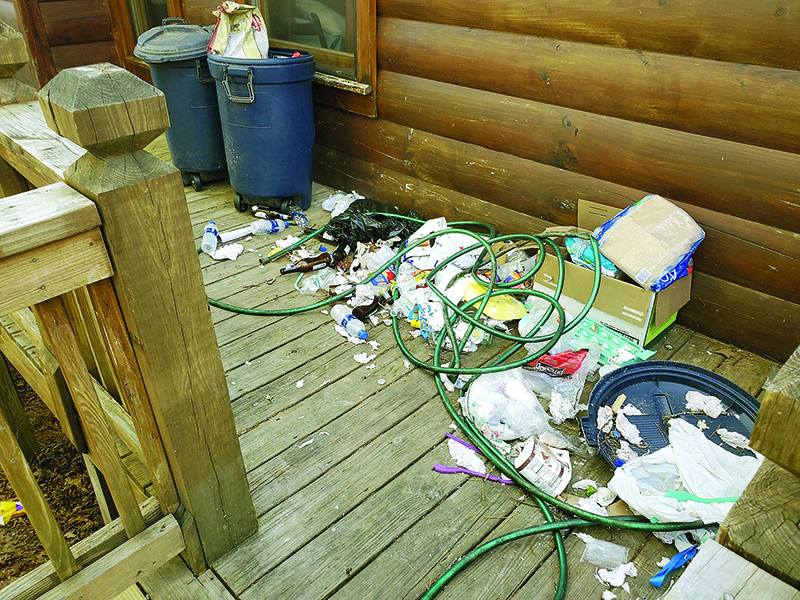
The Appalachia Georgia Friends of the Bears would like to remind the public that March marks the time for the black bears to emerge from their dens.
The first to wake up are the adult males and subadults in early to mid-March. Second to emerge are solitary females and sows with yearlings in late March-mid-April. Finally, are the sows with cubs of the year in mid-April-early May. They will be out, about and hungry.
Attractants like birdseed, hummingbird feeders, pet food, livestock food, greasy barbecues, smokers and fish cookers and other wildlife foods can be accessed by black bears.
Minimize attractants and the availability of food rewards throughout your yard and neighborhood. Appalachia Georgia has approximately 3,000 black bears. Help us save a bear’s life and remove the attractants.
The intentional and unintentional feeding of bears teaches them to approach homes and people for food, which is a recipe for human-bear conflict.
Studies in Canada have shown that two-thirds of human-bear conflict were related to improperly stored garbage. In addition, it destroys their teeth, digestive tracts and results in a slow and painful death. Storing garbage in a sturdy building or placing in an approved bear-resistant trash receptacle and putting it out on the day of pickup goes a long way.
By Gerald D. Hodge, Jr.
Founder, Appalachia Georgia Friends of the Bears
The Appalachia Georgia Friends of the Bears’ mission is to reduce human-bear conflict through proactive educational outreach programs, increase public awareness about coexisting with black bears, the use of humane bear deterrents and advocacy. Visit BearWise.org and agfriendsofthebears.com for more information on reducing human-bear conflict.