
A bluebird trail maintained by the Friends of Harrison Park will welcome another brood of baby birds this summer and the group hopes parkgoers will take time to enjoy walking the trail when visiting.
Last March, group members were joined by Jim Bearden, a member of the Audubon Society and North American Bluebird Society who maintains a bluebird trail at the Green Meadows Nature Preserve in Marietta, to put up six bluebird nesting houses and a shared feeder midway through the wooded walking park.
“Over the years, we’ve destroyed (bluebirds’) habitat by doing things like not building fences out of wooden fence posts. Normally, they would take over a hole in a dead tree or tree limb that a woodpecker makes and use that. Now, if we have a dead tree or limb, we call a tree service to cut it down and chop it up. What we do is build them these condos so they can reproduce and increase their numbers. That’s our goal,” said Bearden then.
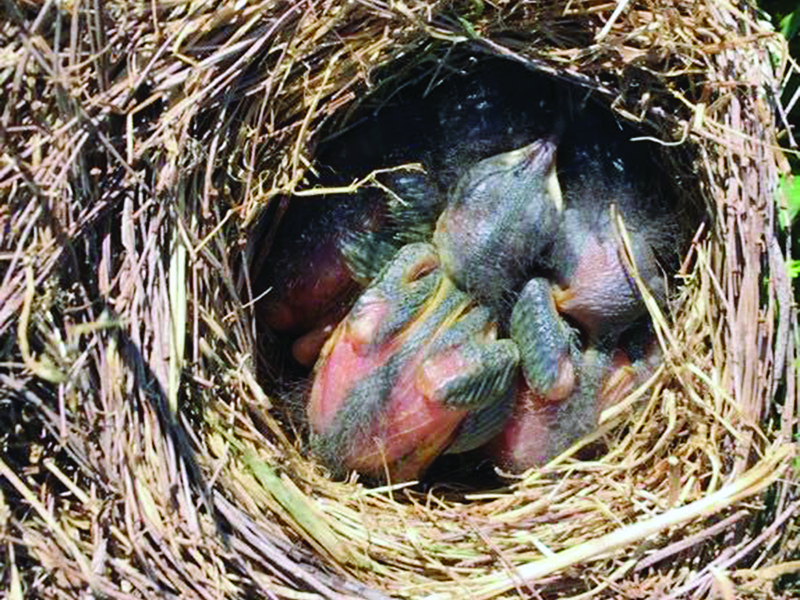
Not long after the houses were installed, bluebirds first took to them to nest, hatch eggs and care for their babies, noted Pam Johnson, of Friends of Harrison Park.
“The park has really done well as a place for bluebirds. They are interesting birds and quite beautiful to look at,” she added. “We placed the houses to face the east side, which is the best side in regard to the heat factor. Five of the houses are currently being used by bluebirds, while one is being used by another species of bird. We go out once or twice a week and fill up the feeder. We also inspect the houses and clean them out between their nestings.”
The Friends of Harrison Park have reason to believe there are some “repeat customers” are coming back to the houses.
“They are having two to three groupings of babies a year and, traditionally, many bluebirds come back to the area they were born in. Usually, their first litter will stay around where they were born and help the parents, which is unusual for birds. They come back the next year to have their own babies,” Johnson explained. “Extreme weather also causes them to come back in the wintertime. We put out feed for them year-round and they know it’s somewhere they can go to get food in winter, which is a hard time for birds because the normal varieties of plants aren’t there.”
Two challenges the volunteers and bluebirds have faced are intruding snakes and other birds nesting in the houses.
“The houses do have snake guards to prevent snakes from going up the poles. Bluebirds almost went extinct in the 1950s because so many of them were eaten by snakes during the egg stage. Now, people are more aware of the dangers when they build bird houses and they can put up a scope or snake guard. The ones on our houses have chicken wire and snakes can’t go through that,” Johnson said.
“(We’ve also had) other birds infesting the bluebirds’ area. We have the one house that’s currently being occupied by another bird species, but used to be nested by bluebirds. They had a lot of fights and the bluebirds ended up losing it to the other birds. It’s a constant battle of the elements for them,” she added.
Trail used for education, exercise
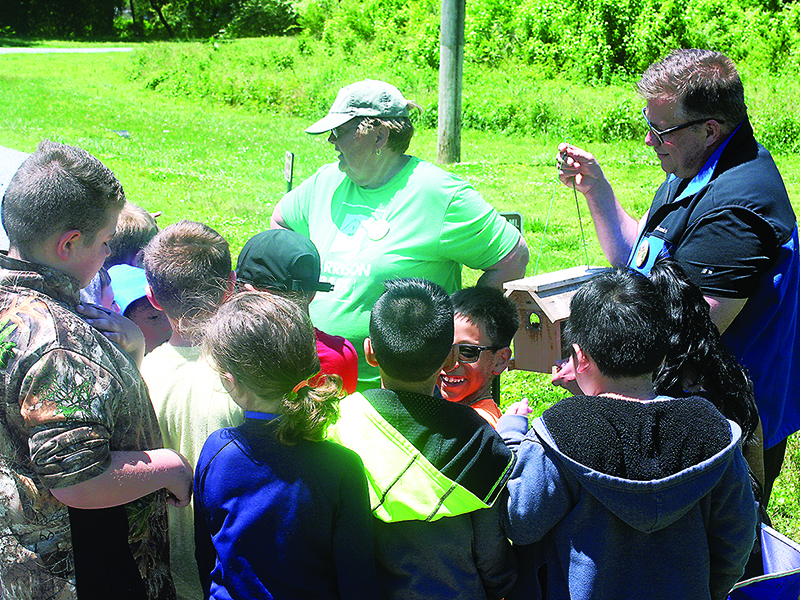
Last year, several elementary school classes were given educational tours of the trail. School closings due to COVID-19 prevented that from happening this year, but the park friends are hopeful families will use the trail to teach their children about birds and nature.
“We had planned to have three school classes and one class with the Girl Scouts, but they were canceled once the health situation started,” Johnson said. “It’s been a great project and it’s a natural project that helps kids learn how to take care of things, as well as develop their own interest in nature. We’re hoping parents will take their kids to the park. As we have classes back at school, (we hope to) also help those students develop an interest in nature.”
Summer tends to be a busy time for bluebirds, noted Johnson.
“In March they begin their mating ritual and in the summer through September they have their babies,” she said. “We encourage people to come and look at the park and the bluebirds. People will ask us questions like ‘what is their mating timeframe?’ and ‘what do they eat?’ Something children like to ask is ‘do they talk to other birds?’ When people ask questions, we try to encourage them to look at the things we’ve put in the park to protect the babies, like the snake guards, so they can also protect bluebirds if they have them in their own yards.”
Harrison Park has been open throughout the coronavirus pandemic and its winding walking path continues to be a popular exercise spot for local residents.
“It has been the only park in the local area that’s been open all the time. It’s been utilized a great deal,” Johnson said. “There’s a lot of people who like to walk at a particular time every day and a lot of seniors go out every morning to walk the path. I’ve seen people in their 80s out there walking, which is pretty amazing. It’s a great place to go have some time to yourself, or go with a friend, and get some exercise. It’s encouraging to me that people use the park for their mental health, too, not just their physical health.”