
Local health district, Piedmont plan, adjust
In a week where the ongoing COVID-19 pandemic caused how we live our lives to be changed by the day, if not by the hour, both the North Georgia Health District and Piedmont Healthcare consistently updated the Times-Courier about how they’re responding to the unfolding health crisis.
‘An evolving situation’
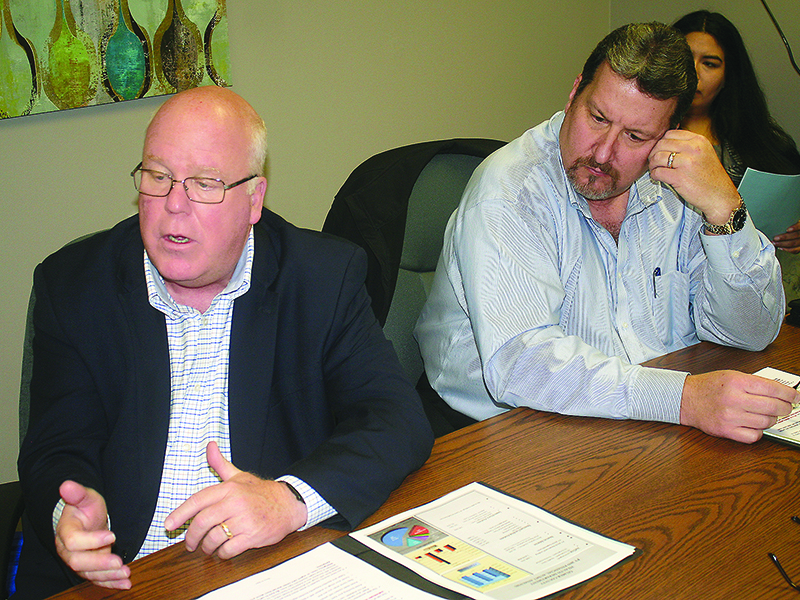
Not surprisingly, the new Coronavirus and its rapid spread were topics of lengthy discussion at a meeting of the Gilmer County Board of Health Tuesday, March 10.
The directional board oversees operation of the Gilmer Health Department, one of six health departments in Georgia Department of Public Health Region 1-2, which also includes Pickens, Fannin, Cherokee, Murray and Whitfield counties.
Dr. Zachary Taylor, North Georgia Health District director, described the virus activity in Georgia as “an evolving situation we’re all going to need to plan and prepare for.”
At the time of that meeting, there were 17 total cases of COVID-19 documented in Georgia. Six had been confirmed by Centers for Disease Control (CDC) testing and 11 were presumptive cases — a positive test result at the state lab referred to the CDC for conformation, Taylor said. One of those CDC-confirmed cases, in Cherokee County, was within the health district’s region.
By Tuesday, March 17, the total number of confirmed cases in Georgia had risen to 146 in 27 counties, according to the Department of Public Health’s daily report. At that time, there were no confirmed cases listed for Gilmer, Pickens or Fannin counties, but cases in Cherokee had risen to seven.
Taylor urged the county government to have an emergency plan in place that could be implemented if the virus spreads locally.
“I think you should expect there will be cases in your county,” he told local board of health members Lex Rainey, Charlie Paris, Curtis Kingsley and Tracy Wells.
“At this time in Georgia, our strategy remains what we call containment strategy. We’re trying to contain the spread of the virus. Every time we have a case, we interview them and we identify and interview their contacts. We ask those contacts that do not have the disease to quarantine at home and we check their symptoms daily. If they become ill, they’re referred to be tested and confirm whether or not they have Coronavirus,” Taylor added.
Paris, Gilmer’s board of commissioners chairman, said the county government has been working on an emergency plan. He asked what should be added to that plan in terms of treatment options.
“We took the plan we already had for an influenza event and updated it, (though not) treatment-wise. We’re anticipating that (plan) will also serve for the Coronavirus,” he said.
Taylor echoed the National Institute of Allergy and Infectious Diseases (N.I.A.I.D.) estimation that a vaccine is expected to be a year to year-and-a-half away from being ready and described mitigation actions the county might need to use to curtail widespread transmission of the virus.
“How do you control group settings? What are you going to do about your schools and businesses? Do businesses have plans? How are they going to stay open and be able to function? Your smaller businesses, restaurants and places like that, could be economically hit hard by this because people may stop coming or they may have a hard time keeping their workforce. I think your economy depends on people coming to this county to visit, so I’d be very conscious of that fact,” he noted.
By the following Thursday, Gilmer County Charter Schools had called off all school sports events and extracurricular activities while suspending classes in county schools starting Monday, March 16.
A slew of local events and meetings were canceled or rescheduled following a press conference from Gov. Brian Kemp Thursday in which Kemp put the decision to cancel school in the hands of the state’s individual school systems, while advising others to limit unnecessary meetings and travel.
At another press conference the following Saturday, Kemp declared a public health state of emergency for Georgia, which prompted more cancellations and temporary closures of businesses and public facilities. Then, on Monday, Kemp signed an executive order to close all public elementary, secondary and postsecondary public schools in Georgia from March 18-31.
A list of local cancellation and closing notices received by the Times-Courier can be found in this week’s edition.
Testing expected to increase
At the board of health meeting, Taylor said there are currently no plans to do Coronavirus testing at Region 1-2 health departments. That could change depending on how severe the pandemic becomes, he noted.
“Laboratory testing remains somewhat limited. Right now, commercial labs are starting to gear up to do the testing. If someone needs the test through our state lab, they still have to go through a process and they’re screened to see whether or not they are a priority for testing,” Taylor said. “I think that will change in the next few weeks as we move along and more testing will be available.”
During the governor’s Saturday press conference, Kemp said the state public health lab’s capacity of testing 100 specimens per day, is expected to double by the end of this week with the addition of new equipment and staffing and that work is being done to establish independent test sites “in every major region of Georgia.”
The COVID-19 test consists of swabs of the nose and throat, Taylor said.
“If you’ve ever had an influenza test or a viral respiratory infection test, it’s the same procedure,” he noted.
Stacy Fentress, a spokesperson for Piedmont Healthcare, confirmed that COVID-19 testing can be done locally at the Piedmont Mountainside ER in Ellijay and Piedmont Mountainside Hospital in Jasper. Those who feel they need to be tested must first meet certain criteria, she noted.
“It’s not a test that anybody who comes in and asks (for) can get,” Fentress confirmed. “Most of our emergency departments, if you go in and you’re having respiratory symptoms, they’ll (take) you in a different direction and give you a mask.”
According to Piedmont’s guidelines, persons who have traveled to level 3 countries as determined by the CDC and/or are immunocompromised and have flu-like symptoms, including fever with cough and shortness of breath, may qualify for testing.
“If patients have severe symptoms that are getting worse, our guidance is to go to an emergency room. If possible, call ahead and let them know you are coming and mask yourself as soon as you can,” Piedmont advised in a statement.
Last week, Dr. Kathleen Toomey, Georgia Department of Public Health commissioner and the state’s chief health officer, also noted the importance of calling ahead about testing rather than risking further spread of the virus in an emergency room or doctor’s office.
“We’ve had many, many questions from physicians (about) how can we get our patients tested. One of the things I’ve always emphasized is make sure individuals who are going to be tested don’t just go to an emergency room (or) don’t just go to a physician’s office. Call ahead. Make sure these tests can be done,” she said.
Both Piedmont and Georgia Public Health representatives also gave recommendations that, within less than two weeks, have become ingrained in the minds of many Americans — best practices for reducing spread of the virus include thorough, repeated hand-washing and limiting any unnecessary travel and meetings.
The World Health Organization has summarized five of those practices in a new public service campaign — Do the Five — intended to help reduce spread of the virus: 1.) Hands: Wash them often. 2.) Elbow: Cough into it. 3.) Face: Don’t touch it. 4.) Feet: Stay more than 3 feet apart. 5.) Feel sick? Stay home.
“The only thing we can do now is nonpharmaceutical interventions to prevent (further spread) of this disease. If you are sick, you should stay home. If you’re out in public, be very conscious of washing your hands or using hand sanitizer. Washing your hands is much more effective than using hand sanitizer, but, if you have the opportunity, I would do both,” Taylor recommended.
Hospital restrictions in place
As the number of COVID-19 cases in Georgia increased last week, Piedmont announced the implementation of Level 3 visitor restrictions at all 11 of its Georgia hospitals.
No more than two visitors are allowed per patient and children age 13 and under, except for those coming in for services, will not be admitted.
In addition, all Piedmont hospital visitors will undergo health screenings and all hospital visitor entrances will be closed, except for designated areas. To be allowed entry, visitors must pass the health screening and those who are admitted will be given an arm band or sticker to show they’ve been screened.
Visitors with fever, cough, sore throat or flu-like symptoms will not be admitted, nor will those who’ve recently traveled outside the U.S., who have symptoms of other acute respiratory illnesses or who’ve had close contact with persons known to be infected, or suspected of being infected, with COVID-19.
“The COVID-19 pandemic is evolving rapidly and we as a health system also must react rapidly to protect our patients and our employees. Safety is at the center of our organization and we believe these steps are necessary to create the safest environment at our hospitals,” said Leigh Hamby, Piedmont’s chief medical officer.
Piedmont also stated that “people with increased risk of chronic conditions and existing comorbidities are advised not to visit.”
Earlier this week, Gilmer County EMA Chief Keith Kucera said the local agency is working with the public health department, as well as Piedmont and Northside hospitals, to stay abreast of the virus pandemic. Standard procedure for local first responders handling a sick call now includes wearing such attire as masks, gloves and eye protection, he noted.
“If you see us wearing that equipment, don’t be alarmed,” Kucera said.
Piedmont has established a special toll-free phone number that patients can call if they have questions about Coronavirus testing or if they meet the following criteria: have recently traveled to areas where there are ongoing outbreaks of COVID-19 and developed fever with cough or shortness of breath within 14 days of travel or had contact with someone suspected to have the virus.
The hotline number, — 1-866-460-1119 — is available 7 a.m.-7 p.m Monday- Friday.