
Could’ve been much worse
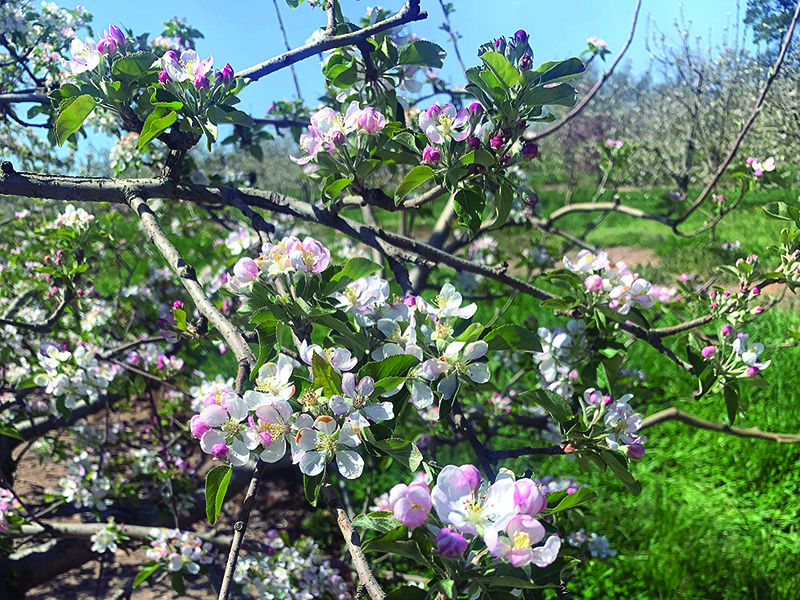
Two things local apple growers can expect, and hopefully overcome, are cold snaps and severe storms that often accompany the arrival of springtime in Georgia.
“For us, it’s just a continual, normal thing. You’re going to have a flood every year and bad wind storms every year. You don’t know when it’s coming, but it’s coming,” said R&A Orchards proprietor Andy Futch.
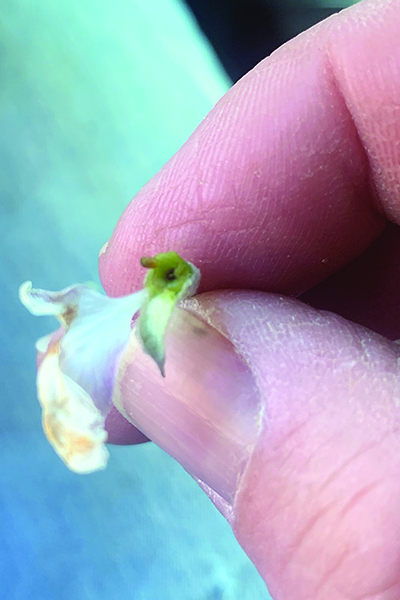
An early April cold snap that saw temperatures dip into the 20s did bite blossoming apple and peach trees, but, so far, the damage doesn’t look too serious.
“Peaches are about done blooming and there won’t be any apples picked till July. They’re budding out up to bloom. All of them (are coming in right now),” he added.
John Reece, proprietor of BJ Reece Orchards, said apple blossoms will turn black on the inside when killed by cold weather, which has been seen on some of the blossoms pulled from his trees. Reece said his Pink Ladies and Galas are in full bloom.
“(That) Friday and Saturday night, it got cold enough to kill some. We pinched some and found some dead ones. (Later), I looked a lot more and it looks like we still have a good crop,” said Reece last week.
Futch described a similar situation at his orchard.
“When it warms up and they go back to growing, you can tell more about it. You can tell what’s growing and what ain’t growing,” he said.
Neither of the local apple growers reported any serious damage from severe storms that came through in late March.
“(We had some) trees blowed down, just normal stuff. We always do when you have 30 or 40 mile an hour winds. Something’s going to blow over and you just have to stake them back up,” Futch said.
Ashley Hoppers, UGA Extension Agent for Gilmer and Fannin County, said she’s been working on a collaborative “bud mortality” study to assess recent cold damage to apple trees in Georgia, North Carolina and South Carolina.
“We will have an apple crop this year. I’ve walked enough rows to see that. Some varieties are fine, (but) some really early varieties like Mutsu got hit harder than others. We got bit, but it wasn’t nearly as bad as it could’ve been. Blue Ridge definitely got colder, and there was slightly more damage. In North Carolina, it was pretty severe,” she said. “We’re fortunate that we only need about 10 percent of an apple tree’s blooms to set a crop.”
Hoppers said, during the early April cold snap, weather stations recorded 28-degree temperatures two nights in a row. It would’ve only taken temperatures dropping a couple more degrees to cause serious damage to the blossoming trees, she noted.
“If it had gone down to 25 or 26 degrees. this would’ve been a completely different story. Generally, we have to get down to about 25 degrees at full bloom to have a 90 percent kill, (but) 28 degrees is right at that critical temperature where we start seeing bud mortality,” Hoppers said. “Depending on where these (trees) were located, we might have dipped into lower temperatures. Each grower is going to have variability in mortality on their farms.”
Whether trees are planted up high or down low is one of the factors from which growers can both benefit and suffer, Hoppers noted.
“Trees in lower sites and recessed areas are generally going to get hit the worst (because) cold air rolls down off the hillside and gathers in those recessed areas. It’s literally called a frost pocket. It’s kind of like a bowl and it holds that cold air,” she said. “(With) trees planted on a hillside, the cold air is going to roll right through. Granted, trees planted on the very top of a hill are going to be most susceptible to prevailing winds. We did see a lot of petal injury and browning because they got roughed up from when that cold front was coming in. That doesn’t mean the flower is dead, but there is some injury.”
Hoppers noted that the extent of peach damage is not known yet, but it could be somewhat worse since those trees are farther along.
“We’re hoping to see less and less freeze events as time goes by. Hopefully, we won’t have a repeat of last year when we had that back-to-back (cold snap) in May,” she added.
Futch said he’s also pretty optimistic about having a good apple crop this year, but acknowledged the lingering unpredictability of spring weather.
“We’ve still got to get through blackberry winter next,” he said.