
Funeral services and visitations have been handled much differently during the COVID-19 pandemic. Those changes will continue until the situation improves and possibly thereafter confirmed representatives from two local funeral homes.
“It’s a scary time, but we’re handling everything the best we can. It’s definitely a new way of doing business and living your life,” said Brian Nealey, funeral director at Logan Funeral Home, as he described safety precautions being taken there.
“We’re recommending anyone who comes to the funeral home to make sure and wear a mask. We’re constantly cleaning and sanitizing doorknobs. We’ve started filtering people through our main doors. We obviously don’t recommend anybody to come if they’ve been sick or running a fever or they’ve been around anyone who’s been sick or running a fever,” he explained.
Donald DeHart, funeral director at Bernhardt Funeral Home, described similar measures being taken at that establishment.
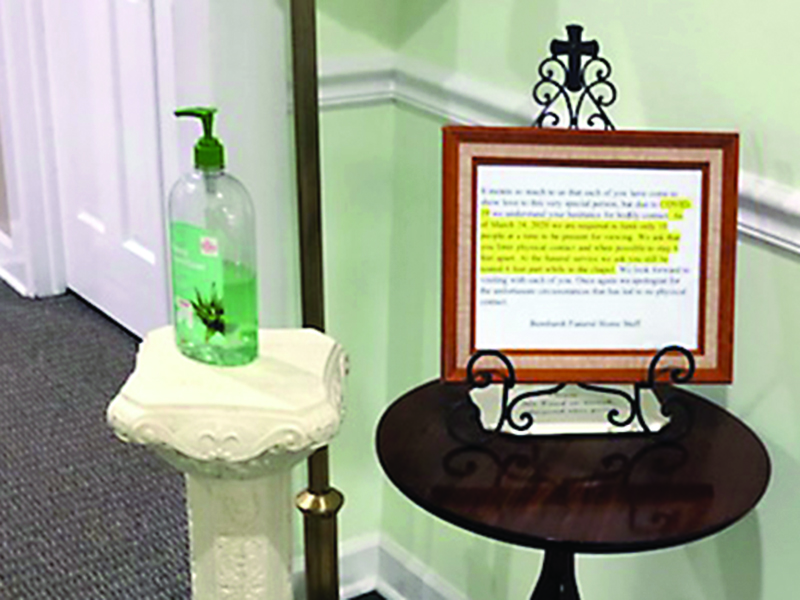
“We’re following the guidelines we’ve had from the national and state Funeral Directors’ Associations and the City of Ellijay now has some guidelines for us (including having) plenty of hand sanitizer available and having somebody to either open the doors or keeping the doors open for visitations when people are coming in,” he added.
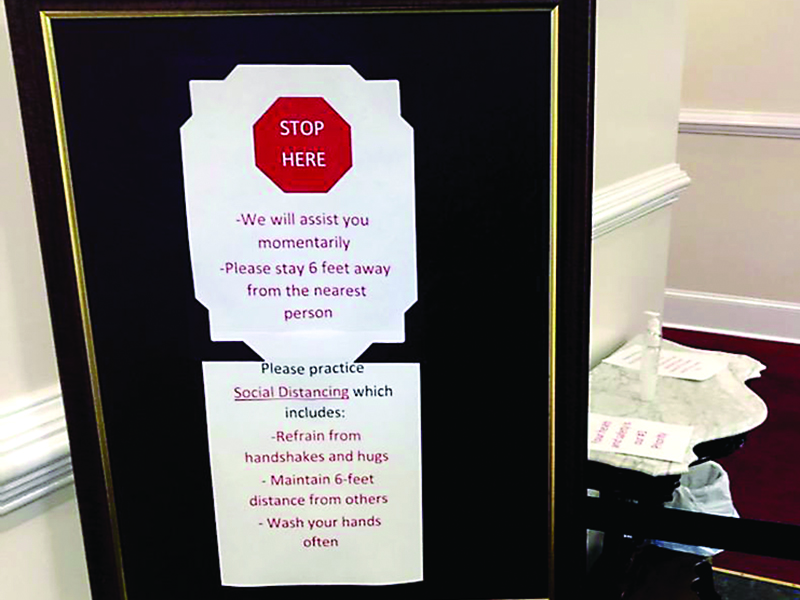
Six-foot distancing is a new requirement at both funeral homes.
“We’re following the governor and keeping up with the CDC’s recommendations. Over the last several weeks, we’ve been trying to keep it to private family only and no more than 10 in a visitation room at a time. As far as the services, (we’ve been doing) the same thing and we’ve been limiting it to preferably graveside services. Each family is going to react to the restrictions differently, but, fortunately, we haven’t had any people who’ve been upset with us,” Nealey said.
“We just lifted that regulation last Friday once the governor’s press briefing came out saying you can have more than 10 people. We are going to start opening it up a little bit, but people still have to maintain at least six feet apart. We’ve got signs posted everywhere (saying that),” he added.
“Most people are totally aware of the situation and most everybody is asking us what they can do (during a funeral). I think the word’s really gotten out with folks,” said DeHart. “We still have to do 10 people or less, not including people who have to be there (like) funeral directors, and people staying six feet apart. We’ve had only a couple of chapel services since this happened and most people have chosen to have private services with family only. Our chapel would normally hold 170-180 people, so if you put them in there with six feet in every direction you’re down to 25 or 30 people basically. Most everything has gone to graveside services. That way, more people can come and you can (still meet) your social distancing requirements.”
Kitchens — standard gathering places for families during a time of mourning — have been closed at both funeral homes.
“(People bringing food for families) is something that’s normally been done for years and years, but we’re not able to have anything like that now because you can’t have everybody using the same forks and spoons and that kind of thing,” said DeHart.
Safety precautions also extend to how staff members handle prefuneral duties.
“We always use universal precautions like (wearing) PPEs, so that hasn’t changed,” said Nealey, also a licensed embalmer. “Now, when we go out to pick someone up, we put on an N95 mask and gloves before we even walk in the door of a house, hospital or nursing home because you can never tell.”
“Now, when you go to a facility like a nursing home (to pick up a body), everybody has their own protocol of how to get in and out. We’ve been to a couple of places where we were not allowed in. (Instead), they take the stretcher in and bring it out. It depends on the facility itself,” said DeHart.
“We have to use personal protection on everybody. The protection required for COVID is no different than (what would be used for) hepatitis or anything else. You can be protected and still do your normal operations. You just have to get it in your mind what you’re dealing with,” he added.
DeHart explained how the outbreak of another deadly disease, HIV/AIDS in the 1980s, led to the now-mandatory personal protection equipment used in funeral homes.
“When I first started in the ‘70s, you might wear gloves and you might not. When AIDS came along, it was a real big deal about using universal precautions because it’s a blood-born disease,” he said.
Nealey noted how numerous coronavirus cases in Dougherty County are believed to have been linked to funerals held there.
“That was the hot spot there for the first few weeks of this whole situation. They traced it back to a funeral home,” he said.
Restricting hugs, handshakes and other forms of physical contact, which is part of new guidelines at both funeral homes, has been difficult, but it’s being done to prevent more coronavirus cases from happening here, Nealey said.
“I hate doing that, but I also don’t want to make anyone sick. Fortunately, we haven’t had any COVID cases, but we definitely don’t want to be the cause of them, either,” he added.
“That’s been hard for a lot of people to deal with, but they’ve been real understanding about things; wanting to do as much as they can, but still keep everybody safe,” said DeHart.
Bernhardt’s is also seeing fewer funeral home regulars who often attend visitations or just stop by to chat.
“We used to have a lot of drop-in folks who would come by and sit, but we don’t have that now,” DeHart said. “We’ve had people who want to come, but are not going to because they don’t need to be around crowds. A lot of folks have chosen to do condolences online or by phone call instead of even attempting to come to a visitation. They hate not to come, but they know they shouldn’t.”
DeHart said he’s been employed at Bernhardt’s for 43 years. During that time, this is the first disease that’s caused significant changes in the way funerals are planned and conducted.
“I’ve never seen anything in my lifetime like this. It’s been a big change for everybody and I think there’s going to be a big change in everything over the years. I don’t think any business is really going to be back to where you were for a long time, where we would have two or three visitations at the same time with a big crowd of folks. It’s definitely not going to be allowed for a long time, but I don’t know if it will change anything after that or not,” said DeHart.
“The whole world’s changed all the way around for right now. It’s interesting in one aspect, but I’m anxious for it to get back to what we had. I think everybody appreciates more what they had now.”