
Will take a little longer to find out, say growers
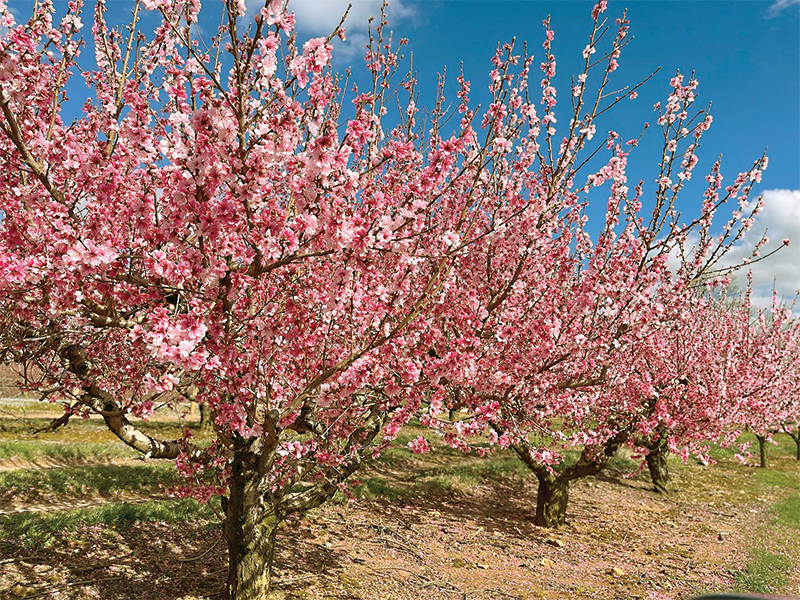
With temperatures recently plunging below freezing for several days, the county’s peach crop may have suffered some degree of damage, but it’s too early to know the extent.
According to the UGA Environmental Monitoring Network, low temperatures were below freezing for nine days between March 11-21. The vast majority of those lows were in the 20s.
“There are (some) dead peaches, but it can fool you. Sometimes you’ll think the crop will get wiped out, but you end up having some left,” said John Reece, owner of BJ Reece Orchards. “It will be about another week (before we’re able to tell).”
Andy Futch, owner of R&A Orchards, provided a similar outlook from his orchard, where more than 30 varieties of peaches are grown.
“We’ve still got a crop right now. It’s by no means a wipeout. We’ve got some damage, but if you’ve got a full crop of peaches or apples, you’ve got to thin them out anyway,” he said. “All the north Georgia fruit growers can hope for right now is that we got a good thinning and not a good killing.”
“We expect these (spring freezes), and we have them every year,” said Ashley Hoppers, extension agent for Gilmer and Fannin County. “It’s one of those things like ‘what is nature going to give us?’ It’s incredible what these trees can weather through, but we like to wait a week to 10 days to kind of get a feel for bud mortality after a freeze event.”
Advective freezes, like those that happened just recently, can be most damaging to budding fruit trees, noted Hoppers. In this type of freeze, cold air blows in from somewhere else, unlike in a radiative freeze, which occurs under clearer and calmer conditions, she explained.
“With a radiative freeze, due to it being clear and calm, the heat escapes and floats up, so you have this temperature inversion with cold air sinking to the bottom and the warmer layer floating above,” said Hoppers. “That’s where wind machines (can be used) to buy yourself a few degrees. When it comes to cold advection, if the winds are really powerful, which they usually are, fans aren’t going to (help) because it’s just a big cold air mass. That’s when it can get really dicey. When you get down to 24 degrees, there’s not much you can do to protect against it.”
Reece described how budding fruit sometimes reacts to the cold air coming in.
“Apples (and peaches) are sort of the same way. There’s a seed right in the middle and it’ll turn black or start drying up. In peaches, it’ll start drying up and the stem will turn brown,” he said. “Usually, it takes longer on a peach before you can tell whether it’s dead or not. I can tell pretty quick if they’re dead or alive, but there’s a thousand blooms or more on a tree. It’s hard to tell which ones are going to make it and which ones aren’t.”
Fortunately, only a small percentage of the vibrant pink blossoms produced by a peach tree are needed for a crop, noted Hoppers.
“It’s a beautiful thing with these trees in that they put on more flowers than they need. You thin most of the blooms off anyway to get a target crop load. You really only need about 10 percent of the flowers,” she added.
There have been ups and downs for the county’s peach crop the past two years. In 2021, peaches took a severe hit due to freezing in late spring. Last year, the trees rebounded after that bad year and produced a great crop that was boosted by ample rain, noted Hoppers.
“For us, if they’d been out farther, it could’ve been a lot worse (this year),” said Futch. “It depends on the stage they’re in. We’ve got some late blooming varieties that have blooms that won’t open till (this week). If you had peaches out there as big as a quarter and it was 28 degrees, that would be pretty bad.”
Reece just pushed up several of his older peach trees that needed replaced and planted hundreds of new ones that will eventually bear later-blooming peaches that won’t be as subject to freeze damage. It will probably take around three years before those trees bear fruit, he noted.
“A lot of times, Easter week is when we have that cold weather, and it hurts our crop. I don’t know how that’s going to work out this year,” said Reece.
As for this year’s apple crop, Reece said the recent freeze might have also hurt some earlier varieties like Pink Lady, but, again, it’s too early to tell.
“Once that bud opens up, it’s susceptible to be killed by cold weather,” he added. It’s like having a blanket over it before that bud opens up. Right now, the Grannies and Mutsus are just starting to bloom. It will take them a week or longer to get in full bloom.”
Fewer peaches than apples are grown in Gilmer County, and by a smaller number of growers, but they still account for a solid cash crop. According the Georgia Department of Agriculture’s 2021 Farm Gate Report, Gilmer ranked 14th among Georgia’s 36 peach-producing counties. At that time, peaches accounted for a Farm Gate value of almost $400,000 countywide.
“They’ve not been in the county as long as apples, but they’ve been (grown) here for a long time. We’ve always had some peaches, just not as many. They’re harder to grow, and they always get killed worse (than apples),” said Reece.