
Gilmer native has worked 32 years in three-county Sequoyah Regional system
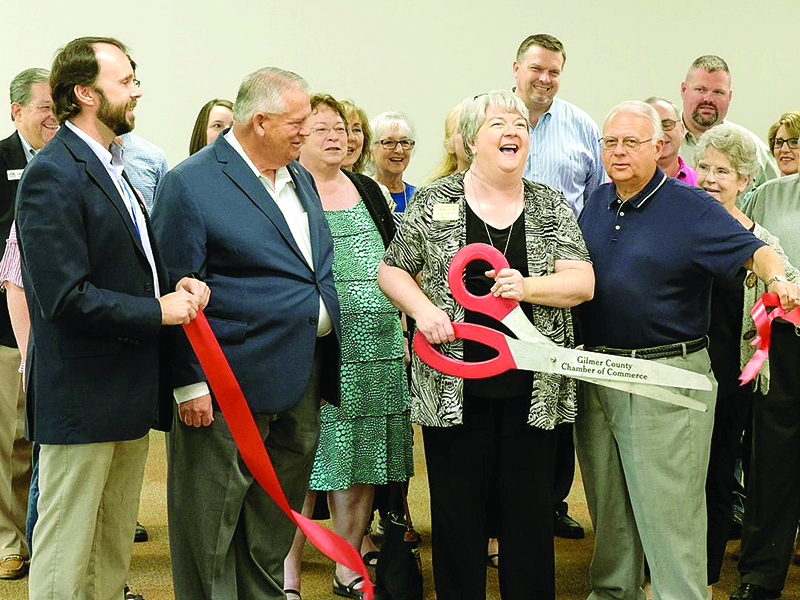
A Gilmer County native who’s worked in the Sequoyah Regional Library System (SRLS) for 32 years — the last seven as its executive director — will soon be retiring.
Anita Summers, who was raised in Ellijay by parents Larry and Alice Davis, began her career with the public library system that includes Gilmer, Pickens and Cherokee counties in 1989 as the Gilmer library’s manager.
Longtime county librarian Ruth Hamrick was retiring then, and she urged Summers to apply for the position.
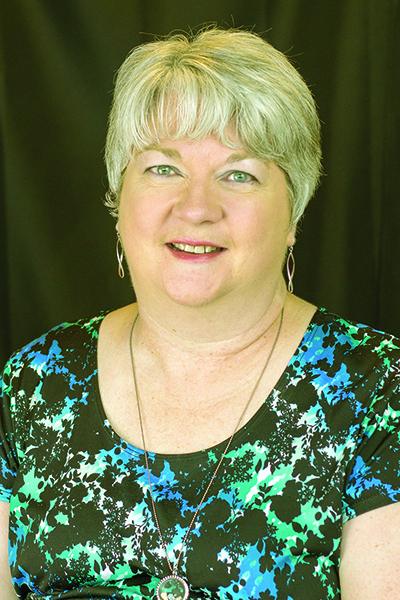
“Ruth knew me all through my growing up here, and she was the county librarian when I was in elementary school. Back then, the public library and school library were housed together,” Summers said.
Summers was working at the Berry College library in Rome, so returning home to live and work wasn’t really part of the plan at that time. Even so, the opportunity to manage her hometown public library sounded like a good fit.
“I thought it couldn’t hurt, and I’ll give it a try. It all just kind of fell into place when I got here, and I never left,” she said.
‘Always something new’
Summers began managing the local library amid a series of technological upgrades, including automation of its book inventory and checkout system. By that time, the library had moved from the old Ellijay Elementary campus to the Dalton Street building where Dalton State College now operates.
And it was growing, Summers said.
“They’d started to expand the building, which was renovated in 1991. We packed everything up and operated a mini-library out of the lobby,” she said. “It was a real exciting time to be there and see all these people I’d known growing up and a lot of new people I’d never met. It sounds like it might be kind of a boring job, but it really wasn’t. There was a lot happening.”
Many more changes would follow in Summers’ time as branch manager, including construction of a new library at the current Calvin Jackson drive location.
In that time, the basic idea of a public library has also evolved from a place of just literature and research materials to a library of things where new technology can be used by customers.
“A big thing I’ve loved about the library is there’s always something new going on,” Summers said. “I can’t imagine working in a library and not liking to learn (new things).”
Among the biggest developments in Summers’ time as branch manager were the addition of computers and the internet being made available to library customers.
“When I first started, there were no computers. I don’t think we even had a fax machine then. It took a lot longer to get information (before the internet), and Interlibrary Loan would’ve been your main way of reaching information beyond your library’s walls,” she said.
“We had microfilm, but, pretty much anytime someone had a reference-type question, we had to check the physical books and magazines we had on hand. If we couldn’t find it there, we might call the headquarters library in Canton. Larger libraries (eventually) had databases you could search, and that’s how we got a lot of information. Then along came CD-ROMs and other databases that began springing up.”
Later improvements may have eclipsed the initial wow factor of dial-up internet, but access to the World Wide Web was a big deal for both library customers and staff in the mid-1990s, Summers confirmed. It was also a learning process for all, she recalled.
“We started out with probably a couple of computers with internet. I remember us getting a 56k line installed and, later, we started having the stations out in the open where people could sign in. Even though we certainly weren’t experts, we would pass along (information) as we learned it, which could be time-consuming. You might spend 20-30 minutes helping one person (with the internet), but you didn’t mind,” Summers said.
“Computer classes became one of our big things in the late ‘90s and early 2000s. Even something like learning how to use a mouse was a big part of it,” she added.
Summers said the local library’s small staff was “like a family.” She enjoyed that camaraderie, as well as helping customers find the books or information they needed.
“You really got to know your staff well and work as a team. You felt like you were making a difference by helping people find what they needed or learn something new,” she said.
‘An indelible impact’
The move to a newly constructed building in 2008 allowed the Gilmer County Library to further expand its educational offerings to the public. Summers was named the library system’s assistant director that same year.
The SRLS trustee board named her executive director in 2014. Since then, Summers has been responsible for overseeing all aspects of operations at seven public libraries in Gilmer, Cherokee and Pickens.
Her office is based in Canton’s R.T. Jones Memorial Library, but Summers has stayed a Gilmer resident.
Under her leadership, the library system’s circulation and program attendance increased, as did service hours, digital resources and staff pay, development and training, according to an official SRLS statement.
Her tenure also saw an 8,000-square foot unfinished basement at the Gilmer County Library renovated into a functioning class and lecture area as part of a 2019 state grant-funded project. Today, libraries in Jasper and Hickory Flat await their own expansion and renovations.
“We are forever grateful for Anita’s time as executive director and for all that she and her team have accomplished under her diligent leadership,” said Jane Shelnutt, Chair of the SRLS Board of Trustees. “Her dedication to service excellence, meaningful library partnerships and continuous learning has made an indelible impact on the SRLS and the communities which it serves.”
Alex Thomerson, who came on board as the Gilmer library’s manager last year, said Summers’ strong leadership has been instrumental in providing “an exceptional level of service for patrons during the challenging pandemic time.”
Soon, another technological change will occur at the library with the addition of RFID (radio frequency identification) devices for checking out materials, Thomerson noted.
“Anita was instrumental in planning and budgeting for (this) equipment, which will offer our patrons a quicker and more efficient checkout system,” he said.
Even with all the new technology available, books are still the library system’s main attraction, Summers confirmed.
“I think a lot of people are surprised to learn that. Our electronic books are very popular, but the print books are still the bread and butter, I guess you’d say,” she said.
Whether people come to see live entertainment, attend a meeting or check out a book, visiting the library doesn’t cost customers a thing, and that makes it a unique place, Summers said.
“If you don’t have a place where people can get information without having to pay for it, that’s a pretty dangerous kind of society to live in,” she added. “I honestly can’t think of any other place where you can just come hang out and not be expected to buy anything. It doesn’t matter who you are, you can get information there all day long.”
As for why she’s decided to retire, Summers said as things continue moving at a fast pace, she wants to slow down a bit. Her last day as SRLS Executive Director will be Feb. 1.
“I want to spend more time with family and pursue some things I don’t have time for now. People have told me you’ll know when it’s time (to retire), and I guess that’s true. It’s a high energy job,” she said.
“I am very blessed to have been part of a forward-thinking system with supportive trustees, dedicated staff, and library-loving communities.”
A search for the library system’s next executive director has started, and the final pick is expected to be made in January.