
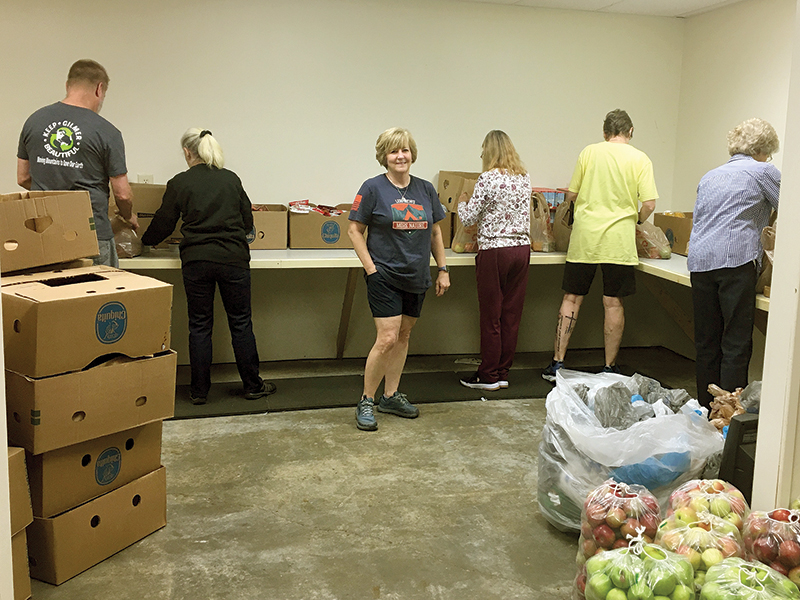
Pending changes to a state nutrition assistance program could result in loss of funding for a local program, as well as several similar ones in Georgia that provide food to local schoolchildren.
The Sack Pack program managed by the Gilmer Community Food Pantry relies on funding from the Georgia Nutrition Assistance Program (GNAP) to provide snacks and shelf-stable food to more than 300 local children a week.
The funding buys food from the Chattanooga Area Food Bank, which partners with Gilmer and eight other counties in its northwest Georgia region. School administrators, mainly counselors, give the bagged food to students to take home over the weekend.
The Georgia Department of Human Services (DHS) is now asking food pantries that receive GNAP funding to collect and keep track of Social Security numbers and family income amounts for kids who receive food, confirmed Jeannine Carpenter, the Chattanooga food bank’s advocacy director. The food bank believes those new requirements are problematic and unrealistic, she added.
“This is a new request,” Carpenter said. “We’ve been getting this money and using it to feed hungry children for years. We have a legal opinion that says we are in compliance in receipt of this money without this verification.”
Allen Triebel, spokesperson for the Gilmer food pantry, said, if that GNAP funding goes away, it would mean a loss of $45,000 or more used for the pantry’s Sack Pack program.
The total funding loss would be around $500,000 in the nine-county area of Catoosa, Chattooga, Dade, Fannin, Gilmer, Gordon, Murray, Walker and Whitfield, Carpenter said.
“In the past, all any pantry had to do was say there was a need for assistance for children to get these specially priced items,” Triebel said. “We buy through that program and, under the current system, we have to report the tonnage or weight (of the food) and how many kids we give to.”
To keep track of the information now being asked for, food pantries would have to use the Federal Income Eligibility Verification System, noted Carpenter.
“It’s a federal program that, frankly, food and hunger volunteers aren’t qualified to use. (It) would also require reliable internet,” she added. “That places an undue burden on school counselors, social workers in our schools and volunteers (at food pantries) in rural areas where they don’t have reliable broadband.”
Triebel said, like many community food providers of its kind, the local pantry is run by volunteers and isn’t equipped with the technology or human resources to handle such sensitive information as Social Security numbers (SSNs).
“It would be, in my mind, very dangerous for people at a food pantry to be inputting SSNs when they are not well vetted,” he added. “We don’t take SSNs for any reason (now). Most pantries are like that.”
The changes could take place at the end of September, when a current contract for GNAP funding expires. Carpenter said the food bank is urging people in communities with programs like Sack Pack, which are aimed at reducing child hunger, to contact state officials and request that food pantries not be required to do income verification or collect SSNs.
“Collecting parents’ information as verification that their children are hungry is not the point of feeding hungry children. At this point, we’re asking for people to contact their elected officials, representatives and senators to (convey) the importance of this program, and to reach out to the DHS and the governor’s staff and ask them to work together to continue this funding,” she said. “At this point, it’s a DHS decision, so we’re hoping the governor’s office and DHS will take a closer look.”
If the changes do go into effect, it should not change the pantry’s weekly food distribution, which is done on Wednesdays, Triebel noted. However, it will mean the food pantry will have to fund the Sack Pack program internally. Triebel said he’s reached out to House Speaker Ralston’s office about the pending changes.