
Passing legislation at the state level, protecting children from the consequences of AI-generated sexually explicit material, has hit some roadblocks. The language was stripped from the senate bill that now addresses political deepfakes instead.
In a previous Times-Courier report, it was explained that companion bills Senate Bill 9 and House Bill 171 aimed to criminalize the distribution of AI-generated child pornography and enhance punishment for up to 15 years in prison.
A local, criminal case has put emphasis on Georgia lawmakers’ efforts to pass the companion bills during this year’s legislative session.
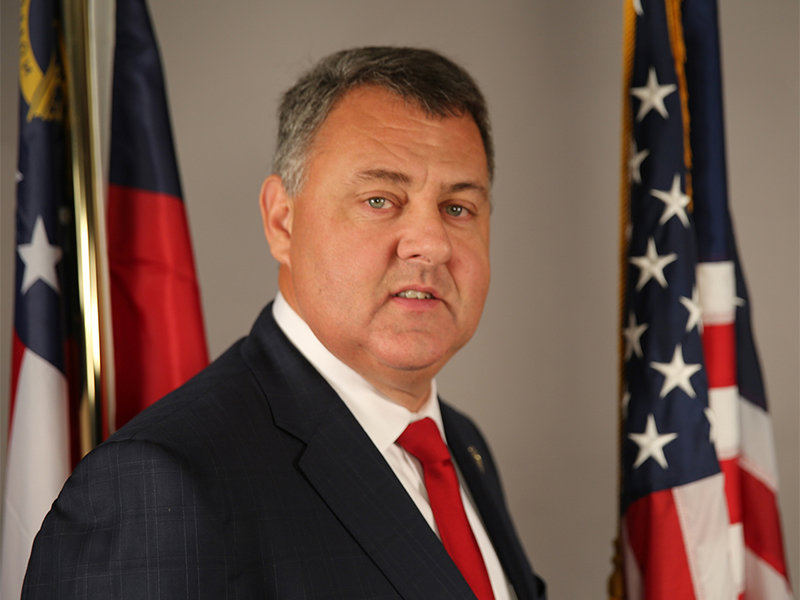
‘It’s unfortunate we have to pass legislation like this, but we have to do things to protect our citizens,” Senate Majority Leader Steve Gooch, R-Dahlonega, said. “As time changes, technology changes are going to continue to bring all new challenges for us, so we will continue to do what we need to do to protect our citizens in Georgia.”
In January, the Gilmer County Sheriff’s Office arrested a man, who serviced Pepsi vending machines at county schools, after an extensive investigation. He’s accused of taking normal photos of students and using AI to make them appear nude.
Ronald Richardson, 48, was indicted last month on 76 counts of sexual exploitation of children, according to the Dekalb County District Attorney’s Office, who’s handling the case.
Richardson’s arrest is believed to be the first AI-generated child pornography case in the state, highlighting the need to protect Georgians from this type of crime.
However, language surrounding AI-generated child pornography was stripped from SB 9 in a House committee, according to the Atlanta Journal-Constitution.
The bill was replaced with the current version that targets political deepfakes, described as deceptive computer-generated audio and images of politicians, to combat election misinformation and interference.
“[SB 9] came to the senate floor, and when it passed the senate, it had the language in there that we felt was necessary to protect children and young people,” Gooch said. “Unfortunately, there were some no votes on that bill.”
Rep. Brad Thomas, R-Holly Springs, sponsored HB 171, and previously told the Times-Courier that SB 9 was being modified to address election deepfakes as well, before final approval by the House.
However, Sen. Gooch said the bill never made it back to the Senate with the House’s changes. It’ll still be available for consideration by the House, but not until they go back in session in January 2026.
“It’s a shame that it didn’t go ahead and pass before the end of session this year,” Gooch said. “It’s a good bill the way it was drafted.”
Stripping the language of protecting children from the ramifications of AI was unexpected. The AJC reported that some of SB 9’s co-sponsors weren’t made aware of the last-minute amendment.
The Times-Courier did reach out to Rep. Johnny Chastain, R-Blue Ridge, for comment, but have not yet heard back.
HB 171 was passed by the Senate, and still focuses on criminalizing the distribution and creation of AI-generated child pornography.