
Retired federal agent to make presentation

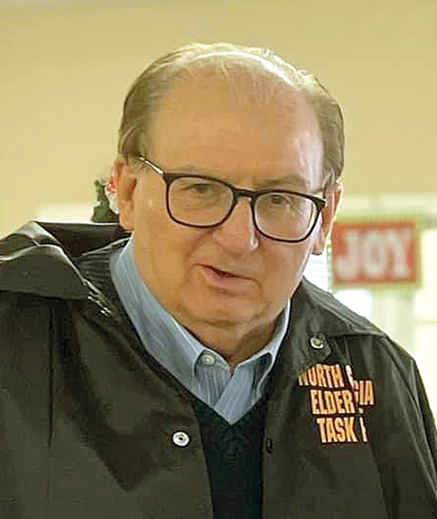
Joe Gavalis
Joe Gavalis was speaking at a seminar in a north Georgia town on scams targeting seniors when he noticed one attendee was becoming tearful.
“She came up afterward and was crying,” said Gavalis, a retired federal agent who spent a career fighting organized crime and labor racketeering. “I said, ‘Are you OK?’ and she said, ‘You really hit home with me.’ Her sister had called her and said she’d won the Publisher’s Clearinghouse (sweepstakes), and they were going to be coming with the TV cameras and balloons and everything.”
The woman related to Gavalis that she’d asked her sister how she knew she’d won.
“(The sister) said they’d called and told her how to pay the taxes on the money up front, so she paid $20,000,” Gavalis shared. “That was a month before the meeting where she came up to me.”
The woman tried to tell her sister she hadn’t won because she never entered the sweepstakes, he continued, but the sister called back just two days before the seminar and said, “I want to make sure you plan next Tuesday to be the first one to ride in my new Mercedes.” The sister “knew it was for real” since the Mercedes was included in the prizes.
“They gave me a description of the car and everything, and they’re coming right here, and I want you to be here when they come,” the woman said her sister told her. When the woman told her sister, “Please don’t tell me you had to pay more,” her sister responded, “Of course I did! How else do you think you get the car transported from Europe to here?”
When the woman asked her sister how much she paid on the second call, it was an additional $20,000.
“So there’s $40,000 lost, and it happened just right here in our area,” said Gavalis, who now works through the North Georgia Elder Abuse Task Force Foundation he helped found. The nonprofit agency can be found on Facebook, and its purpose is “to help tackle the rising challenge of elder abuse in our state by helping to foster collaboration amongst and between public and private agencies that deal with elder abuse.”
Gavalis has spoken to more than 6,000 seniors in the last 10 years on physical, institutional and financial exploitation of seniors, and coordinates with law enforcement jurisdictions on current scams. He is holding one of the seminars in Ellijay on Thursday, Jan. 20, from 9:30-10:30 a.m. at the Gilmer County Senior Center.
Gavalis first learned about an elder abuse task force in California, and when he came back to Georgia asked around if there was one here.
“I was told, ‘Yeah, we have problems, but no one’s really focusing on it.’ So we saw a need to expand it to north Georgia,” he said. With help from others, he started the Cobb (County) Elder Abuse Task Force, and the work began to blossom.
“We used to say ‘We’re coming to speak about elder abuse’ and wouldn’t get anybody,” he said. “Now it’s ‘We’re coming to speak about financial scams and how to prevent them and not be a victim’ and we’ll get 20-30 (attendees). We actually had 300 in Augusta and 180 down in east Cobb. Why are seniors targeted? Our generation is a very trusting generation. Our word’s our bond. You would close a deal on a handshake. If somebody came to your door, sure you would help them. And we were able to save a little bit of money, and it’s all relative.”
Gavalis said a common ploy of scammers is to try and get seniors to purchase “cash cards.” He was asked to elaborate.
“Don’t pay with cash cards,” he said. “The professionals (scam artists) don’t want your cash, they want those cash cards. They’re gift cards, and the bad guys want you to put money on them and then scratch off the number on the back. They want you to buy it so the money’s in the system, then you scratch off and give them the number and in 30 seconds that money is gone and it’s almost impossible to trace. And it’s overseas (in origination), usually.”
No money to get money
Another advisory is “don’t pay money up-front to get money.”
“Like when somebody calls you and says they’re Publisher’s Clearinghouse,” he detailed. “More people are getting scammed on that where they’re paying up-front money. There are seven cases that I’m aware of in northwest Georgia — not Metro Atlanta — and there’s been $2 million lost in the last several months in those cases. It’s gone — $2 million.
“It’s so sad people are taken.”
Gavalis noted there are also scams where people will show up at your door and tell a story about having extra pine straw left over, or leftover roofing or paving material if they see a roof or driveway needing repair. He told of a true case that happened in Catoosa County, which he labeled a “nosy neighbor” case.
“The nosy neighbor looks over and sees these guys working, so she put her coat on and went down there and knocked on the door and asked who are those people,” he began. “The woman told the nosy neighbor, ‘Oh, they’re the nicest people you’d ever want to meet. They came by here and knocked on the door and said they were repairing a driveway and had some material left over, and they gave me a deal.’
“So nosy neighbor says, ‘Let me get this straight — you didn’t call them, they just showed up and they got a deal for you?’ She said, ‘Oh yeah, they’re the nicest people.’ Nosy neighbor says stay here, she gets off the porch and starts taking pictures of them working. One of the guys says, ‘You hold on there, lady. If you keep that up, I’m calling the sheriff.’ She says, ‘No need. He’s already on the way.’ The guys jumped into the truck and took off, and she said this was her proudest moment — she said, ‘I may be old, but I squatted down and got (a photo of) that license plate.’ The sheriff’s office and the (district attorney) took a warrant out for these two guys for attempted financial exploitation.”
Know your neighbors
In another incident, knowing a neighbor’s everyday habits possibly saved a life.
“It’s important to know your neighbors, and their habits, especially if they live alone,” Gavalis said. “In one case, a widow at the end of the street, possibly with the beginnings of dementia, always had her kitchen curtains open at a certain time in the morning. When a neighbor drove by and saw them unopened, she stopped and knocked but got no answer. She then did what every neighbor should do — she called the police and asked if they could do a welfare check on Mrs. So-and-So. They do welfare checks all the time. Wouldn’t you rather find somebody in there drinking coffee than find them on the ground?
“The police walked around the back and knocked and said, “Police, police here, are you OK? And he hears this faint voice saying, ‘Help me! Help me!’ He kicks in the door. She had fallen in the bathroom and broken her hip, and was laying there for over six hours in pain. If that neighbor didn’t ask for a welfare check, who knows what might have happened? Law enforcement doesn’t mind doing welfare checks.”
“Impersonator” scam artists pretend they’re from the electric or water utility and threaten to cut off a senior’s power or water.
“They’ll call and say they’re on the way out to cut off their power at 5 p.m., even if they paid their bill,” Gavalis revealed. “If you tell them you paid your bill, they say it must be a mistake that you can straighten out tomorrow, but they have a procedure now where they have to cut it off. However, you can go and get a cash card to take care of it — sometimes for up to $800. They say, ‘I’ll stay on the phone with you because I’ve got a lot of things to do and you might not get me back. Once you get the cash card, you scratch off that number and give it to me.’
“There was never an issue with your power, and that money is long gone. A lot of these people are lonely, and they prey on that.”
The National Center for Victims of Crime says Americans 65 and older are “more likely to be targeted by fraudsters and more likely to lose money once targeted,” according to an article on huffpost.com. “People have lost their homes, their dignity, their cherished independence.”
Want to go?
﹣ What: Senior Scams presentation
﹣ When: Thursday, Jan. 20, from 9:30-10:30 a.m.
﹣ Where: Gilmer County Senior Center, 111 Gilmer St., Ellijay
﹣ Who: The public is invited
Scam Alert!
The Social Security Administration will never threaten, scare or pressure you to take an immediate action. If you receive a call, text or email that …
﹣ Threatens to suspend your Social Security number, even if they have part or all of your Social Security number
﹣ Warns of arrest of legal action
﹣ Demands or requests immediate payment
﹣ Requires payment by gift card, prepaid debit card, internet currency or by mailing cash
﹣ Pressures you for personal information
﹣ Requests secrecy
﹣ Threatens to seize your bank account
﹣ Promises to increase your Social Security benefit
﹣ Tries to gain your trust by providing fake “documentation,” false “evidence,” or the name of a real government official …
it is a SCAM! Don’t give scammers money or personal information — ignore them!
Protect yourself and others from
Social Security-related scams
﹣ Try to stay calm. Do not provide anyone with money or personal information when you feel pressured, threatened or scared.
﹣ Hang up or ignore it. If you receive a suspicious call, text or email, hang up or do not respond. Government employees will not threaten you, demand immediate payment, or try to gain your trust by sending you pictures or documents.
﹣ Report Social Security-related scams. If you receive a suspicious call, text or email that mentions Social Security, ignore it and report it to the SSA Office of the Inspector General (OIG). Do not be embarrassed if you shared personal information or suffered a financial loss.
﹣ Get up-to-date information. Follow SSA OIG on Twitter @TheSSAOIG and Facebook @SSA Office of the Inspector General for the latest information on Social Security-related scams. Visit the Federal Trade Commission for information on other government scams. Spread the word. Share your knowledge of Social Security-related scams. Post on social media using the hashtag #SlamtheScam to share your experience and warn others.
﹣ Visit oig.ssa.gov/scam for more information. Please also share with your friends and family.
﹣ To report a scam, go to secure.ssa.gov/ipff/home
Source: Social Security Administration