
Unusual animals need somewhere to go, too
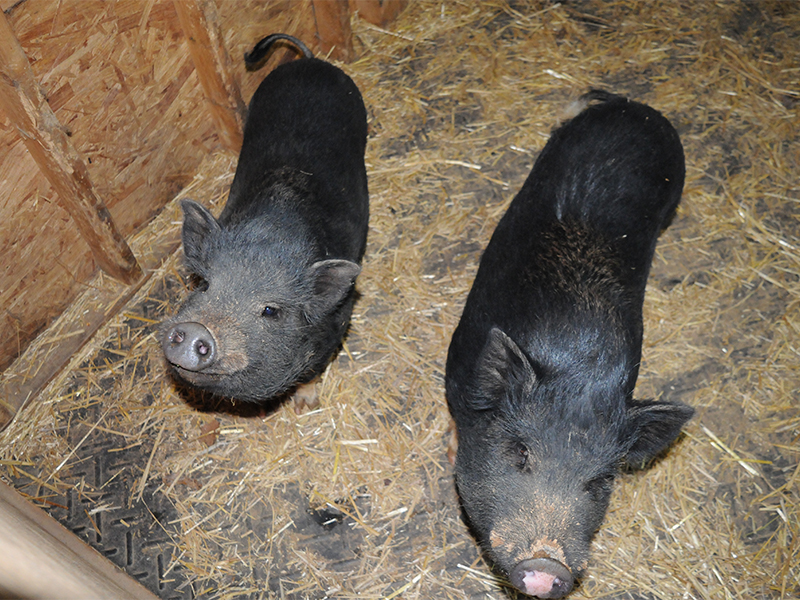
Hogs and dogs may be just one letter apart, but they have very different needs.
That’s why it was a crisis when the Gilmer County Animal Shelter (GCAS) received eight pigs after a welfare check on Monday, Aug. 4.
“We knew it was a bad situation, but we didn’t know what to do,” GCAS Director Kelly Pickering said.
When the shelter discovered them, the pigs were in a bad living situation.
“It wasn’t pretty, but it wasn’t horrible,” Pickering said.
Some people hoard animals. Often, hoarders treat their animals poorly. When something goes wrong, GCAS can face a sudden flood of unhealthy animals that need a new place to stay.
This time, the pigs’ original home burnt down the night after the animal shelter found them.
The shelter took in eight pigs, a number of dogs, a turkey, some ducks, some rabbits and the pigs.
When the pigs arrived in the shelter, their skin was hanging in rolls. In pigs, this is a sign of malnutrition. A healthy pig’s skin should be plump and tight.
“We didn’t understand the body composition of pigs and what bad shape they were actually in,” Pickering said.
The shelter had to call in an expert who knew more about the animals.
GCAS couldn’t keep the pigs along with its dogs and cats, so Pickering and other employees worked to contact the shelter’s network of supporters.
“We understood we had to do something right away,” she said.
Several people were willing to take care of a few pigs permanently.
One local woman adopted a sow and three piglets. A former shelter employee was willing to adopt two more.
The last two male pigs are in the care of local farm owner Deb Morgan. Four months later, she hopes someone will adopt them soon.
Morgan’s property is a foster farm for Southeast Llama Rescue.
Logan had no experience with caring for pigs.
She has learned that their strong heads can push up fences, root up electrical boxes and more. They can’t drink from the same kinds of buckets as llamas.
Bit by bit, Logan has fattened the pigs up to a healthy weight and learned how to care for them.
Currently, she keeps the pigs in one of her llama pens. However, she needs the pen to screen newly arrived llamas on her property. For now, she doesn’t know what else she can do.
Despite early difficulties, the pigs have helped make their stay worthwhile by rooting up and eating blackberry vines that have long been a nuisance on Logan’s property.
So far, Pickering and GCAS volunteers have driven all the way to South Georgia looking for someone to adopt the pigs. They had to bring them back when they discovered the potential adopter’s property was in terrible condition.
“It’s so hard to find places for them to go,” Pickering said.