
Farmers dealing with little rainfall, summer heat
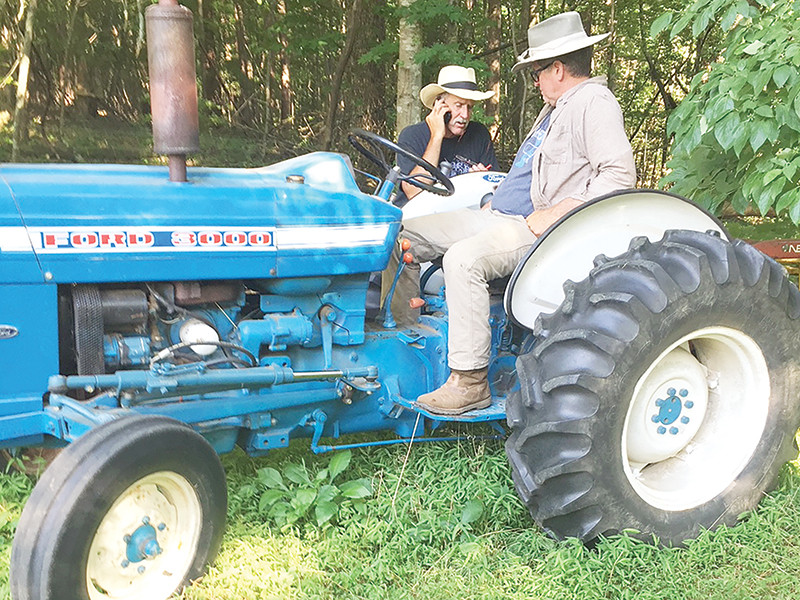
“The farmer prays for rain,” the old saying tells.
That’s been especially true this hot and mostly dry summer, confirmed a Gilmer County beef cattle farmer.
“It’s definitely been drier than in the past few years this summer. The quickest way to realize that is in the hayfields,” said John Clark Pettit, president of the Appalachian Cattleman’s Association, which covers Gilmer, Pickens and Cherokee County.
For Pettit, who raises cattle alongside his dad, John; uncle, Mark and other family members, the lack of rain isn’t hindering a specific crop. It’s causing less hay to be produced and could eventually mean less grass for grazing.
“There’s definitely been a decrease in the yield of hay. We’ve got a field that turned out about 110 rolls of hay last year, and this year it turned out 82,” Pettit said.
According to Ellijay weather station data from the UGA Environmental Monitoring Network, a total of 2.54 inches of rainfall was measured from June 1-July 1.
That’s the least amount measured since 2009, when 1.02 inches was recorded for the same 30-day period. Last year, 6.32 inches were measured in the same timeframe, and a whopping 10.03 inches was recorded in the same month of 2019.
Storms over the weekend did finally bring some relief with longer showers covering the county, but the summer’s scant precipitation has consisted mostly of short, hit-or miss rain.
“We’ve seen a couple of showers that we were really proud to get, but we’ve just not seen the widespread rain (this summer). It rained (a few weeks ago) on Tickanetley, but it didn’t rain a drop out on Highway 52,” said Pettit. “We’re at a point to where, if we don’t get some significant precipitation, we could start talking about the D word.”
The “D word” is drought. As of last week, the U.S. Drought Monitor placed most of Gilmer County in severe drought (or D3) conditions, while a smaller portion of the county was shown as having moderate (or D2) drought conditions.
Effects of severe drought include crop stress, low hay yield, farmers feeding cattle early and hardened soil.
They’ve not started feeding cattle hay at the Pettits’ family farm on the east end of the county just yet. That normally doesn’t start till winter, but some of Pettit’s fellow cattlemen have begun feeding early in a season already low on hay.
“We have to make that hay now, and hope we’ve got enough to make it through the winter,” Pettit said. “I got a call from (a farmer) in Watkinsville, where they’d been three weeks without a drop of rain. He was asking if I had any hay because he’s having to feed now instead of waiting till winter. In a summer with adequate rainfall, the grass is actively growing, and there’s plenty of grazing. Right now, you might say the grass (here) is getting a little thirsty.”
A dry summer’s toll on crops depends on what’s being grown, noted Gilmer County Extension Agent Ashley Hoppers. Some row crops like corn and okra are more tolerant to the heat and low rainfall, she added.
“Folks who are growing commercially on plastic and maybe have drip irrigation will be fine. But if you’re growing on dry land, this is tough,” Hoppers said.
So far, the county’s apples, peaches and grapes are all handling the summer well, Hoppers noted.
“The apple crop is set, and our producers are happy. We were worried that (the spring) freeze was really going to hurt apples, but we don’t really know what the crop is going to be until after June. It’s a good crop, and I think we’re going to have a big apple year,” she said. “Peaches look good, too. They’re prone to disease, so the dry weather has been a blessing in that respect. Our wine grape producers are also happy. Most grape vines are pretty drought tolerant and have pretty deep root systems.”
Some ornamental trees, like Leyland cypresses, have really been feeling and showing the effects of little to no rain, Hoppers mentioned.
“I’ve been getting calls from people with commercial landscapes and homeowners wanting to know what disease their Leyland cypresses have. It’s not disease. It’s drought stress,” she said.
One upside to the extensive dry spell is diseases that would normally plague crops in a wet summer, such as fungal rot, have been kept at bay this year, noted Hoppers.
“I was (recently) on a disease tour across Georgia, and it was difficult to find disease, which is kind of unheard of this time of year in the Deep South. In order to have disease, you must have the pathogen, the host and the right environmental conditions, which usually means moisture,” she explained. “On the other end of the spectrum, you’ve got to have water at some point.”
Steady rainfall instead of hit-and-miss showers would help right about now, especially in the high ground, confirmed Gilmer County’s Wallace Anderson, who grows corn, soybeans and wheat.
“I just harvested my wheat, and it did good,” he said. “I just drilled in some soybeans, and the bottom ground had moisture, but the high ground was hurting.”
For Anderson, who’s been recognized as one of Georgia’s top corn producers, the dry weather is a concern. But it could be worse, he said. Gilmer and much of north Georgia endured highest-level exceptional (or D4) drought conditions in 2007 and 2016.
“I don’t irrigate. I just wait on Mother Nature,” Anderson said. “If we get some rain, I think we’ll be OK.”
Pettit said there’s already concerns among cattle farmers about what the price of hay will be come winter.
“We’ve got our issues already with record high fertilizer prices and diesel prices,” he added. “If we stay in these dry conditions and the hay yields continue to decrease, hay and feed prices could (go higher) this winter.”
Hoppers said the mountains of Gilmer County do provide some degree of protection for farmers during dry conditions.
“Our elevation (can be) kind of like an oasis. I know it hasn’t felt like that, but our growers in places like Tifton and down farther below the Fall Line, it’s been pretty dire (for them). I feel like we’ve been running a few weeks behind them,” she added.
If the dry summer holds out, it could lead to sweeter peaches and apples being picked, Hoppers confirmed.
“Excessive moisture can water down the sugars in fruit, but when there’s not much rain, those sugars get super concentrated. We should have some really sweet and delicious fruit this year,”she said.