
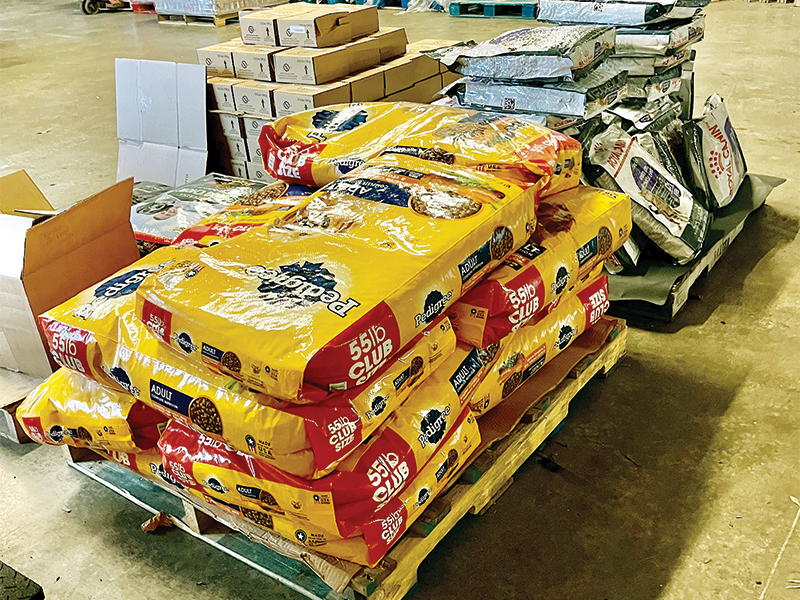
A program at the Gilmer Community Food Pantry that’s given pet food to clients with dogs and cats the past two years is seeing a sudden decrease in the amount of bagged pet food received from the Humane Society.
The Atlanta Humane Society is the pet food pantry’s largest contributor. It receives donated pet food from corporations and distributes the food to pet outreach programs like the one at the food pantry.
“(Their) pet food donations have decreased by a third over the past few months. It’s a downward trend that we didn’t anticipate, and it has dramatically affected our efforts to supplement the pet food supply for families in need,” said Mindy Petzer, coordinator of the local pet food pantry.
That decrease comes as a shortage of dry and wet pet food that started in 2022 continues into this year. Such supply chain factors as shortages in packing materials, raw ingredients and labor have made several major brands of pet food harder to find. As of last week, the pantry had less than a two-week supply left.
“(That’s) a very low amount for us to work with,” Petzer said.
Petzer said 75-80 percent of people who come through the food pantry have pets, and its pet program recently provided food for more than 500 pets a month.
The pantry had been using guidelines from the Atlanta Humane Society to offer supplemental pet food once a month for up to four dogs and four cats per person. The dry dog and cat food, which is portioned out in gallon zip bags, is intended to be a supplement and not enough to feed a dog or cat for a whole month. Still, it’s hoped that providing the food will result in fewer hungry pets, Petzer noted.
“The purpose is to keep pets at home, to supplement enough so their owners can afford the rest of their pets’ food needs. This program keeps so many pets from being either surrendered to the shelter or turned loose,” she added. “In response to the decrease, we’ve changed the number of pets served per family to two cats and two dogs. We simply do not have enough pet food (right now). My biggest concern is that the county will see an increase in surrendered or abandoned pets due to the decrease in donated pet food.”
The food pantry accepts monetary donations from businesses, organizations and individuals, but checks have to be written especially for the food pantry or the pet food pantry for the money to go where intended, noted Allen Triebel, former food pantry director.
“When we started this program, I promised not to spend the pantry’s money (on) pet food. Any money donated to the pet food pantry needs to be specifically directed toward pet food,” said Triebel.
Also, any donations written in an amount ending in 33 cents will automatically be flagged for purchasing pet food, Petzer noted. The mailing address for monetary donations is PO Box 1982, Ellijay, GA, 30540.
“The most effective way to help us now would be financial contributions to the Gilmer Community Food Pantry, earmarked specifically for pet food,” said Petzer. “Then we can purchase the types of pet food we need in the quantities that are needed. We use dog chow for both large and small breeds, cat chow and canned pet food for adult dogs and cats, plus canned puppy food. We’re hoping to raise $6,000, which is the financial difference for the year in what we’re losing monthly due to the cutbacks.”
There are also several pet food pantry donation boxes around the county where donations of pet food can be left. The drop-off boxes are at Tractor Supply, Mountain Hounds, Uncle B’s Feed Store and Bluebird Bistro. There’s also a bin marked “pet food only” next to the food pantry building at 5273 Highway 52 East.
“They don’t necessarily have to buy the pet food inside the stores. They can just bring it and leave it in the bins,” Petzer said.