
State bill impacts night school’s charter, authorization, funding
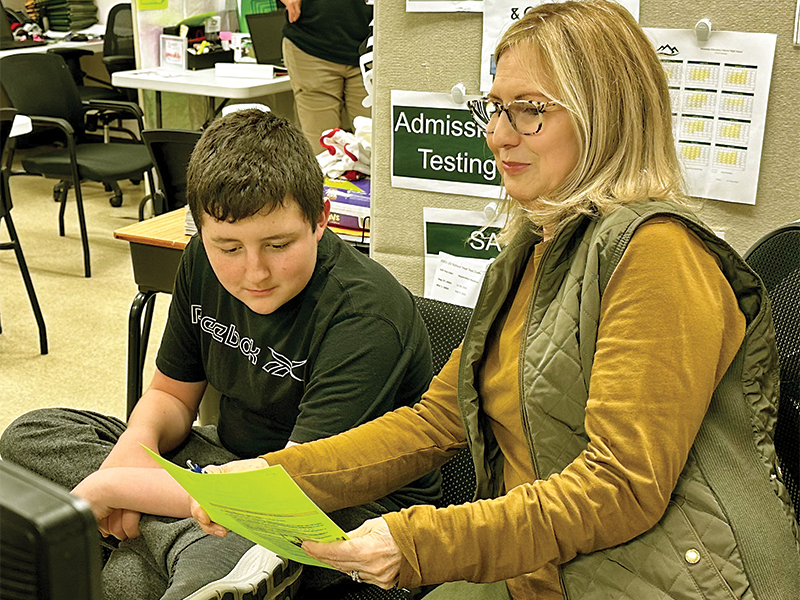
Representatives of Mountain Education Charter High School (MECHS) are asking state legislators to change requirements of a Georgia Senate bill, which could cause a discontinuation of services at all 18 MECHS locations including the one in Gilmer County.
They’re hopeful something can be figured out by June to avoid the worst-case scenario of closing the doors at all those schools.
“The legislation that’s currently on the books would significantly impact us and our ability to continue to serve students,” said Roger Fitzpatrick, MECHS Director of Community Outreach. “We are working with members of the legislature in order to get additional legislation to allow us to serve students past our current charter, which ends June 30 of this year.
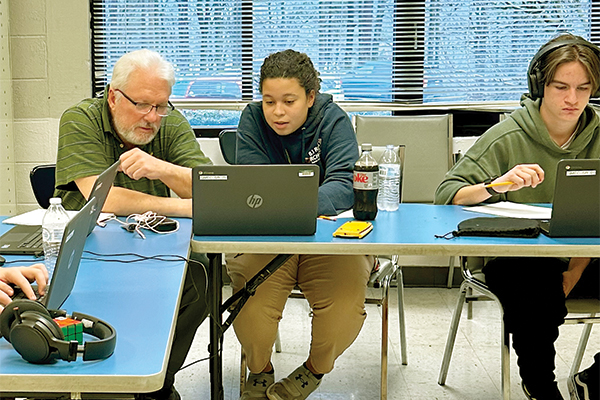
Also called the Graduation Opportunities and Advanced Learning (GOAL) Act, SB153 was signed into law by Gov. Brian Kemp in May 2021. It includes several new requirements for alternative charter schools like MECHS. Per the legislation, such schools will have to be overseen and authorized by a local school system instead of continuing to operate independently.
“The main thing is it requires us to transition to a locally authorized alternative charter school, which would require a local school system to say ‘Yes, we are going to authorize them,’” said Fitzpatrick.
So far, none of the local school systems have committed to that type of authorization, he noted.
“This is no slack to any school system, including Gilmer County, but the issue is (there’s) so many questions as far as what the responsibility of the local school systems would be,” said Fitzpatrick. “We just really don’t have a sufficient bank of answers in order for the local school systems to feel confident about what they would be stepping into.”
Operates very differently
Mountain Education has been the night school option for Gilmer County since 1993. Started in response to high dropout rates, it lets high school students work toward getting their diplomas on a more flexible schedule.
This also allows many students to work and care for children, noted April Smith, Gilmer MECHS mentor and public relations coordinator.
Smith said the Gilmer location was one of the first MECHS sites to be established in the state. It previously operated in mobile classroom units near Ellijay Elementary School before moving to the Larry Walker Education Center, the former Gilmer Middle School building, in 2019. With that move, it’s now able to serve more students than before.
“Mountain Ed. was the first night school system of its kind in the state. When it first got started here, Gilmer MECHS also served part of Fannin and Pickens,” said Smith. “The first few years, students came from as far away as Bartow County because there were no closer options at that time.”
After previously operating as a state-chartered special school, MECHS became part of the state charter school commission in 2013, noted Fitzpatrick.
“This legislation says you have to leave the charter school commission and may not reapply. You have to go back under the state board of education until the end of your charter and, before that ends, you have to become a locally authorized alternative charter school,” he added. “The terminology we would prefer is a state charted special school. That means we get our authorization directly from the state board of education.”
There are 145 full-time students currently enrolled at Gilmer MECHS, which, like the other locations, operates very differently than a county school. Attendance and residency requirements are among the differences, noted Smith.
“At the high school, you have to have so many seat hours. Here, you still have to finish the same number of courses, but you don’t have to have those seat hours,” she added. “We operate four days a week, and, if you’re under 16, you have to come all four days. Our students have to be at least a freshman going into high school, and they can go to school till they’re 21. We have mentors who keep up with those dates. They know when students get that close and encourage them (to finish). There are very few who don’t make it.”
There’s also the question of different funding sources for county and alternative schools like MECHS. How would local school systems go about funding the extra schools?
“There are different batches of funding for (county) schools, the main two being the state and local taxes,” said Fitzpatrick. “With us not having the authority to levy taxes, we can’t get any of those local funds. We would have to rely solely on state funding, so there’s a question that local school systems have in terms of how responsible they would be for (our schools). Would one school system authorize all 18 of our campuses? There’s just a myriad of questions.”
Smith said it wasn’t initially anticipated that SB153 would have such a big impact on MECHS, as well as other alternative schools in Georgia like Coastal Plains and Foothills Charter High Schools, which serve counties in north/middle and south Georgia.
“The first time (SB153) went through, it didn’t have the legislation to cut our funding and basically shut our doors,” Smith said. “The first time, it didn’t seem like it was that bad. When it went through the next part, they added a bunch of stuff. Then it did look really bad for us.”
In discussion
Fitzpatrick said every school system in counties where MECHS operates is aware of the situation, and there have been some talks at the local levels. However, that’s often resulted in more questions than answers, he noted.
“I certainly don’t blame any school system if they don’t have sufficient clarity about what their responsibility is, and I can’t blame them for not stepping up and authorizing us,” he said.
“Here in Gilmer County, (superintendent) Dr. Ridley and our local school system have been supportive. We want kids to get their high school diplomas, and that’s what they want, too,” added Smith.
The different MECHS branches have been putting the word out about the legislative changes in their individual communities, asking residents to write letters and share details about the pending legislation.
“Students, parents and people in the community have all contacted us wanting to know how they can help. We’ve had lots of people writing letters, making phone calls and emailing,” said Smith.
Former Georgia House Speaker David Ralston, who passed away in November, had been supportive of finding a solution, noted Smith, but Gilmer is currently without a house legislator as the race for District 7 Representative nears the Jan. 31 runoff election.
“With Gilmer and Fannin, we’re kind of in limbo about who our legislator will be. I’ve been in touch with both candidates in the runoff, but they can’t do anything either,” said Smith.
Fitzpatrick said MECHS has completed an application with the state Department of Education, per the bill, and is “working diligently with them to satisfy the requirements of SB153 while, at the same time, hoping to work with the general assembly to have additional legislation” allowing the schools to operate past the charter end date.
“We’re as confident as we can possibly be, without being overly optimistic, that we will have additional legislation that will allow us to continue to exist,” he added. “There are some members of the general assembly who are working on something, and we will continue to work with them and answer all the concerns.”
Smith said Gilmer MECHS had 25 graduates in 2022. Eight students have already graduated in 2023, and it’s expected that more than 20 others will be able to satisfy their graduation requirements by the end of the year. Since the night school program started here, 528 students have earned their diplomas by attending Gilmer MECHS.
“We’re hoping that our future is going to be preserved, and we’re waiting on that legislation,” Smith said. “In the meantime, we’ll continue to keep meeting the needs of our students and providing them with the best education we can give them.”