
Growth, increase in tourism among factors
Not too long ago, the busiest time for tourism in Gilmer County was signaled by autumn leaves changing color and the annual apple harvest.
Now, every season is busy with both weekdays and weekends bringing an influx of visitors, exponentially increasing the county’s temporary population.
That and other factors, including the growth of the county still to come, are sparking conversation about a projected need for more ambulance service.
“For years, it was they may come up on Saturday or Sunday, and we could handle that. Now, more people are here seven days a week, and we have the same obligation to them as we do (people who live here full time),” said East Ellijay Police Chief Larry Callahan.
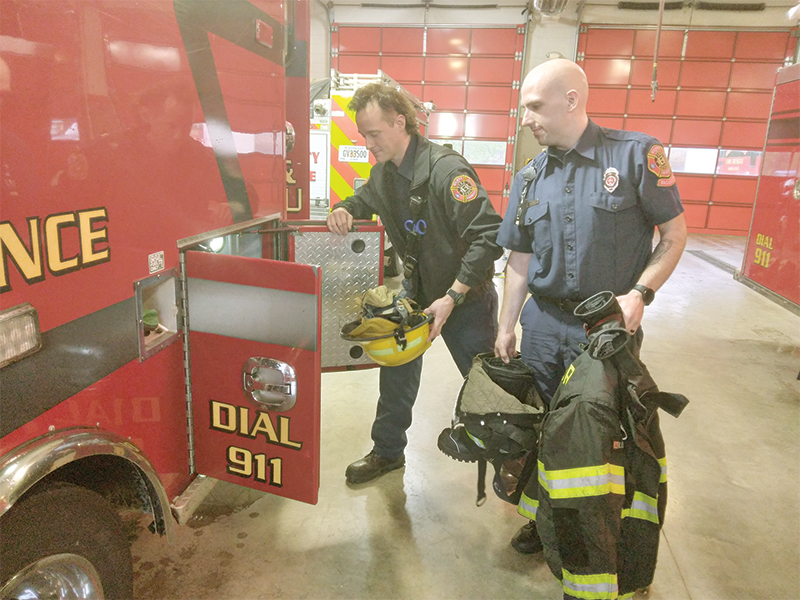
According to Fire Chief Daniel Kauffman, Gilmer Fire and Rescue currently runs four frontline ambulances and has three reserve ambulances that can be used if the situation demands or when another vehicle needs to be repaired or serviced.
“We do have a weekend surge in population with (all) the rental cabins up this way. That weekend surge on Friday through Sunday increases our opportunities to respond to additional 911 calls for fire and EMS. We’ve also had a surge in our normal population since COVID. With that and the weekend surge in population, our ambulances are on the road pretty constantly,” Kauffman said. “There are days where four ambulances are adequate, but there are many days when all four are committed on calls in the county at the same time.”
As of Monday, three of the department’s four frontline ambulances were being repaired or serviced, which meant all three reserve ambulances were being used. If one or more of those were to also go down, the county would be however many ambulances short. All the reserve units aren’t in use every week, but it does happen, noted Deputy Fire Chief Jason Bryant.
Gilmer Fire maintains an active mutual aid relationship with neighboring counties including Pickens and Fannin. When any of the three counties have all their units in use, they can request one of the other counties’ fire departments be on standby to assist with calls. That’s become a regular occurrence, Kauffman noted.
“We do rely on mutual aid, and we have a good working relationship with our surrounding counties,” he added. “I wouldn’t say it (happens) every day (where we have to request mutual aid), but it does happen more than we would like.”
The large amount of residential development going on in the county, which will continue to bring more residents, is something that makes Commission Chairman Charlie Paris concerned about how impending growth will impact emergency services.
“We understand that Gilmer County has had a lot of growth and will (continue to) have a lot of growth, and we want to manage that growth as best we can. The urgency I see is that a lot of these subdivisions are on the fringes of the county and a good ways out from fire stations that currently house ambulances,” Paris said. “One thing we’re going to have to do as we grow and these subdivisions start coming online, is have an ambulance nearby that can get there in a timely manner. It may take years for them to get built out, but the point is when that very first house goes in, I need to be able to get an ambulance to them in a timely manner.”
There’s also the aging senior citizen population, which generally requires more medical services, Paris noted. According to the 2020 U.S. Census, one-third of the county’s total population of 31,519 was age 60 or over.
“Right now, Gilmer is pretty much a senior-type community, and I don’t really see that changing a lot,” Paris said. “I think that portion (of our population may) decline a little bit, but that segment will still be a big part of our growth and typically requires more ambulance service than the younger folks.”
Increasing the county’s ambulance services isn’t quite as simple as just buying another vehicle. The ambulances have to be driven by trained emergency response personnel, and manned fire stations are needed to house them. Kauffman said a new ambulance now costs around $300,000, while the salary/benefits cost for trained personnel to run an additional one is closer to $500,000. Additional life support equipment also has to be purchased to go on the ambulances.
“You’re looking at around $900,000 just to put up an additional ambulance 24 hours a day. You’re looking at three paramedics and three EMTs, which means future budget talks,” Kauffman said. “Housing another ambulance is a whole other issue, either locating it in a fire station we can man or running two ambulances out of station 1.”
The fire department is currently waiting on two new ambulances, which have been on order since last year and probably won’t arrive until 2025. They are planned to be added to the four-vehicle frontline, not as additional units with additional staffing.
“We’ll be bringing two on and retiring one. We have an apparatus replacement plan where we replace one every year, which allows for our oldest ambulance at any time to be four years of age,” Kauffman said. “We are behind and off schedule with that right now due to COVID and supply chain issues.”
In the meantime, Gilmer Fire will be taking an approach that will hopefully offset longer wait times for emergency services. The department is scheduled to receive two mini-pumper trucks, which have been on order since 2022 and 2023. When those vehicles arrive, they’ll be outfitted to also carry various EMS equipment.
The “quick response trucks” won’t be able to transport a patient, but they will be able to offer basic and advanced life support care until an ambulance can arrive.
“We’re getting the monitors, AEDs and additional equipment together now. Once our mini-pumpers arrive, they’ll be outfitted with the medical equipment,” Kauffman said. “Our objective is, if all four units are committed, we can still respond with medical equipment and start patient care ahead of an ambulance arriving. This hasn’t necessarily been standard or consistent, but it’s going to be.”
Paris noted that the need for more ambulance service hasn’t been discussed at board of commissioners meetings just yet. But, looking to the future, the planning should start now.
“Before we say this is what we need to do, we would have to have those discussions at the (BOC) meetings. I feel like we need to start getting on track and start recognizing this. I don’t want to wait five years and start planning for it,” Paris said. “Assuming all those subdivision lots someday will represent a home and a family, there’s going to be a lot more need not just for ambulances, but also park and rec. facilities, sheriff’s deputies and road crew. As we grow, the entire infrastructure and fabric of the county is going to have to grow with it. Ambulance (service) is just one part of that.”
Kauffman said, when asking for equipment or additional staffing, the fire department wants to have the data to back up the requests. They will be assembling a five year plan to present to the commissioners this year, which will outline some of the anticipated needs in those areas.
“We’ll have that for the end of 2024. This will probably be the first one that we’ve done,” Kauffman said.