
December 7 is 82nd anniversary of attack on Pearl Harbor

When Keith McClain and his fellow Marines began pulling sailors out of the bay, the men who had been aboard the bombed USS Arizona were speechless.
“They were in a state of shock,” the late McClain said in an interview published on December 7, 1991. “We’d ask them a question and they would just stare straight ahead.”
McClain didn’t know it at the time, but he was serving as a front-row witness to history when Japanese Imperial Forces attacked Pearl Harbor, Hawaii, with fighter planes carrying torpedo bombs on December 7, 1941. Fifty years later, he attended a memorial service there with his family, according to the newspaper.
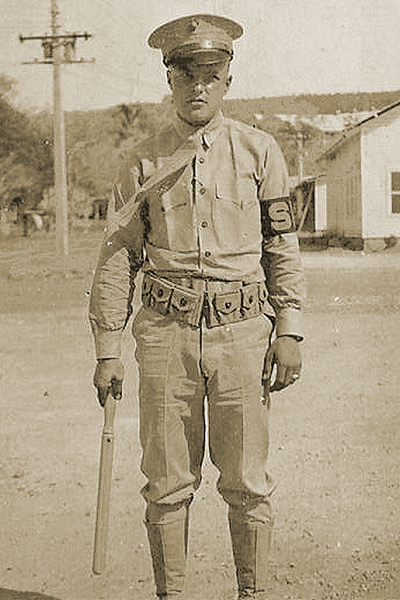
McClain’s son, Kelly, provided the newspaper clipping and recalled what his father told him about the sneak attack that decimated the U.S. Navy fleet at Pearl, and led President Franklin Roosevelt to declare it one day later “a date that will live in infamy.” Roosevelt also declared war on Japan.
“He was on guard duty at a Quonset hut, guarding radio equipment right across the harbor from the (USS) Arizona, and was getting ready to come home for Christmas,” said Kelly McClain. “So when the bombs started falling, there were four guys guarding the Quonset hut. They each had a clip of ammunition and one .45 pistol.”
The Arizona was sunk and remains in the bay of Pearl Harbor to this day. It is a much-visited memorial. Around 2,400 military personnel, primarily sailors, died during the assault.
Keith McClain was supposed to get off guard duty at 8 a.m., but wasn’t relieved until 8 or 9 the next morning, his son noted.
“When he got back to his barracks at Hickam Field right there at the waterway, all the showers were stacked full of dead bodies with toe tags on them,” said McClain, who noted his father as the printing foreman at Lee Printing for 35 years did print jobs for Ellijay and Chatsworth clients and friends, as well as Dalton. “They thought they were going to get invaded that night, but on the 23rd of December they took (Marine personnel) down to the Navy yard and put them on a ship. They took them under deck and wouldn’t let them come out until Christmas Day. It was pouring down rain, and they were headed for Palmyra Island to set up anti-aircraft guns out there. There was a convoy of ships headed that way, and he said he didn’t think he was ever going to get home. He didn’t get out of the Marine Corps until 1946, I believe.”
Keith McClain enlisted in the Marine Corps in 1939 and served in the 3rd Marine Defense Battalion, Fleet Marine Force, eventually earning the senior NCO rank of gunnery sergeant. Kelly McClain was asked if his father stayed on post during the attack.
“They didn’t have anybody tell them anything to do up until the next morning,” he replied. “They came by that night (after the morning attack) and gave them some sandwiches. But as the attack was going on, they were pulling people out of the water that were covered in diesel fuel and had burns on them; they were shell-shocked and didn’t know where they were at. They pulled them up on the shore and tried to do the best they could for them.”
Following are portions from the original article about Keith McClain published in the Dec. 7, 1991, issue of the Daily Citizen-News. It was written by reporter Mike Mann:
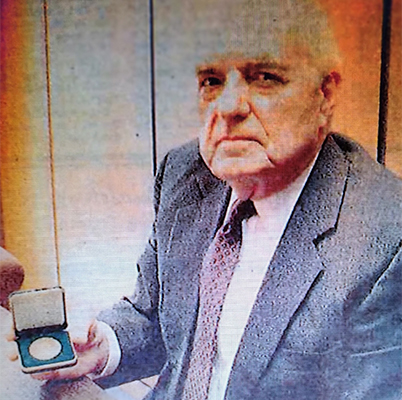
‘Dalton veteran in Hawaii today to remember Pearl’
Keith McClain was five minutes away from being relieved of duty when it all began.
“I was on guard duty at an old warehouse straight across from the (USS) Arizona,” he recalled. “I heard an explosion over on Ford Island. I thought it was practicing or something. Then I saw the planes flying over the trees, and I saw the insignia and knew what was going on.
“The Arizona was blown to bits. Those poor old boys aboard the Arizona didn’t stand a chance. Every time there was an explosion on the Arizona, it sent shrapnel into (our) building.”
Armed with only a .45 caliber pistol and a seven-shot clip of ammunition to share with the other two Marines on guard duty, McClain didn’t do any firing back.
“They left us down there. We called the sergeant of the guard to try to get rifles, but they never came,” McClain said. It would be two weeks before he would find his rifle.
With the warehouse of radio parts, paper towels and toilet paper he was guarding right in front of the Arizona, McClain saw plane after plane fly directly overhead to get to the strategic targets.
“People that say it didn’t scare them, there’s something wrong with them,” he admitted.
While his warehouse wasn’t a target during the bombing raid, there was still plenty for the young Marine to do.
“We pulled four or five sailors out of the water,” he said. “We tore into the paper towels and tried to wipe the oil off of them. They were in a state of shock. We’d ask them a question, and they would just stare straight ahead.”
It would be about 60 hours before McClain would get any rest. McClain hopes to see some of his old buddies at the reunion of survivors. He lost track of many of them following the attack.