
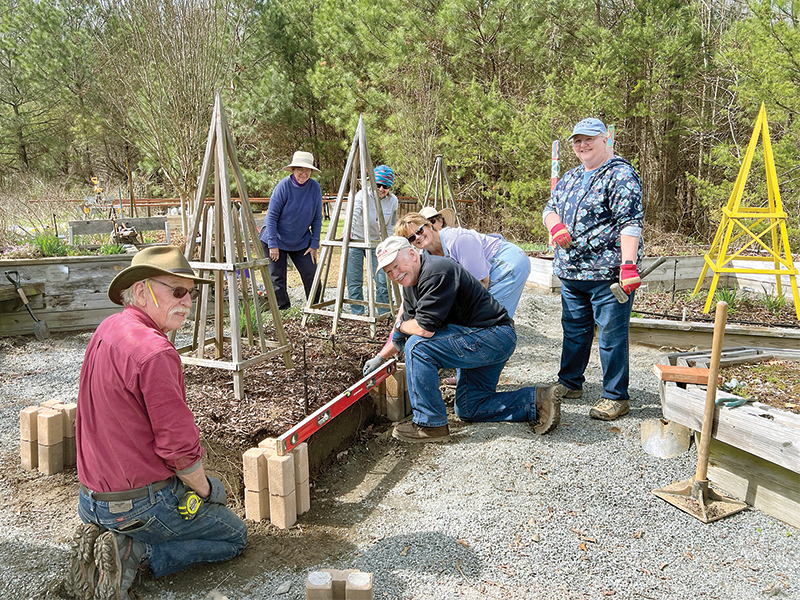
Gilmer County’s Master Gardner Extension Volunteers are about to mark a big chore off their summer checklist.
For the past few months, the team of local University of Georgia-approved green thumbs and their spouses have teamed up to renovate a popular educational garden at the Gilmer County Library.
So far, the volunteers have put more than 200 hours into the ongoing renovation project, which started in spring, said Master Gardener Julie Keller.
The Discover, Inspire, Grow garden, or DIG, was built on the library campus in 2014. Planting and maintenance of the site are funded by the Master Gardeners, who’ve also received donated supplies from such local retailers as Lowe’s, Walmart and 515 Lumber at various times.
“We thought the library would be a good place for this garden because it has a lot of traffic, and it’s a good place to have an educational project,” said Keller. “That’s the primary goal of the DIG. It’s not a showy garden. It’s there for people to see really good plants for our area.”
“We typically wake up the garden in spring and put it to bed in late fall. It’s been so well-received by the community and people who use the library,” said Master Gardener Debbie Rupp. “It’s not uncommon for staff or visitors to go sit out there and eat their lunch or bring their kids and show them the cool plants. It just makes us smile.”
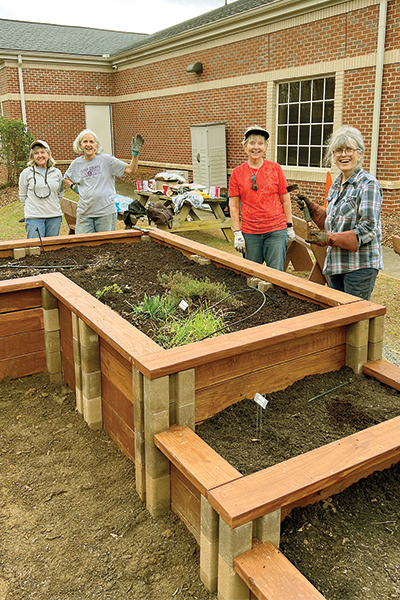
Over time, the garden’s raised wooden beds had deteriorated, so plans were made to install concrete blocks with slots that will allow for rotting boards to be easily removed and replaced. With installation of new treated lumber, most of the beds have been rebuilt from the ground up. Michael Harrison, whose wife, Lisa Harrison, is a Master Gardener, drew up plans for the new garden bed design, said Keller.
“The block and board beds have the advantage to where, if one board goes bad, you don’t have to tear up the whole thing. That’s a huge deal for us,” she added. “All the exteriors of the beds were replaced, and new we also added some new gravel this year.”
Each area in the eight-bed garden has a different educational or horticultural theme and purpose, Keller explained. One area features All-America Seed Selections, which are plant varieties that have been proven to grow particularly well in local conditions.
“We have a bed for perennials, one for herbs, one to attract pollinators, one that’s all native plants, a veggie bed and one that has plants that were common to Gilmer County in the early 19th century. We are supported in that one by the genealogical society,” she added.
Only one more garden bed, a round one in the center of the site that contains succulents, needs to be redone, said Rupp. Master Gardeners normally maintain the garden on Tuesday mornings, which gives them an opportunity to meet and offer gardening tips to library patrons.
“People will come by and ask us questions, so, in that respect, it’s unique because we get an opportunity to educate all ages,” said Rupp. “That’s the whole purpose behind it — a demonstration and education garden, but also something that brings joy to people.”
The DIG is also a certified monarch butterfly way station. That designation is given to places that maintain a habitat favorable to Monarch butterflies and butterflies in general, said Keller.
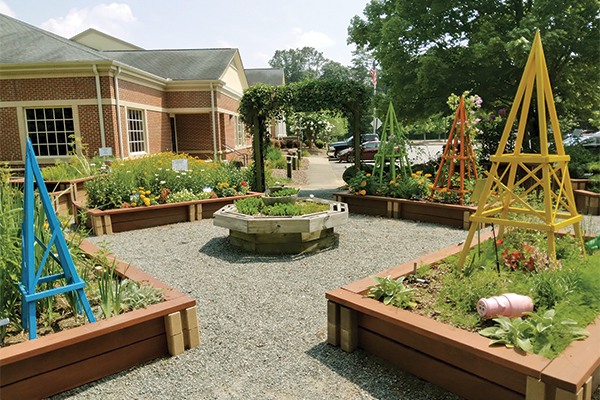
“We have (planted) a lot of the orange milkweed that you see along roads in Gilmer County quite a bit if it’s not mowed down, as well as a lot of other plants that are food sources for pollinators,” she added.
“If we didn’t have pollinators, the planet would die. Nobody would have any food,” said Rupp. “They have a huge importance, and we need to nurture them. The Monarch is just one example of how using pesticides and herbicides have taken a toll on certain pollinators.”
Pollinators will be the subject of the first event to be held in the educational garden since the renovation project began.
The Master Gardeners will host a program that coincides with the Great Southeast Pollinator Census Count Saturday, Aug. 19, from 10:30 a.m.-12:30 p.m.
The event will begin in the library’s community room, then move outside where attendees, particularly those second to sixth-grade age, can observe pollinators in the garden and record their findings. Data obtained from the annual “citizen science project” will be used by UGA in its pollinator conservation efforts and to gauge how pollinator populations are being affected by weather and other environmental factors.
“This will be fun for people of all ages. It’s really interesting how people tend to think of pollinators as just bees or butterflies, but there are many teeny, tiny pollinators you might not even think about,” said Keller. “When you sit and look, you’ll see a huge variety of small critters doing their work.”