
A local case, where a man allegedly used normal pictures to create AI-generated child pornography, highlights Georgia lawmakers’ efforts to pass companion bills during this year’s legislative session, working to protect people from this type of crime.
Both Senate Bill 9 and House Bill 171 aim to criminalize the distribution of AI-generated child pornography and enhance punishment for up to 15 years in prison.
Sen. John Albers, R-Roswell, and Rep. Brad Thomas, R-Holly Springs, have worked together on AI research in subcommittees and conducted joint meetings in the off-season, leading them to sponsor these bills.
If passed, the companion bills will also clarify existing state law to allow someone to be punished even if the sexually explicit material doesn’t depict a real child.
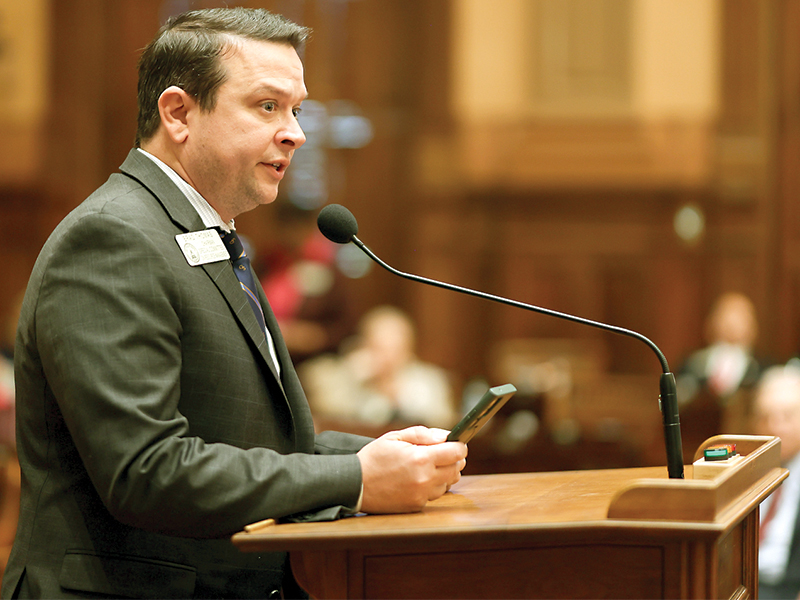
“[The bills would] treat that kind of crime the same as it would be an actual child abuse case if it were a real child,” Thomas said. “That keeps defendants from using any loopholes for creating this material.”
The proposed bills come as lawmakers across the country work to find solutions for the quickly developing technology and crimes surrounding “deepfakes,” which are AI-generated videos, photos or audio of real people that fabricate their actions.
“There’s so much [AI] out there that people don’t even know. I hope it’s not too late to get a handle on it,” Gilmer County Schools Superintendent Dr. Brian Ridley said on the legislative action. “I hope the House and the Senate can come up with something that really protects our citizens and our students because it’s out there. It’s not going away.”
The ramifications of “deepfakes” is evident with the arrest of Gilmer resident Ronald Richardson, which is believed to be the first AI-generated child pornography case in the state.
Richardson, a Pepsi vendor working on school campuses in the county, is currently behind bars and facing charges for dozens of counts of sexual exploitation of children.
After a student reported his inappropriate behavior in December, GCSO’s investigation found that Richardson had numerous photos of Clear Creek Middle and Gilmer High students, taken from social media sites and while on campus. He’s accused of using AI to make the girls appear nude and distributing the sexually explicit photos, according to investigators.
“This case proved that people with devious minds can take the most innocent, generic picture off any social media site … and alter it using AI to depict [them] naked,” Gilmer County Sheriff Stacy Nicholson said. “That’s unacceptable. We have to have some stiff penalties for that, so I’m glad [the legislature] is looking at that.”
Richardson was denied bail, and the criminal case was referred to the DeKalb County District Attorney’s Office, who’s serving as the prosecuting office.
The parents of eight of his alleged victims, ages ranging from 12 to 17 years old at the time of the incident, have filed a civil lawsuit against both Richardson and Pepsi Beverage Company for the emotional distress their accused actions cause.
It claims that Pepsi was aware of reports made in September 2024 of Richardson filming girls walking by him at Gilmer High School, which demanded the company to investigate and remove him. However, due to an alleged lack of drivers in the area, Pepsi reinstated him to the route, according to the lawsuit.
“We want justice for these girls and their families, hopefully to the extent of what can be repaired,” Caroline McGlamry, an attorney with Pope McGlamry law firm handling this case, said. “We want to undo as much of the damage as we can, contain it and also help provide them with the support for having to continue to deal with the ramifications of Mr. Richardson and Pepsi’s actions.”
The parents of the victims are demanding a trial by jury, compensatory and special damages for the fear, mental suffering, shame and humiliation stemming from the crime and punitive damages against both Richardson and Pepsi for their alleged negligence and misconduct.
The proposed bills in the state legislature would add sentence enhancement for child pornography cases like this, as well as when AI is used in fraudulent or stalking situations, since Thomas said the technology enhances the crime itself and makes it that much more believable.
The House and Senate were aligned in their conclusion that these companion bills need to become law, where Thomas added, “It’s definitely not a partisan issue, and I believe it really addresses a lot… HB 171 expands upon what we were already going for with HB 1361 in the previous session.”
Thomas said they worked to get HB 1361 passed to criminalize “deepfakes” during last year’s legislative session, but the Freedom Caucus raised concerns over infringement of free speech.
“I feel bad for those people in Gilmer County … if it hadn’t been for the Freedom Caucus, this would’ve already been a crime,” he said. “I don’t know why anybody would feel like creating child sexual abuse material is somehow a First Amendment right … It’s just so heinous of a crime, and we’re supposed to be protecting our kids.”
The AI-generated child pornography case in Gilmer is believed to have led the Freedom Caucus to re-evaluate their position they were so adamantly against last year, where they’ve now voted in favor of the house bill, he said.
HB 171 passed in the House and will go to the Senate judiciary next week, where Thomas believes it will move through. He said SB 9 is being modified to address “deepfakes” in elections as well, a concern brought up in the state legislature last year, and will then likely be passed by the House.