
Sanford’s dedication to drug/alcohol recovery, counseling remembered
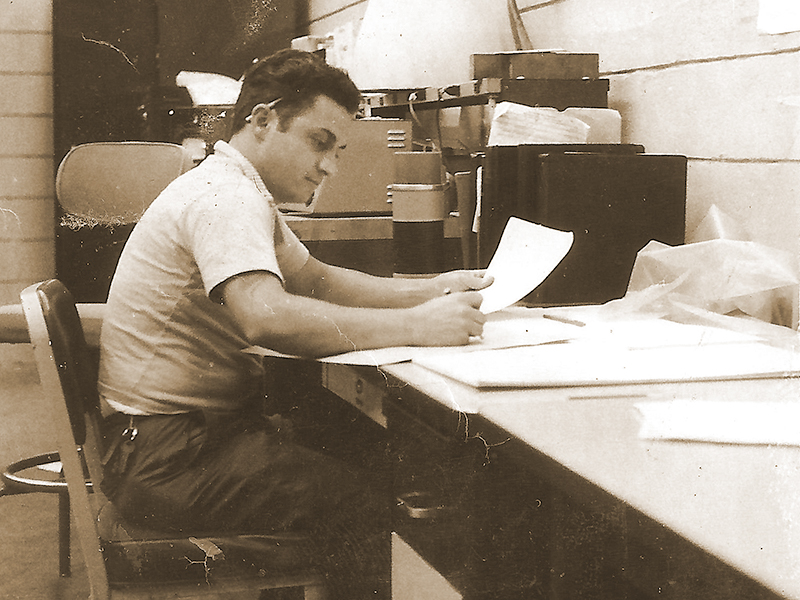
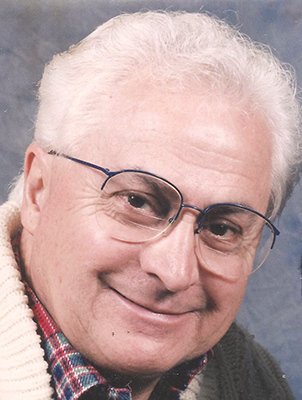
Roy Sanford
Before moving back to his hometown of Ellijay in the late 1980s, Roy Sanford had already engineered projects that involved NASA spacecraft and had another job in nuclear testing that required high security clearance.
According to his son, Sanford’s greatest accomplishment may have been working in different areas of addiction recovery and counseling for more than three decades. Sanford passed away Nov. 13 at the age of 89.
Jay Allen Sanford has a lot of stories to tell about his dad, with whom he reconnected after relocating to Gilmer County in the early 2000s.
“Growing up, I hardly knew him, really,” said Jay. “I didn’t get to know him well until I moved to Ellijay to help take care of my mom and decided to stay in case dad needed me.”
High security careers
Sanford was born in Ellijay, one of 11 children. He served three years in the Navy during the Korean War and, after returning home, lived in Boston, Mass., and Connecticut.
“He came back to Ellijay long enough to meet my mom here. They went up to Boston and got married,” said Jay. “That’s where she was from, and it was closer to where her family was. That would’ve been 1953-54.”
As head of radiography at the AVCO Corporation, Sanford led a team that developed heat shielding for NASA’s Apollo lunar spacecraft. Their design was used in several of the Apollo missions, Jay noted.
“He was working on the Apollo project through the first manned orbit and the first moon orbital flight,” he added. “AVCO was a subcontractor of NASA, and his team brainstormed and designed the heat shielding.”
The first Apollo mission never made it into orbit, and is remembered for the tragedy that occurred when a fire started in the module during a launch pad test at Cape Kennedy, killing all three astronauts aboard.
Jay said his dad was adamant that the heat shield was not to blame for the tragedy. The “honeycomb” heat shield and cell-by-cell radiography process Sanford’s team developed remained in use by the space program, and a variation of the design is still used in modern-day private orbital flights like those led by Amazon founder Jeff Bezos, he noted.
“It’s the basic honeycomb design that his team designed at AVCO as the most efficient way to affect re-entry without burning up a ship,” said Jay. “Dad always said the heat shield wasn’t what failed, it was the heat shielding cover, which I guess they rushed out there to get ahead of the Russians by a couple of weeks.”
Later, Sanford worked as a personnel director for United Nuclear Corporation (UNC) at its top-secret testing facility in Montville, Conn. Reactor fuel elements for the U.S. Navy Nuclear Propulsion Program had been fabricated there since the 1950s, and the plant remained in operation until 1990. Today, the Mohegan Sun Casino sits atop the former nuclear facility site.
Sanford never divulged much about his employment there due to the high security involved. He did tell Jay that was interviewed and cleared for his job by Admiral Hyman G. Rickover, who’s considered the father of America’s nuclear Navy.
“Dad continued (doing) that sort of pretty intensive work that required a lot of intelligence and security clearances. We had to get security clearances to even know where the parking lot was,” Jay remembered.
New purpose, lifelong commitment
After retiring, Sanford and his wife, Dorothea, returned to Ellijay in 1989.
Sanford had already started attending Alcoholics Anonymous (AA) meetings in Connecticut and hoped to continue here.
“The Gilmer group was in the early stages then, and he kind of jumped in with both feet,” said Jay. “He started sponsoring folks locally, giving speaker meetings and attending the AA conventions. He was also in the process of attaining various certifications in drug addiction counseling and things along those lines.”
It wasn’t until Jay was grown that he realized his dad had a drinking problem.
“He wasn’t like a mean drunk or anything like that. He was one of those drunks who basically came home and feel asleep in his chair every night,” he said. “I really didn’t realize he was an alcoholic, just that he was out of it most of the time.”
The problem eventually got bad enough that Sanford realized he was in trouble and needed something to help curb the addiction. Getting involved with AA is what worked, Jay noted.
“He didn’t get into much trouble. He wrecked a couple of cars, maybe, but not any legal trouble. Unbeknownst to me, he was having issues with his job and his marriage,” said Jay. “It wasn’t until he joined AA that he attended to those issues and was able to fix them.”
Here, Sanford became more involved with local AA groups as a Trusted Servant (or group officer) and put his certifications in addiction counseling to good use. His work as a freelance addiction consultant included making DUI evaluations and assessments for the Appalachian Drug Court, a program that seeks to treat and rehabilitate nonviolent drug-abusing defendants who meet certain criteria.
“I guess you’d say that was his third career. He did the drug court assessments and worked with the local courts and probation departments,” Jay said. “(He did) interviews with people to determine if they were suitable for various programs.”
Tod Page, who’s currently the program and work coordinator at Isaiah House, an Ellijay faith-based recovery center for men with drug and alcohol problems, said Sanford played a big role in him achieving sobriety.
“There’s a little article I saw that said, ‘Be the reason that somebody believes in sobriety.’ Roy was that reason for me,” said Page. “He brought me up and showed me how to act in sobriety. I’d been a gutter drunk, but he showed me how to live a day at a time. He told me something to do, and when I look back, it was the best thing somebody ever told me. It was the (importance) of being of service to others.”
Sanford had that effect on several men who’ve come through Isaiah House, noted Page. “Roy was definitely a big part of the men here trying to learn how to live another way of life. He showed a lot of them that way, including myself,” he said.
Jay, who does the “Overheard in Ellijay” comic strip for the Times-Courier, is glad his dad was able to help many with their addiction problems. His long involvement with AA and addiction recovery are noteworthy on their own, but the fact that most of that involvement occurred after retirement and into his 80s makes it even more admirable, Jay noted.
“That’s what a lot of people in town are going to remember him for. It gave him a purpose, and it was almost a full-time job for him. At almost 90 years old, he was still putting work into AA,” he said.
A full listing of local Alcoholics Anonymous meetings can be found each week in the Community Calendar section of the Times-Courier.