
Gilmer Chamber holding community food drive
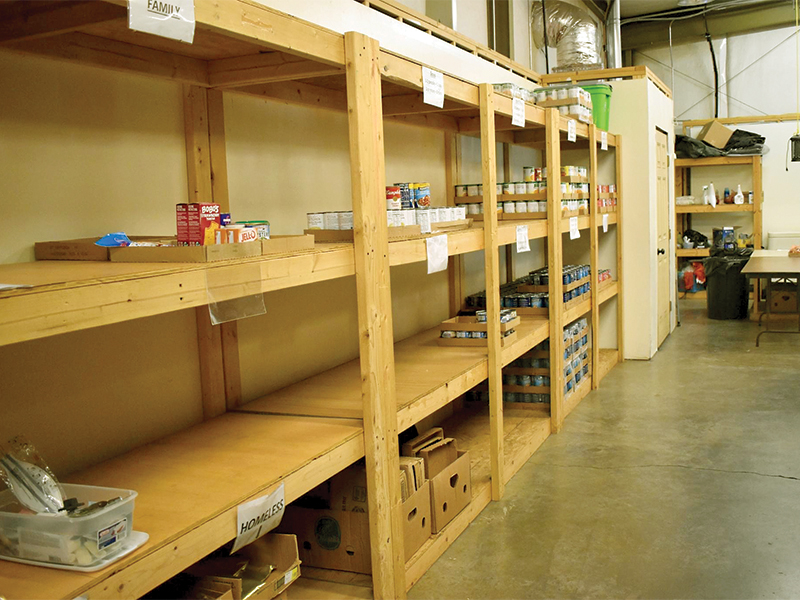
During much of the COVID-19 pandemic, the Gilmer Community Food Pantry had plenty of food to distribute, but served a much smaller number of clients than before the pandemic started.
Now, with inflationary prices and supply chain issues limiting the pantry’s purchasing power, the nonprofit is having trouble keeping up with increased demand from those needing food.
“We’ve had a tsunami of events, including rampant inflation and supply chain issues, that have made things we used to be able to get impossible to get now. We’re having trouble getting almost anything nowadays,” said volunteer and former food pantry director Allen Triebel. “The world is not the same as it was, and we haven’t gone back to pre-pandemic (conditions).”
Food banks that supply food to pantries like the one here are also having difficulty stocking certain food items, and what they do have available to buy is now priced at almost retail cost, Triebel noted.
“We can only buy from the Chattanooga and Atlanta Community Food Banks. One is 100 percent government, while one is semi-government,” he added. “We are now unable to buy hardly anything that we want to buy. First, it has to be available for us to buy it. You can only order in a three-day window, and, a lot of times, there’s nothing there (to order). If it does become available, we pay pretty close to retail for it.”
Meat is one example of a food staple that used to be fairly easy for the pantry to buy in bulk, but has since become much harder to purchase.
“We used to be able to buy hamburger and chicken for 19 cents a pound,” Triebel said. “We‘ve not been able to buy it from (our suppliers) at all since November of last year. When we last bought it, it was at $1 a pound then.”
Triebel said he recently ordered a shipment of shelf-stable food for the pantry’s Sack Pack program, which provides bagged food for kids in local schools to take home over the weekend. Two years ago, the shipment would’ve cost around $500. This year, it was $2,500, he said.
“During the pandemic, it was actually easier to get food than now. We had been able to get a lot of free things, but not anymore,” Triebel added. “There were a lot of free items — things like free potatoes or carrots, that we could get and distribute that same week — because the government was subsidizing food pantries. There were also grants we could get that were government subsidized, but that’s over now.”
Another factor is the lack of outlets the pantry has for its food purchases. A program done by Food Lion corporate previously supplied food pantries, including the one here, with bulk items, but it ended a few years back, Triebel said.
“At one time, we would probably buy about 50 percent of our stuff from them,” he added.
Previous annual community food drives that helped keep the pantry’s shelves stocked were coordinated by the postal service and the local Pepsi plant. Neither of those drives were held this year, Triebel noted.
With all this, more clients are now coming to the pantry needing food. Triebel said there’s been about a 30 percent increase in new clients this year.
“We had 221 families (in a recent week),” he said. “We haven’t had those numbers since Thanksgiving of last year, which is usually our busiest time of the year.”
Community food drive announced
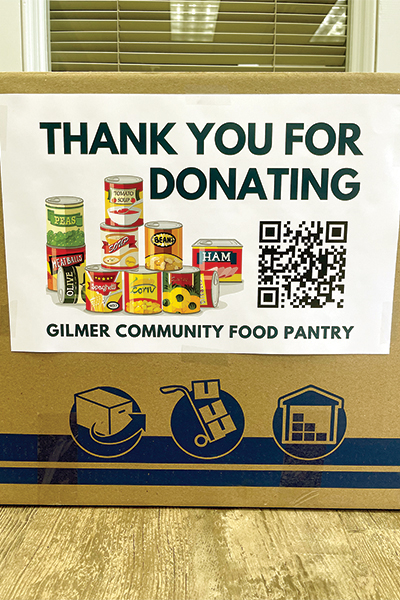
A community food drive led by the Gilmer Chamber started earlier this month. All donations of canned and boxed shelf-stable food will go to the local food pantry.
Donations can be made at the main chamber location at 696 First Avenue, East Ellijay, and the Downtown Ellijay Welcome Center at 10 Broad Street.
Chris Wang State Farm Insurance, 765 Maddox Drive, and Chateau Meichtry Family Vineyard and Winery, 1862 Orchard Lane, are also accepting food drive donations, noted Triebel.
The food pantry is particularly in need of the following items: any types of 15-ounce canned vegetables and fruit, canned chicken and tuna, 19-ounce plastic bottles of ketchup, mustard and mayo, plastic containers of grape and strawberry jelly, canned spaghetti sauce, canned chili, beef stew, baked beans and Beanie Weenies; chicken and beef Ramen noodles, canned tomato sauce, canned tomatoes and any canned soups.
“We ask that no items in glass containers be donated,” said Triebel.
The food pantry also accepts donations of shelf-stable food in bins outside its location at 5273 Highway 52 East.