
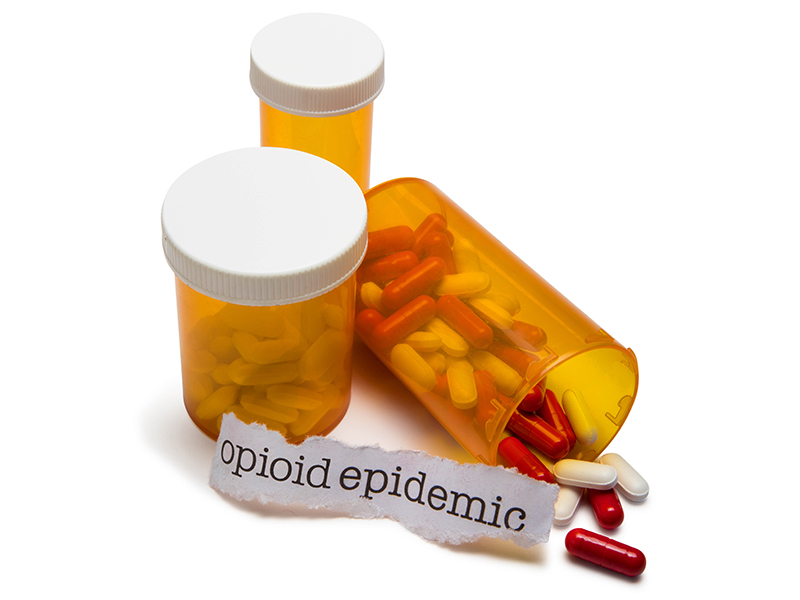
Gilmer is among three north Georgia counties that are target areas of a new opioid abuse reduction program led by the Morehouse College School of Medicine.
That program, Community Education and Training in Opioid Use Reduction (CETOUR), is funded by a federal grant from the Health Resources and Services Administration (HRSA). Its purpose is to develop strategies that can be used to reduce opioid misuse and abuse including overdose deaths.
Gilmer, Pickens and Fannin comprise the target area of CETOUR, said Somilez Francis, of the Morehouse School of Medicine, during a November teleconference held by Gilmer Family Connection.
Family Connection offices in Fannin and Gilmer are among the program’s collaborators, along with the North Georgia Health District, Georgia Mountains Health Services and Highland Rivers Health, an outpatient recovery and wellness center with offices in the three counties.
The overall mission of CETOUR is to offer enhanced community-centered resources for opioid addiction prevention, treatment and recovery, according to Morehouse.
The Appalachian Opioid Coalition, a group with representatives from the target counties, will provide a community-driven approach to reducing opioid use disorders, Francis noted. The coalition will include input from health care, substance abuse and mental health providers, social services, drug court, law enforcement and the faith-based community.
“We aim to identify strategies to reduce opioid use, implement those strategies and provide referrals to opioid services,” Francis said.
Opioids are a large class of drugs that includes prescription pain medication like Oxycontin, Hydrocodone, Codeine and Morphine, Francis said. The drugs are dangerous for several reasons, including lethal effects from even a low dosage and a variety of exposure risks including inhalation and needle sticks, she added.
Francis said the total number of opioid-related overdose deaths in Georgia increased by 245 percent from 2010-2017, and Georgia ranked 13th in the nation in drug overdose deaths for 2019.
“Rural communities are impacted the most due to significant workforce shortages and being less likely to have specialized health care, as well as gaps in the availability of substance abuse treatment services,” she added.
The three-county target area has significantly higher ER visit rates for opioid overdoses, said Francis during the Family Connection teleconference.
“All three counties have been designated by the Georgia Department of Public Health as having the highest vulnerability for opioid overdose, and all three are designated by the HRSA as health professional shortage areas,” she added.
Tiffany Watson, Gilmer Family Connection director, said Family Connection will play a significant role in connecting community leaders, law enforcement and collaborative partners for CETOUR training.
Alexandria Sanford, of Highland Rivers Health, said the program will include educating the community about NARCAN and how to administer it. NARCAN is the brand name for naloxone nasal spray, a prescription medicine that can be used in the event of an opioid overdose.
“(It) increases the time that paramedics and first responders can get to them and get them to a hospital to get help,” she said.
Watson said NARCAN training is being planned for January.
A drug takeback initiative has also been started locally, Sanford noted.
“There’s a (big) container at our facility that anyone can use. If you stop by there and say (you) need to drop off medication, they will take it and dissolve it for you,” she said.