
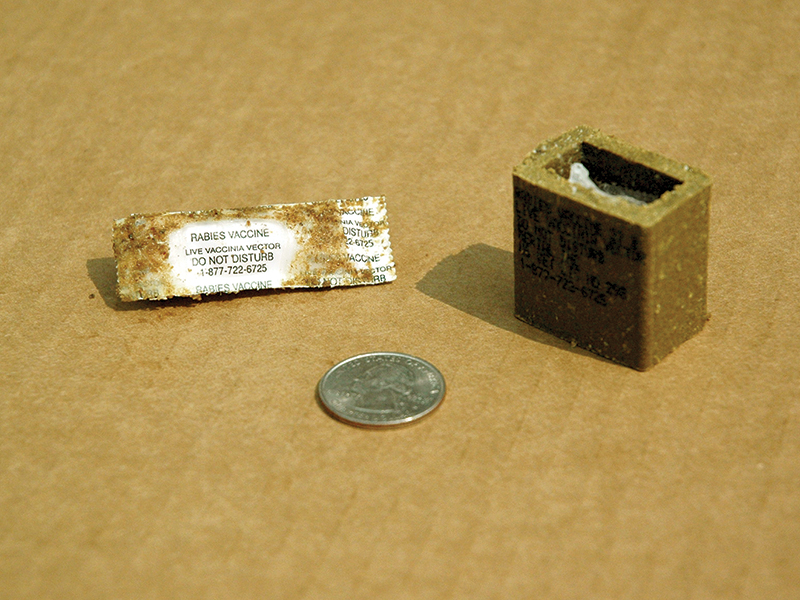
Critters in the north Georgia mountains may soon find a snack in their path that will protect them against rabies.
Gilmer is one of several north Georgia counties that was scheduled to receive an airdrop of oral rabies vaccine (ORV) packets for wildlife sometime between Oct. 3 and 10.
The airborne vaccine baiting program is a joint effort between the U.S. Department of Agriculture (USDA) Wildlife Service Division, the Animal and Plant Health Inspection Service and the Georgia Department of Health. It’s been conducted in Georgia since 2003 as part of a larger effort by the Wildlife Services’ National Rabies Management Program, which extends from Alabama to the Canadian border.
Areas of Gilmer County that will be covered this year have only been included in the program since 2021, said Jordona Kirby, a Wildlife Services biologist with the National Rabies Management Program.
“We expanded the zone at that time to create an extended barrier across the northern portion of the state. The program in Georgia is part of a larger effort this month (that also includes) portions of northeast and north central Alabama, east Tennessee, western North Carolina and southwest Virginia,” she added.
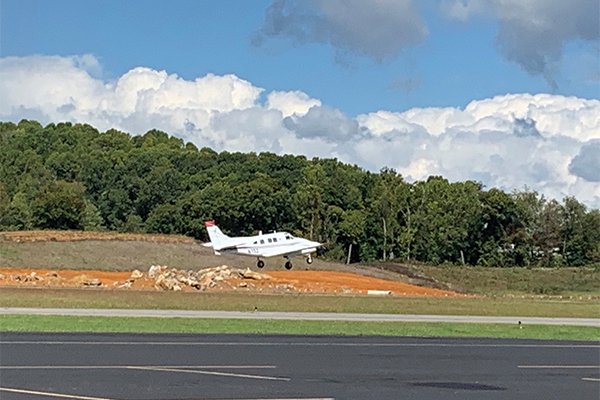
The large swath of Gilmer County to be covered includes much woodland, most of which lies inside the Chattahoochee National Forest and Wilderness areas. Other nearby counties scheduled to receive ORV airdrops include Fannin, Pickens, Murray, Towns, Union and Whitfield.
Kirby said the primary target of the mass vaccinating is the raccoon population, but other wildlife will also be vaccinated if they ingest the small, edible vaccine packet coated in fish oil.
“The smell makes it highly attractive for raccoons and other wildlife. We’re primarily targeting raccoons, but also coyotes, foxes and skunks,” Kirby said. “Wildlife make up more than 90 percent of rabies cases reported annually. Along with bats, raccoons are one of the top species in which we see rabies. Raccoons are our primary target also because of their potential interaction with domestic animals. They are generally considered kind of a charismatic animal, so a lot of people like them and don’t mind having them around. But the highest potential for rabies exposure is between raccoons and dogs or cats.”
Anyone who may find one of the rabies vaccine baits on a stroll or hike in the woods is advised to leave it alone, advises Wildlife Services. Dogs or cats could possibly ingest the vaccine, but the animals should be all right if they do, although they may experience an upset stomach, Kirby said.
If human contact with the bait occurs, the contact area should immediately be rinsed with warm water and soap, Wildlife Services recommends.
Almost 1 million of the rabies vaccine baits will be distributed this year. More than 500,000 of those will be in Georgia. The airdrops are being done by small, low-flying planes in rural counties like Gilmer, while helicopters are covering the more populated counties included in the program.
Rabies is caused by a virus that infects the central nervous system in mammals and, if exposure isn’t treated, it’s almost always fatal. Costs associated with detection, prevention and control of rabies cost more than $600 million annually in the U.S. alone, according to the Centers for Disease Control.
Cases of rabies exposure are generally low in Gilmer, but, so far, there have been no positive cases of rabies in the county this year, confirmed the local environmental health office.
“We hope to keep it that way by continuing to advise residents to be cautious of wild animals, including strays — especially those that exhibit strange behaviors — and to ensure their pets and livestock are up to date on their rabies vaccinations,” said Jennifer King, North Georgia Health District public information officer. “Vaccinating their animals against rabies is crucial to preventing the spread of the virus in the community.”
If local residents see or are exposed to potentially rabid animals, they should call the Gilmer County Environmental Health office at 706-635-6050.