
These exercises help keep the county safe
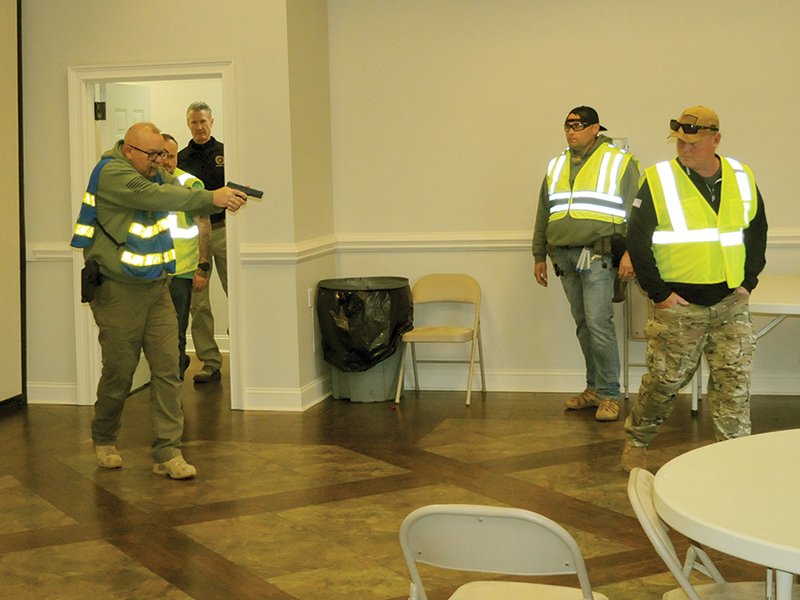
Gun first, Ellijay Police Department Assistant Chief Ray Grace swept into a gruesome scene at the Gilmer County Community Center.
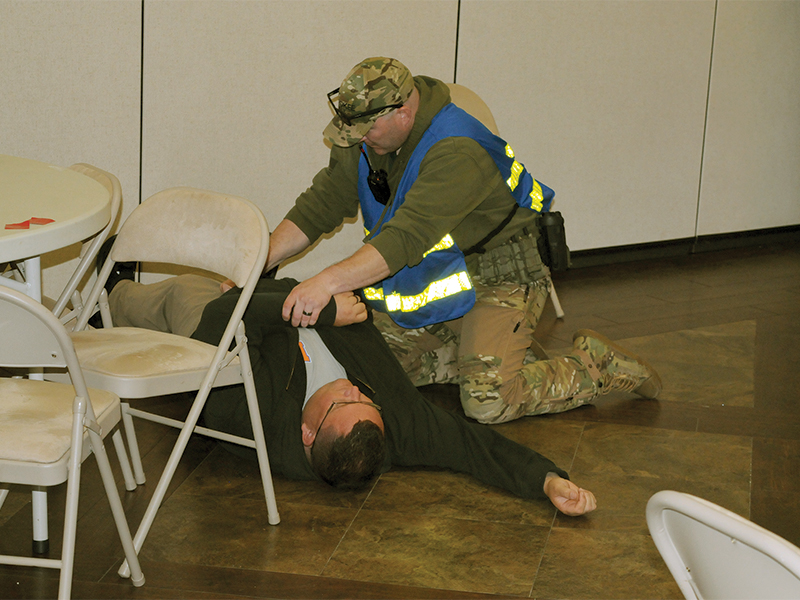
One man was shot in the back, bleeding out unconscious on the floor. Another, shot in the leg, was still able to ask for help. The shooter was gone.
This scenario wasn’t real; it was a routine active shooter training conducted Thursday, March 26 by Gilmer emergency services.
“We want to be ready when it happens,” Grace said.
Exercises like this one allow emergency personnel to learn tactics, work as a team and get their mistakes out of the way in a safe setting.
To host an exercise, EMS personnel set up the community center with a team of people acting out crisis roles.
Some people pretended to be wounded. Another pretended to be a former law enforcement officer present on the scene. Another pretended be the shooter.
Officers had to enter the building, secure the scene and help the “wounded.”
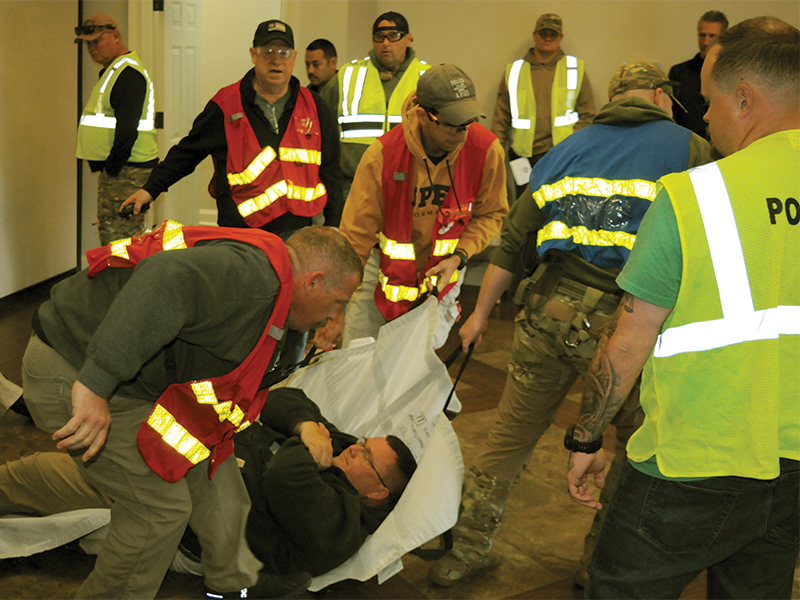
Then, emergency services came in to provide more medical care and get the “victims” to a hospital.
To respond to a mass casualty active shooter event, EMS services all need to work together.
At the training, the Ellijay Police Department, East Ellijay Police Department, Gilmer County Fire and EMS, Cherokee County Fire and EMS, Fannin County Fire and EMS, Murray County Fire and EMS, Pickens County Fire and EMS and the Fannin County Sheriff’s Office all participated.
“If we have an active shooter type situation, our employees work together to get in, secure the scene, then get fire personnel and medical personnel in to get the victims out as quickly as possible,” Grace said.
Law enforcement’s first responsibility is to secure the scene so victims can get help.
“The longer they stay here, the less likely they are to survive their injuries,” Grace said.
The active shooter training is paid for by federal grants through the Advanced Law Enforcement Rapid Response Training (ALERRT) program, a Texas State University organization.
“The only way these events are going to be mitigated is through the critical response of public safety,” said Adjunct Instructor Jeff Hall, the ALERRT representative on scene.