
Cold can be dangerous for those with nowhere to go
During weeks of icy temperatures, the vulnerable among us need help.
That’s why Gilmer County residents step up to help their neighbors.
“Some people live in areas where it might be tough for them to get off their street because of ice,” Gilmer Community Food Pantry (GCFP) Director Adam Pilkinton said of food pantry visitors.
Cold weather often causes vehicle issues, too.
“There are people whose cars don’t do as well in cold weather,” Pilkinton said. “Sometimes they get stuck at the pantry, and we do the best we can to get them back up and running.”
Many food pantry clients have old or used cars that do poorly in icy weather One time, Pilkinton met a food pantry client who drove a car from 1974.
For some people, cold temperatures can be a big emergency.
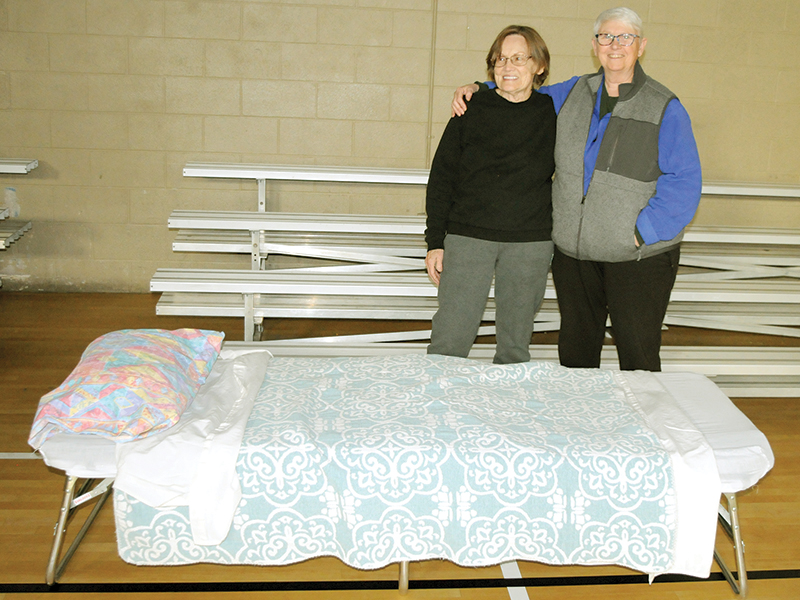
That’s why the Gilmer County Warming Center provides people in need a place to stay, co-chair Rachel Tarr said.
When the snowstorm hit Saturday, Jan. 31, there weren’t many more people than usual at the shelter.
“We had five regulars, and maybe one or two drop-ins,” she said.
Some people living in Gilmer lack enough shelter to stay warm in these temperatures. For them, the Gilmer County Warming Center is a necessity.
When the weather gets bad enough, volunteers make sure everyone at the warming center can have a safe place to stay even if they must remain during the day. The center also provides food.
“The volunteers who started on Friday night stayed throughout the weekend, Tarr said.
Sometimes, volunteers at the center buy visitors movie tickets so they can stay somewhere heated during the day.
If anyone needs a warm place to stay, the Gilmer County Warming Center is located at Gilmer County Civic Center, 1561 South Main Street in Ellijay, and opens at 5 p.m. Its entrance is located on the same side of the building as the pickleball courts.
The center is open any night when temperatures drop below freezing for most of the night,
Those in need of more information or who want to volunteer can call Tarr at 770-316-4934 or her co-chair Jackie Watson at 404-909-3275.
The state of Georgia also has a Low Income Home Energy Assistance Program (LIHEAP).
This federally funded program is administered through Georgia Community Action Agencies. It helps pay heating bills for low-income households.
Seniors and those who are medically homebound are eligible for assistance starting the first workday of December each year.
Others can apply for assistance through this program starting on the first workday of January.
Legal immigrants and citizens who earn at or below 60 percent of Georgia’s median income and who have full responsibility for their home’s primary heating source energy bills can apply.
This program has limited amounts of funding, distributed on a first-come, first-served basis.
Those in need can learn more at dfcs.georgia.gov/services/low-income-home-energy-assistance-program-liheap.