
Creatures are best left alone
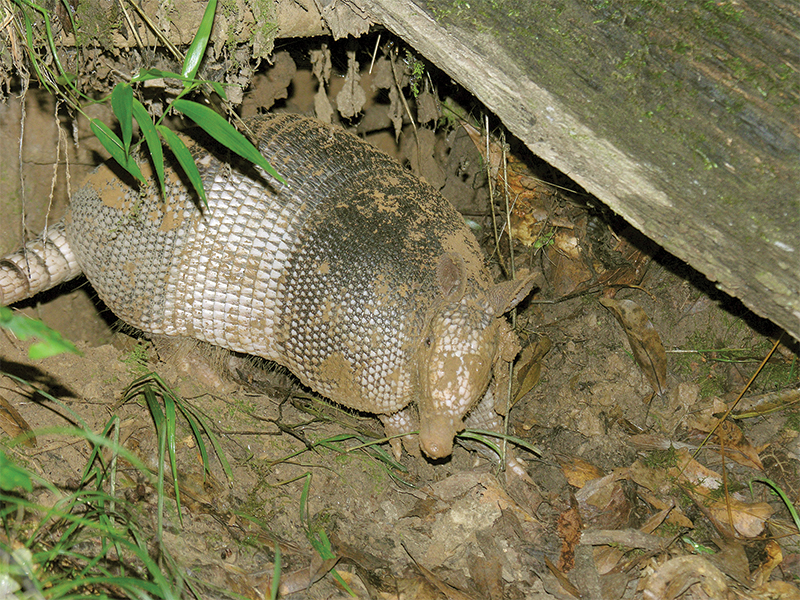
Armadillos are creatures of contradictions.
They are armored yet shy, small but widespread, and weak but difficult to eradicate.
Now that these animals live in Gilmer County, it’s likely that they’re here to stay, armadillo expert Dr. William Loughry said. He has spent 35 years studying armadillos.
“You’re not going to get rid of them forever, so find a way to make peace and get along,” he said.
People should stay away from the animals “at all costs” because they can carry leprosy.
“If you leave them alone, things should be OK,” he said.
Armadillos aren’t native to Georgia, but they’ve been moving north for many years. Today, they’re sometimes spotted even in southern Illinois, Loughry said.
The only thing so far that has seemed to limit armadillos is a lack of water.
“Without water, they don’t seem to be able to make it.,” he said.
The working theory right now is that armadillos have moved north because European colonization and agriculture have made northern habitats more comfortable for them, said Loughry.
Scientists can trace the northward movement of armadillos from two sources.
One source is Texas’s armadillo population. The other source is pet armadillos, released into Florida sometime in the 1920s, Loughry said.
“Sometime in the early 1970s or thereabouts, the Florida-derived animals and the Texas-derived animals merged into a single population, probably somewhere around eastern Alabama,” he said.
Even if armadillos aren’t native, they don’t cause that much trouble with native ecosystems, Loughry said.
Sometimes, they eat the eggs of ground-nesting birds. Other times, they “usurp” gopher tortoise burrows. They can also be frustrating when digging on human property.
“Given that their diet is mostly insects, there aren’t too many concerns there,” Loughry said.
Although armadillos are not native, it’s likely things will “work themselves out” without too much intervention.
Eventually something will figure out how to eat them, the weather will get them or something else will happen that keeps their population controlled, he said.
But people’s attitudes toward armadillos can be dramatically different.
“Florida considers them an invasive species,” Loughry said. “In Texas, they’re the state mammal. So different people have different views.”