
Gilmer Fire and Rescue prepares for next class in new recruit training academy
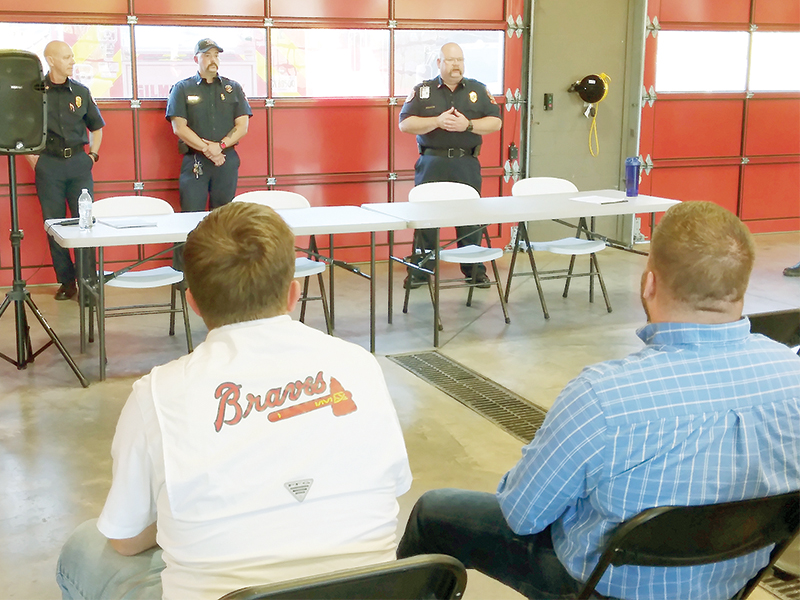
Gilmer County Fire and Rescue is looking to hire up to 16 new firefighter/EMTs with the next leg of its paid new recruit training academy. At two open houses last week, prospective applicants got a feel for what will be expected of them if they’re accepted into the program.
“This is an amazing opportunity, to be paid to go to school. Your job 40 hours a week is to go to school,” Fire Chief Daniel Kauffman told open house attendees last Tuesday.
“It’s going to be very challenging and we have high expectations,” added Battalion Chief Jason Bryant.
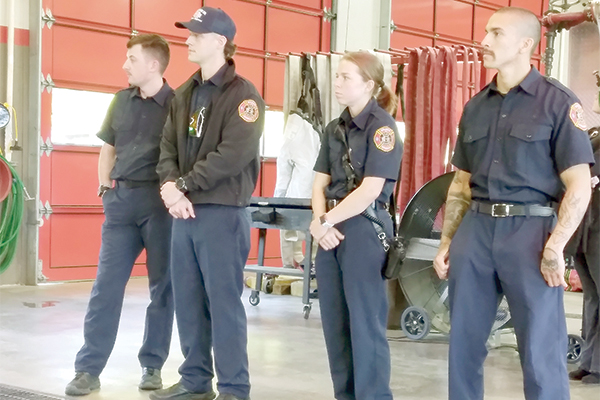
The department’s first new recruit academy, which started last August, is about to wrap. The last requirements for the eight remaining recruits will be completing in-house psychomotor skills assessments and taking their off-site national registry exams for the EMT portion of the class, Kauffman noted. The Class 22-1 recruits have already gained their firefighter certifications.
“(After they graduate), they’ll be transitioning over to 24-hour shifts,” said Kauffman. “We were right here in April of last year, not sure of how many people were going to show up because we haven’t ever had this type of program up here. We had such great results, and it exceeded our expectations. The quality of the eight recruits who are finishing is great. We’ve trained them in the way that we operate. They don’t bring in any bad habits. They’re familiar with the department. and there’s no learning curve, so they will transition right in.”
EMS Chief Terence Evans said a paid training program like this one is not offered by many fire departments in north Georgia.
“It really is kind of putting us ahead of everybody. You’re not having to go to technical school and work a job while you go to school,” said Evans at the open house.
Deputy Fire Chief Mark Chastain said he started as a volunteer firefighter in 1998, later landing at a career department in 2002. Then, it was standard to start as a volunteer and obtain firefighter certification that way, then put yourself through EMT school, he noted.
“Fortunately, for you guys, things have changed over the years. We are offering this training in house and paying people to go through (it). That’s a huge transition from when I started 25 years ago,” Chastain said.
The chiefs gave a rundown of the program’s physical demands, including a physical skills assessment and regular cardio exercise drills in addition to carrying and operating heavy equipment. They were also upfront about the countless types of emergency situations department employees encounter. That could include picking up teeth and other body parts from the pavement, Chastain noted.
“You’re going to see, smell and touch things that no human being should ever have to experience in their life, but nobody ever picked up the phone and called 911 because they were having a great day. They called 911 because they’re having the absolute worst minute of their life. They expect you to fix that,” Chastain said. “We do the absolute best we can with what we have to work with. Sometimes we don’t have a lot to work with, and just have to give it our best because there are other things at play. We can give them the absolute best care and the absolute best opportunity they have for survival, but there’s some things we can’t fix.”
“A lot of times, a (person) will think ‘OK, I’m pretty tough, but then they get out on a call and realize ‘this isn’t for me.’ If you go to the doctor, and the sight of blood makes you want to pass out, you might want to think about it a little bit,” said Evans.
About the physical demands of the training, Rylan Cochran, one of the recruits in the program’s first class, advised potential recruits to “start drinking water now. You probably should have started drinking water last week.”
“On the fire side, it will test you physically. On the EMS side, it will test you mentally,” said Chastain. “You will reach levels you never knew your body could do, and you will reach academic levels you never thought you would be able to in this line of work.”
Academy graduates will earn numerous state and national certifications including Firefighter 1 and 2, Hazmat Operations, Hazmat Awareness, EMT Basic and EMT Advanced.
“(That’s) a lot more than a lot of people in career departments have five to six years into their career,” said Bryant.
Chastain said Gilmer Fire and Rescue typically runs between 5,000 and 6,000 fire and EMS calls a year.
“When I first came here, we had two ambulances and three guys on a fire truck. Now we have four manned stations and two people on each engine and two people on each med unit,” he added.
Kauffman said those accepted into the program must also sign a legal document with a two-year commitment to Gilmer Fire that’s expected from those who complete the paid training.
“You’ll have to sign a contract the first day of class. If you do not make the two years or leave before then, there is a requirement to pay it back,” he said.
With the fire department looking to hire up to 16 new employees, it’s hoped that the next round of academy graduates will bring the department up to full staff. The program is expected to start in June and end next spring.
“Out of the (academy graduates), I’m looking at my officers for this fire department five to 10 years down the road. If you make it through this process, you are future officers. That’s what we’re here to train you for. We’re getting ready for tomorrow,” said Chastain.
The firefighter recruit application will remain up on the Gilmer County website until May 12, noted Kauffman. Applications will not be considered after the May 12 cutoff.
“Physical agility testing begins the 13th,” Kauffman said.