
The grieving can find peace in the rhythm of fishing
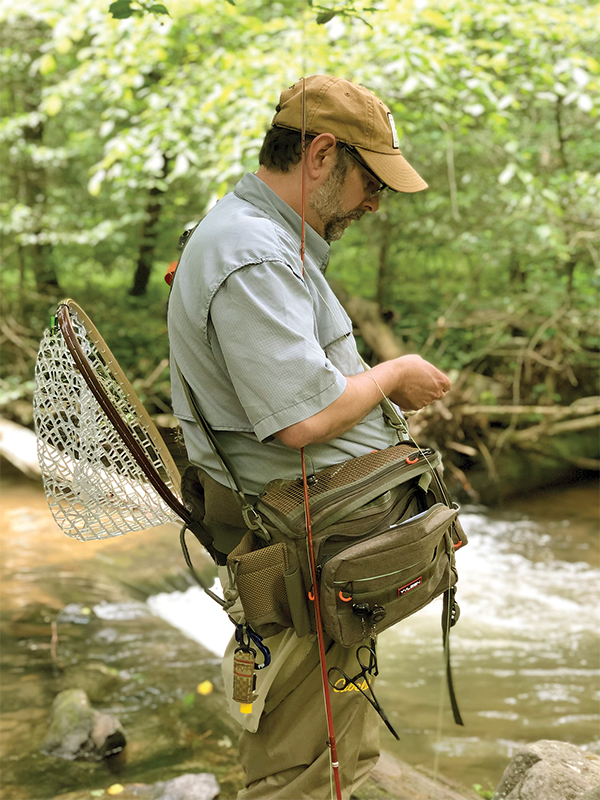
Few people understand grief like a hospice chaplain.
“I’ve experienced about 5,000 deaths,” former hospice chaplain Rick Gillert said. “And I’ve helped those families and patients through the grieving process.”
Today, he directs Angling in Grief, a group dedicated to helping people process grief through fly fishing.
“I had this idea in the back of my head of combining professional grief care with fly fishing,” he said.
Gillert started the group in November, 2024. He is both a certified grief counselor and as a Christian counselor.
During his time as a hospice chaplain, he would often seek peace from the difficulty of the work by going fishing the next day.
“I can almost imagine my anxieties, my worries as leaves falling on the water and washing away,” Gillert said.
In his program, clients join a group and go through a 10-week course on fly fishing, processing grief and coping skills.
“These are people who grieve mostly through doing things that they enjoy or solving problems,” he said.
Studies have shown that they rhythmic nature of fly fishing helps people get into a “flow,” focusing completely on the task at hand.
The joy of this “flow” can give people the energy they need to process grief.
“While they’re focusing on the fly fishing, part of the brain can also be working on understanding and reevaluating the grief process,” Gillert said.
Counseling is less about telling people what to feel and more about “helping them through the process,” he said.
Often, our culture has an overly simple understanding of grief, Gillert said.
Many people say grief has five distinct stages people pass through in an orderly process.
But the reality is more complex.
“A lot of people will experience it more like a pinball machine,” he said. “They’re being bounced around through all these feelings, and you have moments of peace and comfort.”
Every person is different, so every loss is different.
It’s often more complex than just missing someone, Gillert said.
For instance, losing someone means losing the whole relationship, good and bad alike. Sometimes in the aftermath, loss and relief can mingle, he said.
“This can be very challenging to people who don’t know to expect this, or who don’t know that grief can be challenging in that way,” he said.
No matter what, processing grief takes time.
And fly-fishing offers lots of it.
On a typical fishing expedition, someone can go out into nature and engage in a peaceful activity while their mind wanders.
The mix of peace and professional advice makes the program unique, Gillert said.
“In our case, we actually suggest strategies, and in some cases individualize things,” he said.
Angling in Grief offers both group and individual counseling.
To learn more, those interested can go to anglingingrief.org.