

Students in agriculture classes at Gilmer High School (GHS) not only helped grow and pick a crop of apples for a recent class project, they were also able to use the county cannery to process and package the harvested fruit.
The project gave 9th-12th grade ag. and floriculture students a unique, hands-on look at how Gilmer County’s banner fruit is grown and used.
“They have not had this type of experience before,” said Emily Farist, GHS agriculture teacher. “Some of them had picked apples at a u-pick before, but they’d never actually got to do the hands-on stuff like going to the cannery or making apple butter.”
Apple butter and apple sauce were among the treats made using Rome Beauty and Gala apples picked in the first harvest from the orchard near the Clear Creek Agriculture Education Center. The facility, on the campus of Clear Creek Middle School, is used by both middle and high school agriculture classes.
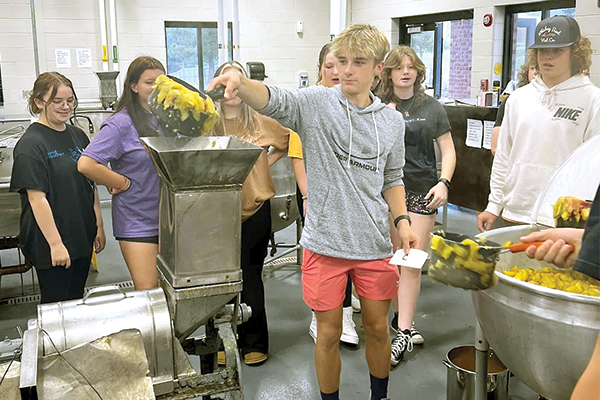
“The process of making apple butter is something that was new to me. Even though I live in Ellijay, I’ve never been apple picking before, which was a lot of fun,” said student Katelyn Campbell. “I (also) enjoyed the process of getting to make apple butter in class. I can’t wait to harvest more apples.”
“My favorite part of making apple butter was getting to taste it. After we harvested and sliced the apples, it was really cool to see the end result of the entire class’ efforts,” said student Gracie Gaitanoglou.
This particular class project has been long in the making for the agriculture education staff. The 90 apple trees, which produce seven different varieties, were planted on the school campus in winter 2021.
Mike Bushey, GHS Young Farmer Teacher, said establishment of the orchard was funded by a federal grant during the COVID pandemic.
“That first year back from COVID, we weren’t able to travel to contests like we normally do. We were able to divert some of that money we would normally use to go to FFA competitions into the orchard,” he added.
Several local apple growers have been kind enough to share their knowledge and some tricks of the trade along the way, Bushey noted.
“The trees blossomed (before this year), but we took all the blooms off that first and second year per advice from the local orchard growers who know a lot more about it. They’ve been a great resource in helping us get rolling,” said Bushey. “This was actually the first year that we let some fruit get on the trees. We thinned them, and (picked) probably a third to a half of a normal crop that would come off those trees, which are all semi-dwarf. We were pleased with what we got.”
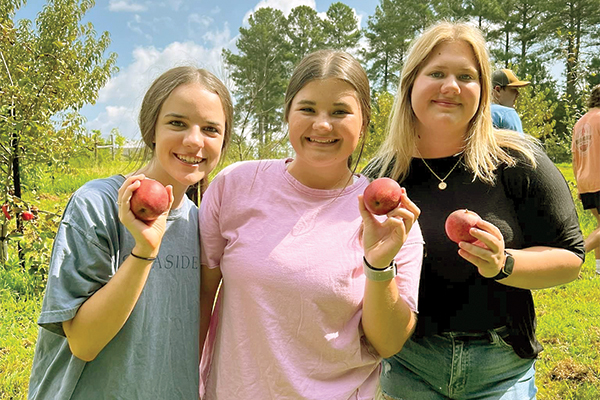
Now that the trees are mature enough to bear fruit, many more groups of ag students will learn firsthand about how apples and other fruit grows from bloom to harvest.
“We also have 10 cherry, 10 nectarine and 10 peach trees, as well as some nursery landscape plants in our orchard. We can take the kids out there and (show them how) to identify the different types of plants,” said Farist. “The care for the orchard is all in the hands of the students, while advisors oversee the hard work the students are doing. They (are also) able to learn the proper techniques of spraying, pruning and fertilizing.”
“A lot of the things we teach in class, the kids have been able to see in real life out in this orchard,” added Bushey. “Like a lot of the orchards, we lost most of our peaches and nectarines (this year) with that late frost we got. The good thing is that the kids have been able to have a better appreciation of how hard it is to grow fruit. You’re totally at the mercy of Mother Nature.”
Farist, a GHS graduate and former ag student, said the local agriculture education program was great when she was enrolled, but it’s continued to expand with more opportunities and activities added since then. The fulfillment of this project is an example of that growth.
“This was a fun, hands-on activity, which I know every school doesn’t have the opportunity to do. One thing that makes our program stand out is that we can have these experiences for the kids,” Farist said. “I know they enjoyed it because they keep asking, ‘When are we going back to the cannery?”