
New program gives leaders pre-promotion training
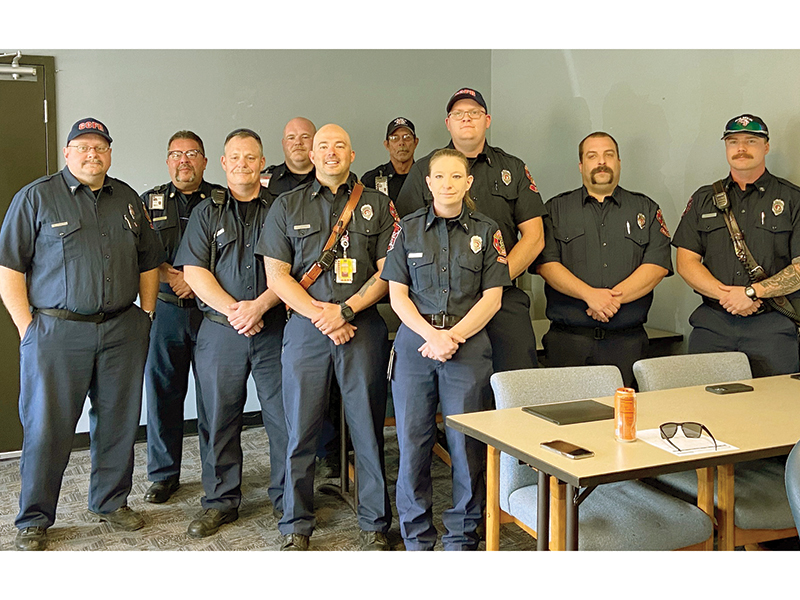
Gilmer County Fire and Rescue is using a newly-designed training program to prepare firefighters for leadership positions before actually promoting them.
Eleven Gilmer firefighters were promoted to the rank of lieutenant last week after graduating from the fire department’s new Company Officer Development Academy (CODA).
The CODA grads and new lieutenants are: Robert Padgett, Mark Glover, Christopher Harrell, Geoffrey Daves, Terrance Evans, Michael Schminky, Tiffany Czirok, Michael Dockery, William Sergent, Jessica Perkins and Colton Prather.
“We identified the firefighters who possess the qualities we look for in our future leaders. Setting up those future lieutenants to be successful and prepared for the position was our ultimate goal,” said Fire Chief Daniel Kauffman.
The 15-week program provided each participant 240 total hours of instructional training, Kauffman noted.
“Traditionally, departments will put out study material and test their candidates for the position of lieutenant. They (may) promote them without properly training them for the position,” he added. “We put this (program) together for the purpose of developing our company officers instead of just giving them material to study and testing them.”
In the development stages since last fall, CODA classes began in February and wrapped May 31. Instruction and training were done in-house by senior members of the fire department staff.
“This was a from-the-ground-up project. We had to develop classes, curriculum and a calendar. We had nothing to copy or emulate, so it was truly a team effort to make (it) happen,” Kauffman said.
Participants trained two days a week while upholding the regular responsibilities of full-time first responders. “The whole process was kind of a grind. It wasn’t easy,” Kauffman said.
CODA is actually one of two new training programs started by Gilmer Fire this year. A new non-certified recruit training program, which starts in August, will offer paid on-the-job training to applicants.
“We’d thought about doing the ‘noncert’ program, in January, but we needed the leadership in place prior to it (starting). We did CODA first to develop our leaders and have them entrenched and in place,” Kauffman said. “When the noncert program (participants) graduate in the summer of 2023, they will have these leaders and mentors in place to help them be successful.”
Kauffman said the CODA curriculum covered such topics as leadership development, discipline, social media responsibility, customer service, report writing, vehicle extrication, sizing up a scene and responsibilities of the right front seat, which is where a lieutenant sits during emergency response.
“We also had live scenarios and went over how Gilmer County is funded and how the fire department is funded, what our operating costs are and what our capital expenses are,” he added.
All 11 in the class were already firefighters and EMTs or paramedics. In addition to the promotion in rank, they also received Georgia Fire Instructor 1 and Fire Officer 1 certifications, Kauffman noted.
“They are going to be in charge of other firefighters and EMS personnel. If it’s a house fire and they get there first, they’re going to be the ones giving the scene size-up, establishing command and giving assignments,” he added. “By having these lieutenants in place who’ve been trained and educated to make these decisions, it should produce better results.”
Members of the graduating class all “gelled as a group,” the fire chief noticed.
“Instead of it being a cut-throat competitive process, if somebody was down that day, they would pick them back up and encourage them to keep going. That was everybody in the group,” Kauffman said,.
In using CODA and the upcoming noncert training program, the fire department hopes to retain more long-term employees. “That’s our goal, recruitment and retention of our employees,” Kauffman said.
Gilmer Fire plans to put another class through the CODA program, but those dates haven’t been determined yet.
“We need to promote a few more people to get officers in every station on every shift. We probably have three-fourths of what we need,” said Kauffman. “We’ve also had other departments reach out about our program who’ve caught wind of it. We’re more than willing to share information with the other departments who may be interested in doing something like it.”