
Operations keep food preservation tradition alive
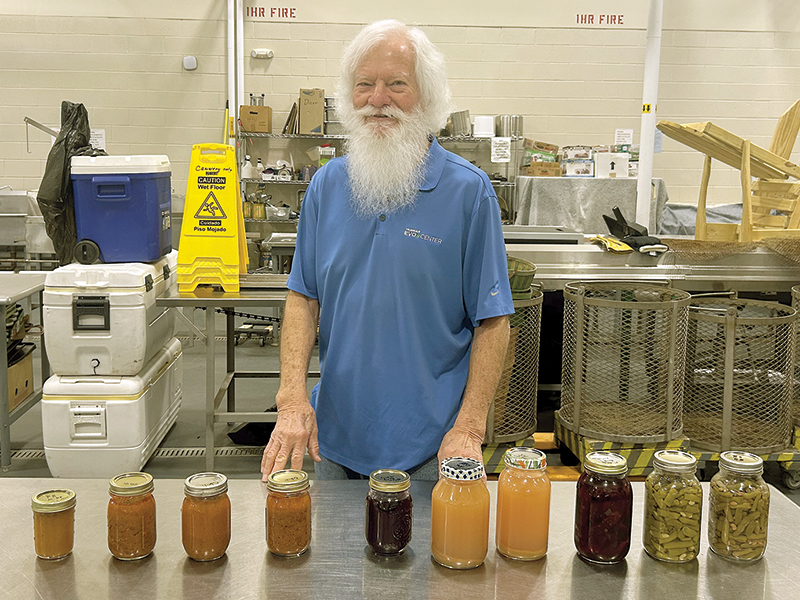
Gilmer County Cannery has proven it can can.
With a mix of heavy rains and dry weather in summer, it wasn’t the best year for agriculture.
“We had an extremely wet May and June,” Gilmer County Schools agriculture teacher Michael Bushey said. “And then the switch flipped in July to bring pretty much no rain whatsoever.”
The cannery produced 10,888 units of canned food.
Eighty-nine percent of the food processed by the cannery was homegrown, Bushey said.
In all, there were 1,035 visits to the cannery, including 298 students.
The cannery provides a facility where anyone interested may can food for home use.
It opens in July and closes in December.
To can food, users must pay $2 for a tin can, $.50 for a glass pint jar, and $.60 for a glass quart jar. Those bringing glass jars must provide their own jars, rings and seals.
During its season, the cannery is open from 8 a.m. to 2 p.m. Tuesdays and Thursdays. All produce must be brought to the cannery by 10:30 a.m. It’s located at 385 Clear Creek School Road.
For gardeners and farmers growing cannable produce, Gilmer’s many different mountain valleys provide many kids of environments. Things can be very different just a few miles away.
“Something can grow really well in one part of the county and not in another,” he said.
While summer wasn’t the best weather for growing fruits and vegetables, fall brought good apple and peach crops.
“We had a really good fall, though,” he said.
The season this year provided its own adventures.
One teacher, Rachel Walters, took several of her classes to the cannery to make apple sauce.
“They got to see what they think of the flavor,” Bushey said.
Another person brought in 100 quarts of green beans at once.
The cannery is a valuable resource for anyone interested in preserving food. But it’s also so much more. The instruction and resources of the cannery help keep the art of food preservation alive.
“It used to be passed down from generation to generation,” Bushey said.
Knowing how food went from the farm to table gives you security and certainty.
“The more folks we get in here, the better appreciation they get for agriculture,” Bushey said. “And they’ll be taking something home to share with their families.”