
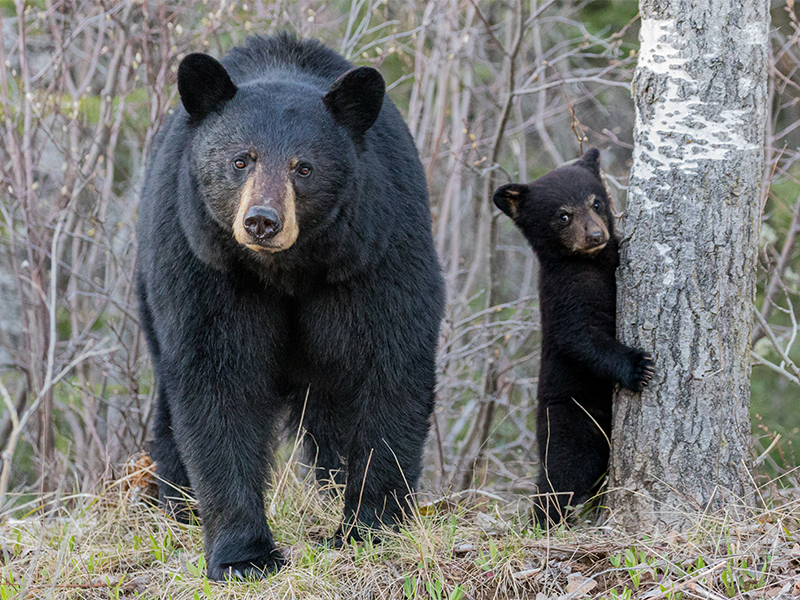
A mother bear with cubs is one of the most protective animals in nature.
Recent reports suggest one with two cubs has moved on from the hiking shelter on Springer Mountain.
“Obviously, we’ll be monitoring the situation,” Georgia State Bear Biologist Adam Hammond said. “Everything looks to be going so far, so good.”
On June 11, the USDA Forest Service temporarily closed the Springer Mountain Shelter.
The shelter had to be closed because the bear had gotten too accustomed to eating food left by people, Hammond said.
When bears get used to eating human food, they become far more likely to have a dangerous encounter with people, he said.
“Any time we’ve had issues in the past that occurred on the trail, there’s a lot of users in these shelters,” he said.
Leaving food or garbage out that attracts bears effectively teaches them that they should get near people to get food.
“Bears are always going to do what’s easy,” he said. “People need to take responsibility and do what they can to prevent access to human-provided food.”
But this same opportunism can also help bears to move on. If one food source is gone, they will quickly move to another.
If a bear hasn’t developed a strong preference for food or trash left by people, shutting down human activity in an area is one way to get it to change its habits, Hammond said.
So far, this plan seems to be working.
“Hopefully, the bear goes on and finds natural food and just leaves,” he said.
If the bear continues to approach people, more drastic measures may have to be taken.
Every human excursion into the woods shapes the patterns bears live by, Benton MaKaye Trail Association Director of Membership Steve Hayden said.
“They’d rather be left alone, but if you’ve got food next to you, they’re going to push you out of the way in order to get the food.”
For hikers, it’s important to “leave no trace.”
This means leaving no food behind, protecting food from bears, burying human waste and bringing hiking food with smells that don’t attract bears.
On a short hike, people shouldn’t leave food behind and should eat in ways that don’t leave bits of food on the ground, Hayden said.
On a long hike, it’s best to bring dehydrated or freeze-dried food in a closed container, he said.
Waste should be buried at least 6 inches deep.
Hikers should wash dirty dishes away from their camping or hiking area.
On all hikes, people should carry out any garbage they create or bring in, he said.
“Trash that is innocently left on the ground basically will not decompose in your lifetime, Hayden said.
These rules apply on both days-long treks and on short excursions, he said.
“It’s not a bear problem. It’s a people problem,” he said.
By following these rules, hikers can keep themselves, others and bears safe, he said.