
They will find new homes outside the county
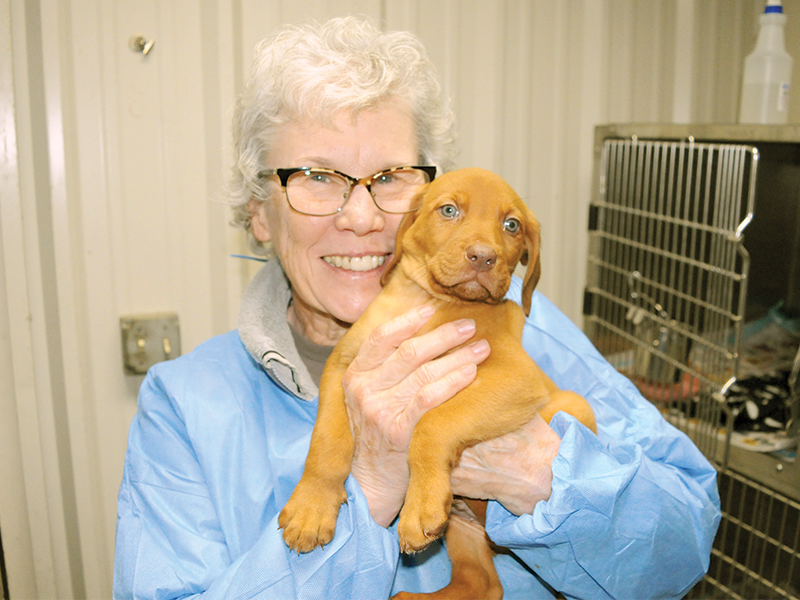
Seventy-nine cats and 80 dogs may seem like a lot of animals to transport, but for the Gilmer County Animal Shelter (GCAS) it’s a crucial part of the job.
“It’s bittersweet,” GCAS Director Kelly Pickering said. “We get attached to them. And then, all of a sudden, they’re leaving for transport.”
In the animal control field, many rural areas of Georgia have too many animals and not enough people wanting to get new ones.
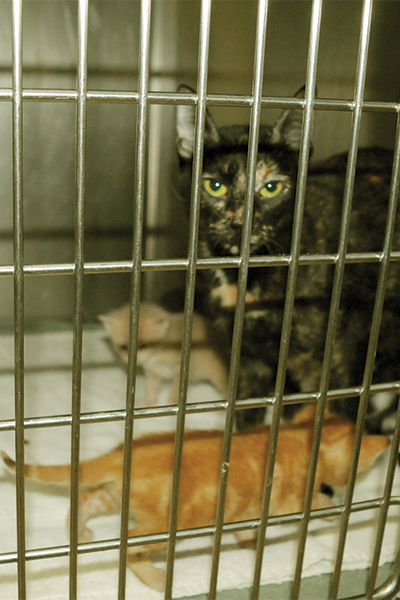
Other areas have many people who want pets, but not enough animals.
The solution is simple, albeit challenging to execute. GCAS must transfer the animals to a county with fewer animals.
GCAS is a no-kill shelter, which makes transport, fostering or adoption the only way animals leave.
“I hear stories about transport drivers in places like that driving up to find lines of people waiting to adopt animals,” Pickering said.
Over a year, GCAS usually receives more animals than it can house. And with the county growing each year, she is “very concerned” that the shelter will be overwhelmed by future animal population.
“In any rural county, it’s going to be worse. And in any county that does not have strict spay and neuter laws,” she said.
Part of the excess number of animals can get a place to stay from the many families that foster for the shelter. Others can get a home with local rescues.
But that still leaves many more that need relocation. Most of the animals relocated go to shelters or rescues in Georgia.
“There are some in our immediate vicinity like Homeward Bound and Angels Among us,” Pickering said.
Others are farther away. Just a few include the TLC Humane Society of Lumpkin County, Tennessee group New Leash on Life, The Humane Society of South Coastal Georgia and the Humane Society of Forsyth County.
In this work, GCAS has a leg up, Pickering said.
“People have gotten really excited to get animals from us, because they know they’re getting healthy animals that have been socialized,” she said.
The shelter has invested great effort in warming its animals up to people. It has also put great effort into developing relationships with other shelters.
“We are very transparent,” Pickering said.
This commitment to openness and animal rehabilitation has ensured that GCAS can handle Gilmer’s constant influx of animals.
Often, GCAS staff must bring the animals to different shelters in groups of three or four at a time. Without their efforts, the shelter wouldn’t be able to successfully help the hundreds of animals that pass through its doors each year.
In the long term, the solution for the flood of cats and dogs entering the shelter is for local owners to spay and neuter their pets.
“There’s a never-ending supply of animals in Gilmer County that need help,” Pickering said.