
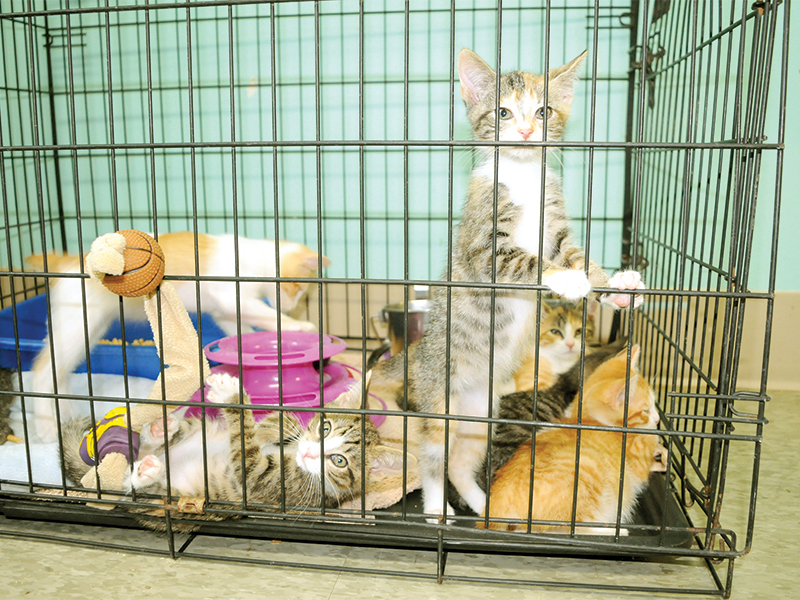
Gilmer County Animal Shelter (GCAS) director Kelly Pickering had to take in 33 Chihuahua-wiener mix dogs after their Gilmer County owner could no longer care for them.
In situations like these, certain phrases come to mind for Pickering: “Oh my God! What are we gonna do?”
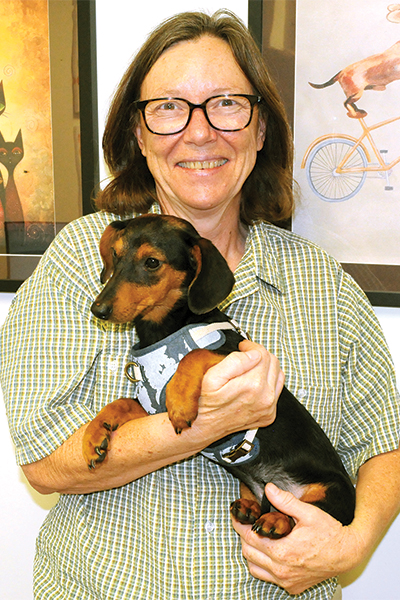
Because the owner hadn’t neutered the dogs, many of them had puppies.
In a blaze of phone calls, frantic days and networking, Pickering and her hardworking staff found places to keep the “horde” of dogs.
“Our incredible volunteer group, Ellijay Paws in Need, within 24 hours had all three nursing mothers [and puppies] in foster homes,” she said.
Local animal rescues took an additional six dogs away.
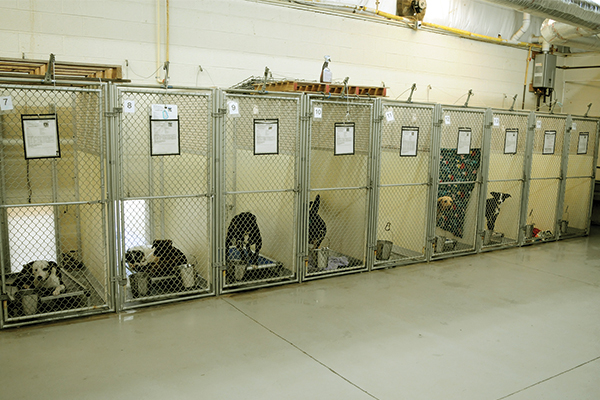
If something similar happened today, it would be hard to see where GCAS could possibly fit more animals. Currently, the shelter has a total of 218 dogs and cats, with dozens more animals in foster care with volunteers.
Her staff have filled the GCAS building’s rooms with cages like a massive game of Tetris.
Even the empty cages already have a dog or cat assigned to them.
Although adoption and entry rates change from month to month, more dogs come in than go out, Pickering said.
“For every one cage we have filled, there’s probably at least two waiting to come in,” she said.
Because GCAS is a no-kill shelter, most animals leave by adoption or transfer elsewhere.
“Elsewhere” often means Eleventh Hour Rescue, a New Jersey shelter.
Other times it means shelters in the state of Virginia or the city of Savannah.
“I can do it without GPS,” Pickering said of the New Jersey route. “I know all the gas stations I like to stop at. I know the rest stops that I want to stop in to take a nap on the way back.”
Both GCAS and Fannin County Animal Control have an agreement with Eleventh Hour to take dogs each month. The two shelters switch off.
Before the COVID-19 pandemic, Eleventh Hour would often accept 15 dogs in one shipment, Pickering said. But today, she will make the 14-hour drive to New Jersey with as few as four dogs.
This situation exists because many people don’t neuter or spay their pets, Pickering said.
“What we’ve been trying to do is be creative and find ways to help sponsor spays and neuters,” she said.
An unspayed cat can have as many as three litters in a year.
Fixing a pet is expensive, she said. Although the price varies based on the size and sex of the pet, it typically costs around $400.
Along with Ellijay Paws in Need, GCAS has worked to make free or reduced cost pet-fixing programs available.
“We’ve been able this year to spay nearly 200 community animals for low-income people for free,” Pickering said.
Unfortunately, the program that did this, a traveling neuter and spay clinic called the Snippet Bus, has just left the county for Franklin, N.C., she said.
Pickering said she knows cost makes neutering and spaying difficult for some families in the county, and worries that laws mandating it would be difficult for some families.
“We’re looking for other ways to continue spaying and neutering at no or low cost,” she said.
Gilmer’s dog and cat populations can’t keep rising forever.
The county commissioners are looking into finding solutions, Pickering said.
If people started neutering their animals today, there would be some immediate positive effects for the county.
But it would take time for shelter overpopulation to return to better levels.
“It would take at least a couple of years,” Pickering said.