
Online theft changes the digital world
We live in the golden age of swindles.
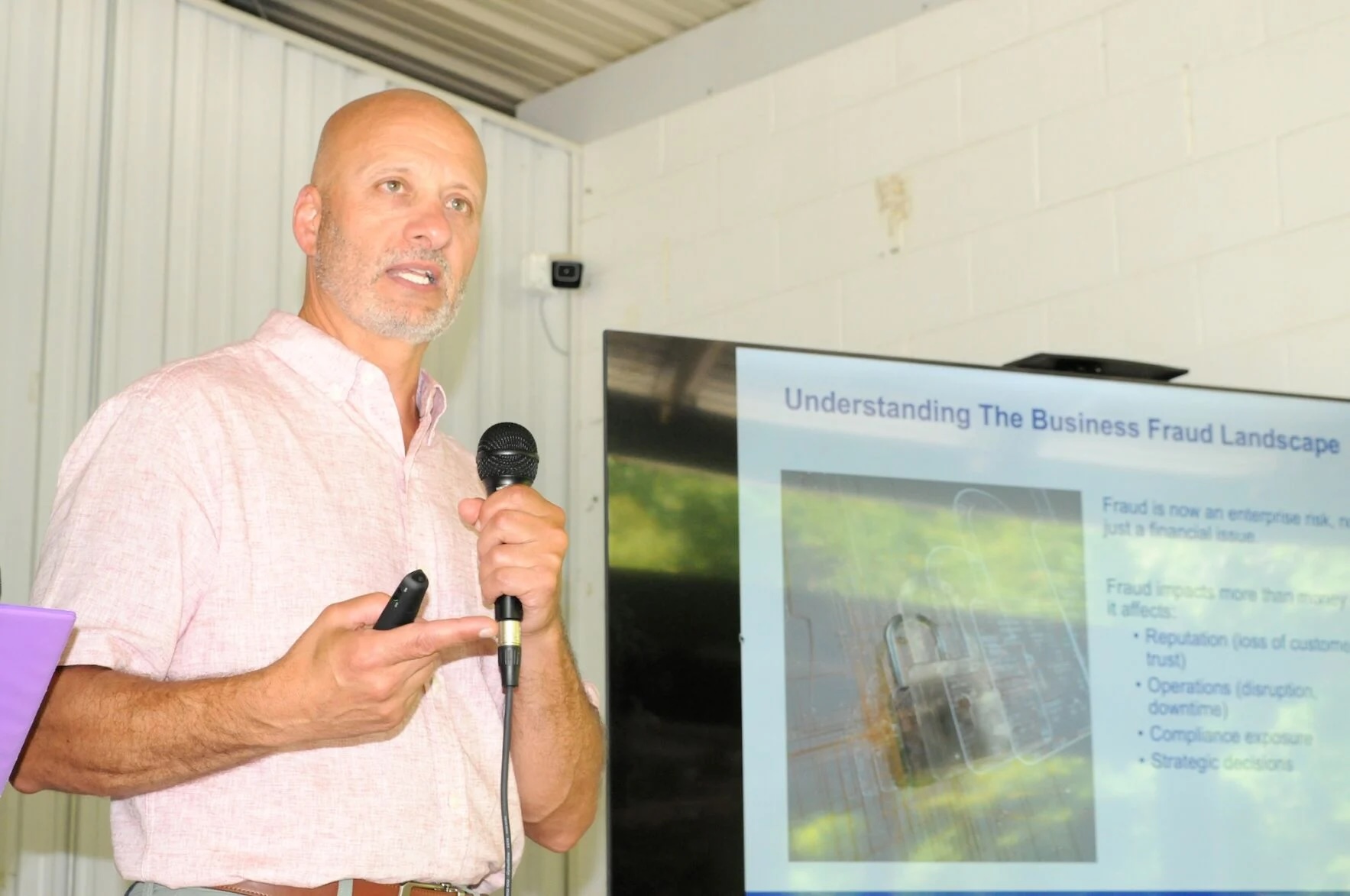
According to a talk from the United Community Bank (UCB) given at the Thursday, June 11 Gilmer Chamber of Commerce luncheon, online theft and fraud is out of control.
In the past, “the worst that happens is somebody gets ahold of your checkbook and maybe you lose a couple hundred bucks,” UCB Chief Security Officer Jay Rajaee said. “It’s just not that way anymore.”
In the digital age, several factors have come together to make mass scale fraud possible.
Communication is cheap and easy. Law enforcement across international borders is difficult. And one transaction can give scammers thousands or tens of thousands of dollars.
This new threat has changed banking in many ways, he said.
Recently, United Community Bank has hired 14 full-time employees devoted entirely to fraud prevention.
“You can just destroy your entire business in one click, Rajaee said.
But even the experts can fall victim to scam tactics.
“It’s amazing, the technology improvements that fraudsters have had in ripping us off,” Rajaee said.
Rajaee said he clicks on scam emails from time to time even after extensive training.
“Everyone has got to speak fraud,” he said. “You don’t really have a choice anymore.”
For scammers, the old proverb about crime holds true. They only need to be lucky once.
There are countless ways scammers try to trick their victims.
But the most common ones rely on urgency.
If someone feels like an email is urgent, they don’t stop to think, and don’t realize it’s a scam, he said.
“If you feel anxiety when you look in an email because it’s prompting you to do something, take a second look,” Rajaee said.
Another way scammers can trick you is by imitating legitimate institutions.
If you receive an email asking for your credentials, it’s a scam, Rajaee said.
Just because an email, phone call or letter looks like it’s from a real organization doesn’t mean it’s trustworthy, he said.
“Call the number that you have,” Rajaee said.
A common tell for scammers is nonstandard use of English. Many scammers come from other countries like other countries.
Scammers often use unusual words like “Kindly” and strangely formal English.
Another red flag is cryptocurrency and gift cards.
“If crypto comes up and you’re not expecting it, you’re getting defrauded,” Rajaee said.
If you slow down and think, none of the scammer methods are particularly successful.
But in the right circumstance, they can be terrible effective.
People are more likely to fall for scams when they are tired. The elderly are also more likely to fall for scams.
Sometimes seniors get tricked so badly they refuse to believe the truth, like one senior Rajaee remembers speaking with.
“Myself and a bank president were begging her to believe us that she was getting defrauded,” Rajaee said. “And she wouldn’t believe us.”
If you’re scammed, you aren’t alone. Three million people report losing money to scammers every year.
It’s likely that the total number of people scammed is closer to triple that amount.
“People don’t report it because they’re embarrassed,” Rajaee said. “I would encourage you, especially if you’re our customers, don’t be.”
In the event of being scammed, it’s best to act quickly. If you tell your bank immediately, it’s sometimes possible to get the money back.
“The sooner you connect with us on a fraud happening, the sooner we might be able to help,” Rajaee said.
After that, the money can very quickly go beyond recovery.
But just who got it afterward can depend.
Scammers come from many places, Rajaee said.
Some come from third-world countries where even a relatively small theft from an American can bring in a year’s salary.
Even after they’re arrested, many criminals will still keep trying to scam people.
“They are in prison with a cell phone, making tons of money. They’ve got nothing but time,” Rajaee said.