
‘Allowing me to have my life back’

After serving in deployments to Iraq and Afghanistan in the War on Terror, Nikisha Melendez struggled with post-traumatic stress disorder (PTSD), anxiety, depression and other ailments. She went through therapy, but still grew anxious in public places — and especially crowds.
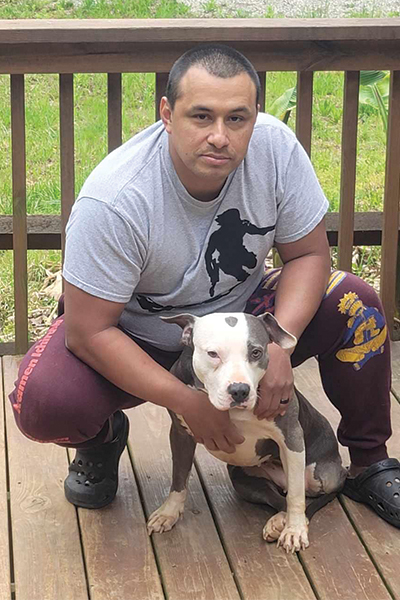
Then she learned about Shelter Dogs for Veterans, a unique outreach in Talking Rock that helps match those struggling with PTSD, traumatic brain injuries (TBI) and other trauma from their military service get readjusted to civilian life. Shelter Dogs was created, and is operated, by Sharon Callan.
“Sharon has been extremely patient and understanding with me, and I have seen the progress,” said Melendez. “When I first went to Walmart for a training session, I had a panic attack and only lasted for about five minutes in the store. Now, I can take Joker (her shelter dog) and complete all of my shopping. Thanks to the training, I have started talking to people while in public, instead of remaining quiet and constantly looking around for an escape route.”
Callan has been training dogs “for about 40 years.”
“It was originally old-school type training because it was all we knew,” she said. “It was very aversive with the dogs, but I went back to school in 2010 and studied positive reward-based training and that’s how I train now.”
Callan explained that aversive training was any negative training such as jerking on a leash, yelling or putting hands on the dog in any negative way — or even worse, shock collars, prong collars or choke chains.
“I started my personal business (training dogs) in July 2011, and then in 2015 started the nonprofit Shelter Dogs for Veterans,” she continued. “Basically, I pull dogs from the kill shelters and train them as service dogs for veterans and first responders that have PTSD, TBI and military trauma. I have a good instinct at picking dogs.”
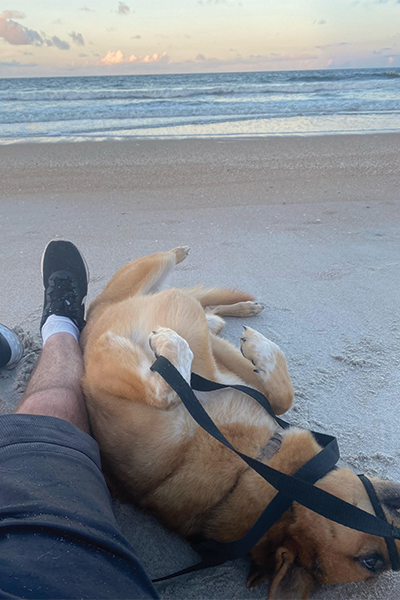
Dogs with the right stuff
Callan looks for dogs who not only respond well to commands, but are also a good match for their eventual owner/veteran.
“If the dog looks at me or stares at me — not in a fearful way, but if he’s interested in making eye contact — that’s one of the first things I look for,” she detailed. “I don’t want a dog that’s fearful, so if they won’t make eye contact they’re usually fearful. And I look for a dog with energy. How it works is I pull the dog (from a shelter) with a particular veteran in mind. Since I’ve already met with him, I know the things that he needs. For example, if he has TBI and has balance issues, I’m looking for a dog that’s big enough he can brace against it when he stands, or to help him get up.”
There are other factors as well.
“If (the dog) is just alerting for a panic attack of the veteran, you can use a smaller dog, but most of the veterans don’t want a small dog,” Callan noted. “So it’s usually a medium- or bigger-size dog. I also like them to have a little bit of ‘prey drive.’ Because if I’m teaching a dog to carry their groceries or get their leash or harness for them, you want a dog with some prey drive that wants to do that kind of action. In other words, I don’t want a dog that couldn’t care less.”
Still, it depends on the veteran “to let me know some of the traits I’m looking for in the dog.”
“Some of them just want a dog that’s a couch potato, so I look for that, to see if they’re one that doesn’t do a lot,” she continued. “Also, if a veteran has hobbies, such as kayaking. Then I need a dog that enjoys the water. So I look for all those kinds of things. I usually try to find two or three dogs for each veteran that I think will work, then I have them come and meet the dogs while I’m there with them. And I can tell a lot of times — just by that interaction between the dog and the veteran — if it’s going to be a good match. Then they take the dog home with them for two weeks and bond. Then they start coming to me once a week and we learn new cues each week, then we teach them tasks and things like that they’re going to have to do for their disability. The whole process takes anywhere from 12 to 18 months.”
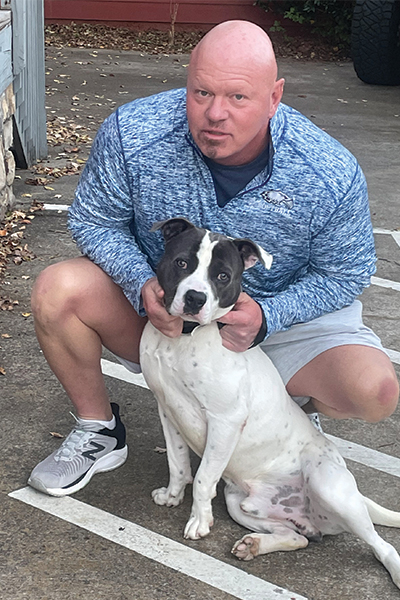
The dogs do a basic obedience training for five to six weeks, then spend the same amount of time in advanced obedience. Then they take a “canine group citizenship test.”
“What that says is that your dog is safe to be in public, around other dogs and people,” Callan explained. “After they pass that test is when we start training for the service tasks that we want the dog to do to help them … The veterans also have to have 240 hours in public with their dog, and it’s documented … we also work on the behaviors the dogs have to have in public.”
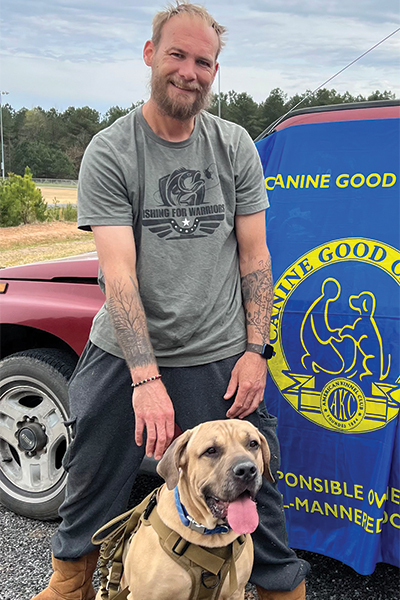
Then dogs are tested even further with an “Urban K-9 Good Citizen advanced test.”
“It’s closer to the final test — the Public Access Test,” she added. “I video all the tests, especially the last one, and then I have proof the dog is certified. There is no legal certification right now for service dogs; it’s coming, but there is not one at this point. So that just means they’re certified by me, that we’ve done all the training, and they’ve passed the public access test.”
How do veterans find out?
Callan said referrals usually come from other veterans who already have dogs she has trained.
“Veterans will see them at the VA (clinic) or wherever and ask them where they got their dog, then they’ll contact me,” she said. “A lot of the organizations I work with will also make referrals to me. The American Legion sends people to me. It’s a lot of word of mouth. We don’t advertise; we probably should, but I’d rather spend that money toward training that dog for a veteran. Everything for the veteran is free; it’s all paid for through donations, and we do have fundraisers to try and raise money here in Ellijay and Jasper. We do have a couple of local donors who give to us yearly.”
Callan said Shelter Dogs for Veterans could really use someone knowledgeable in writing grants.
“It would be great to have a person who would help out doing that,” she said. “But the biggest problem we have for our organization is finding volunteers to help us. So it’s been more my husband and I, and we do have veterans come and help with the events when we do them.”
Callan’s credentials are deep.
“I personally volunteer with ‘Train a Dog, Save a Warrior’ out of Texas,” she noted. “And I volunteer with Battle Buddies, it’s a national organization, and I’m a volunteer trainer with Pets for Vets. I’m also a mentor-trainer with Animal Behavior College, the college I went to, and I train any students in the area who have gone through their program. I’m more on the rescue side because I want to save the dogs from the shelter as well.”
Shelter Dogs for Veterans, then, is a “win-win.”
“I’m not only helping a veteran get his life back, but I’m getting a dog out of the shelter and saved,” she believes. “I actually have a veteran right now who is training with me to learn to train for Shelter Dogs for Veterans. We have trained his dog, and he’s about to take the public access test. But he wanted to help give back, and I’m not a young girl anymore … we’re just a small organization, we only have three board members and I’m the only trainer.”