
By Gerald Hodge
Founder, Appalachia Georgia Friends of the Bears
Disease! It was not a word that was in everyday conversation until the late unpleasantness of 2020 unless you were a farmer, in the medical field, military or a historian. Since the pandemic, it has been so much a part of our lives that we almost suffer from “disease fatigue.” However, diseases are nothing new. It has been with humanity since the very beginning and will be with us until the very end.
 The impact of disease has set the stage for the fall of civilizations. The Rinderpest plagues (1709–1786) in Europe destroyed the cattle industry. Great Britain turned to the North American colonies to supply them with hides. In turn, Native Americans traded wild deer hides for European manufactured goods that resulted in its extirpation and destroying their social structure.
In our own history, two out of three deaths during the American Civil War were because of disease and not combat. During the Spanish Influenza outbreak of 1918, approximately 675,000 humans died of the disease in the United States. This is slightly more than the casualties of both the North and South combined during the American Civil War.
Why are we still concerned about disease? Have you walked into the supermarket lately and looked at the price of chicken or eggs? Approximately 20 million chickens had to be destroyed in the last quarter of 2024 because of H5N1 Highly Pathogenic Avian Influenza. In 2022, we had 104 incidents detected in migratory wild birds in Georgia. Last year, it was detected in multiple wild bird species in Stewart and Seminole counties. If one chicken dies of H5N1 in one of our poultry houses, all the birds must be destroyed. It would be devastating to our farmers and economy as Elbert County and the state of Georgia is finding out right now.
We know now that wildlife has died of both H5N1 and COVID-19. This includes polar, brown, and black bears. Wildlife biologists are just now getting funding to attempt to check on how it has impacted wildlife in the wild.
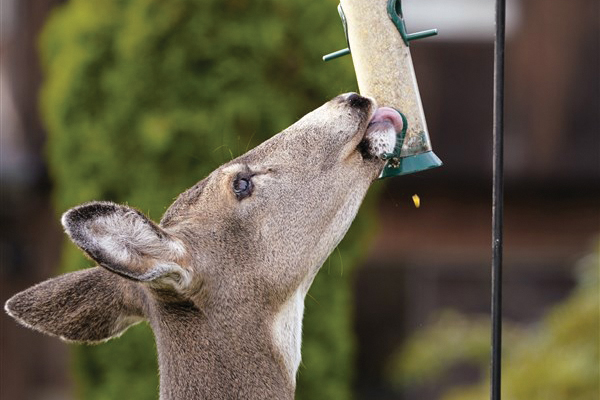 Deer hunting in Appalachia Georgia is popular to both full-time residents and hunting tourists. However, Chronic Wasting Disease (CWD) has emerged as a threat to this industry. It was first detected in wild deer out west in 1981 and has been making its way eastward ever since. Today, it is northeastern Alabama, west Tennessee, and more troubling, in Yadkin County, N.C., and its surrounding counties. In January 2023, it was confirmed outside this surveillance zone in Cumberland County, 140 miles away.
Currently, CWD is only transmitted from deer to deer, however, viruses are continually mutating. H5N1 and COVID, both originating in Asia, at one time were limited to birds and then they mutated, jumped species and impacted the world. Each year, the Georgia Department of Natural Resources is further tightening its restrictions on how wild deer are handled and transported within and into the state.
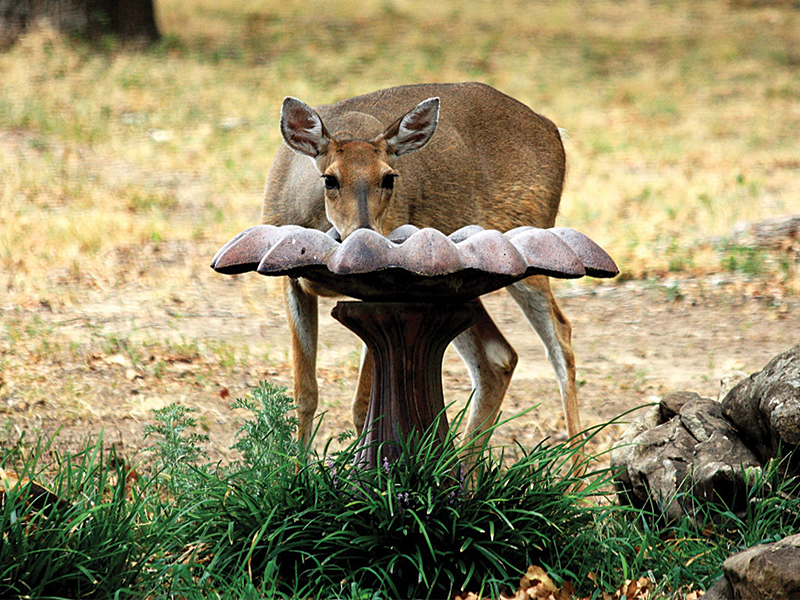
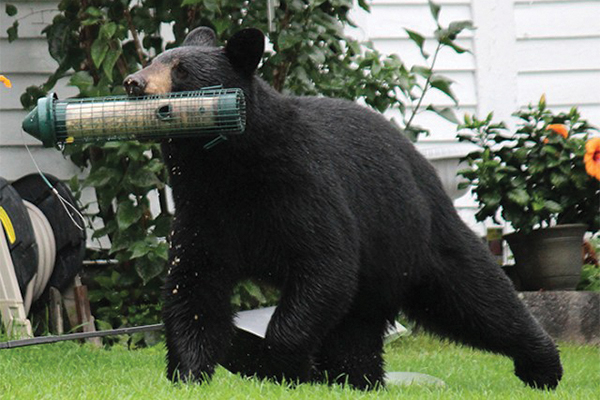
We are in a trifecta of disease that can impact both humans, wild and domestic fowl and all other wildlife. Humans are the key to slowing or stopping its impact. We must stop feeding wildlife, birds, and keep garbage away from them. The feeders are petri dishes for diseases as illustrated in the graphic. The microbe is more of a threat than the hunter’s projectile.
The Appalachia Georgia Friends of the Bears mission is to reduce Human-Bear conflict through proactive educational outreach programs, increase public awareness about coexisting with black bears, the use of humane bear deterrents, and advocacy. Visit BearWise.org and agfriendsofthebears.com for more information on reducing Human-Bear Conflict.