
If Gilmer Schools reopen as scheduled this fall, it will have been nearly five months since students were in a traditional class setting.
Students have not been in classrooms since March 13 because of the COVID-19 (coronavirus) pandemic. The school system relied on distance learning techniques until the academic year ended May 22.
An annual concern for educators is “summer slide,” which is a term coined to describe academic regression that occurs when students do not take part in regular active learning.
The term first appeared in a 1996 study by a group of six professors from the University of Missouri and Tennessee State University.
“A review of 39 studies indicated that achievement test scores decline over summer vacation,” according to their research. “The meta-analysis indicated that the summer loss equaled about one month on a grade-level equivalent scale, or one tenth of a standard deviation relative to spring test scores.”
Many studies have been done since and some have explored minimizing its effects. The Times-Courier interviewed Gilmer County Schools chief academic officer Lottie Mitchell last week to discuss the phenomenon.
Mitchell has multiple roles in the school system and concisely explained some of her responsibilities, saying, “In small districts, directors wear many hats. As chief academic officer for Gilmer Schools, I work closely with the building administrators and academic coaches in grades K-12 in the development of the district’s instructional systems, including curriculum, interventions, accountability, scope and sequence and professional learning.”
The attention paid to summer slide has been greater than years past. Since students have not been in class since March 13, the problem could be exacerbated despite teachers’ best efforts.
“Our teachers did a great job to work with our students through distance learning, but it can’t replace the face-to-face instruction they would have received had we continued with our school year,” Mitchell said. “We tried to keep the students active, and we’d still like to offer them some opportunities. We do worry with having distance learning and the summer ... we are a little more worried about summer slide this year.”
Research suggests students from lower income families could regress more over the summer months compared to those from middle-class backgrounds. Gilmer’s poverty rate is 17.4 percent, according to the U.S. Census Bureau, which is 3.1 percent higher than the state average.
“Some of our children, in high-poverty areas anywhere in the state, are maybe some of the ones who don’t have as much access to print materials to read,” Mitchell said. “Maybe they don’t have transportation to go to a county library under normal situations. Maybe they’re more at home and don’t have as much to keep them engaged.”
Considering all of the factors in play, Gilmer Schools have made an extra effort this summer to provide students with academic activities.
“With the challenges of distance learning during school closures due to COVID-19, we felt it was imperative that our students be provided with optional, meaningful and fun activities to keep them engaged in active learning this summer,” Mitchell noted.
Each school worked together with teachers, academic coaches and instructional leaders to create summer choice boards with learning activities for students.
“I’m really proud of the teachers,” Mitchell said. “It took a lot more time to come up with critical thinking and creative activities than just providing a worksheet.”
Mitchell acknowledged summer slide is an ever-present subject of interest to educational supply vendors, but she is steadfast in regard to saving dollars and relying on local recourses.
“Rather than purchase a program, we utilized our teachers’ knowledge and creativity to create meaningful activities,” she said.
Students are free to choose which activities to complete. Those who are struggling may opt to review activities with lessons already covered. Those who are excelling in a particular subject may want to explore future lessons and look ahead.
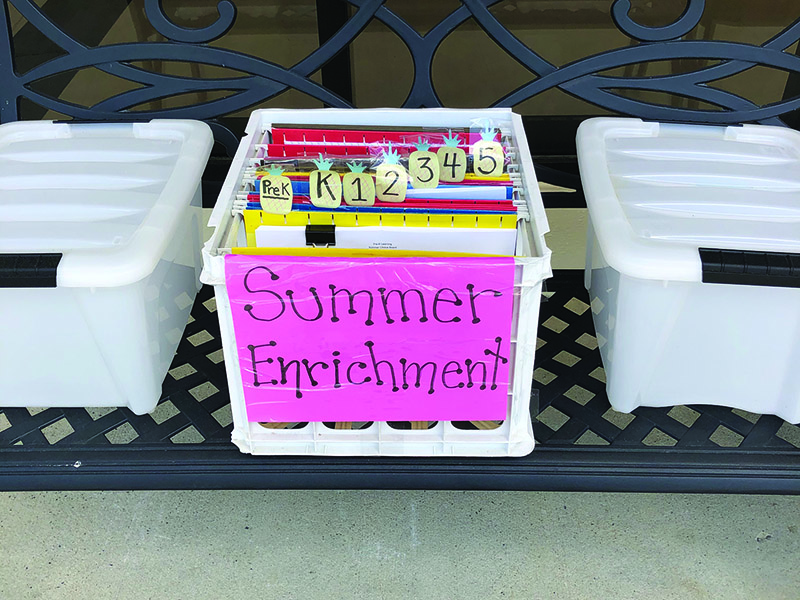
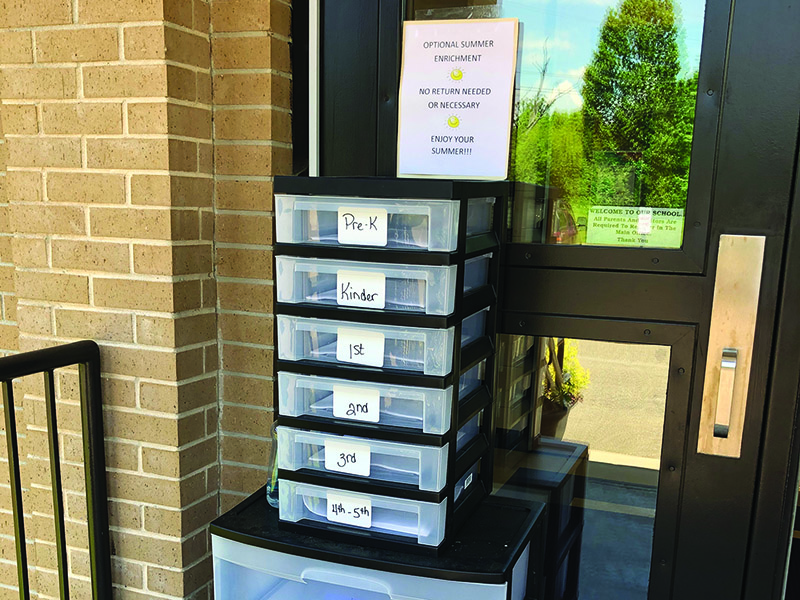
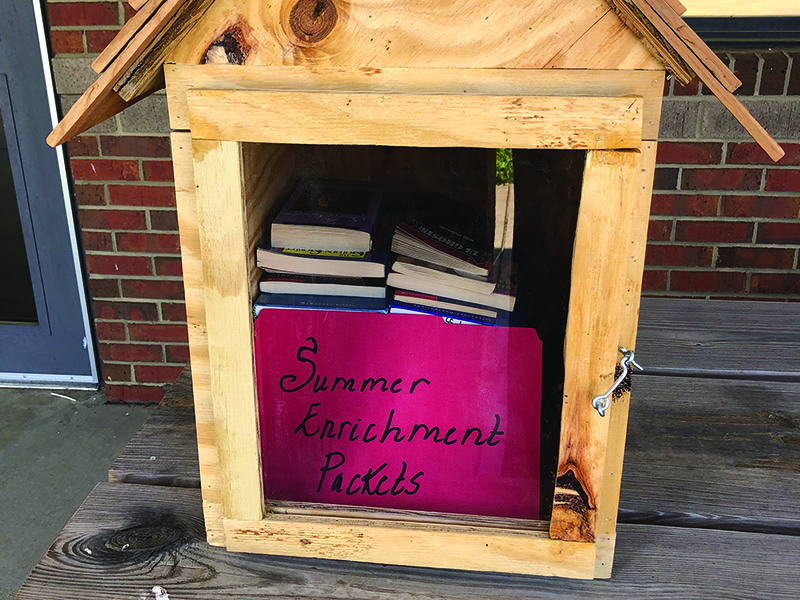
There are activities available for all grade levels and they can be found on the district website and at the front entrance of schools. The choice boards will also be distributed at the four meal sites throughout the county as part of the Seamless Summer feeding program.
“It is always important to encourage students and families to continue learning during breaks, but at this time it is critical that we consciously strive to provide learning opportunities throughout the summer to keep our students’ academic skills sharp,” Gilmer Schools Superintendent Dr. Shanna Downs said via email.
Students are encouraged to read at least 15 to 20 minutes per day. Mitchell hopes to make use of the Literacy for Learning, Living and Leading in Georgia Grant to provide free books at schools and once per week at Seamless Summer sites.
“Anything they can do over the summer to keep them engaged with active learning will help them stay in the learning mode,” Mitchell said. “A few minutes a day or even just two hours per week will help them be more prepared when they come back to school.”