
All the details on how first responders keep the county safe
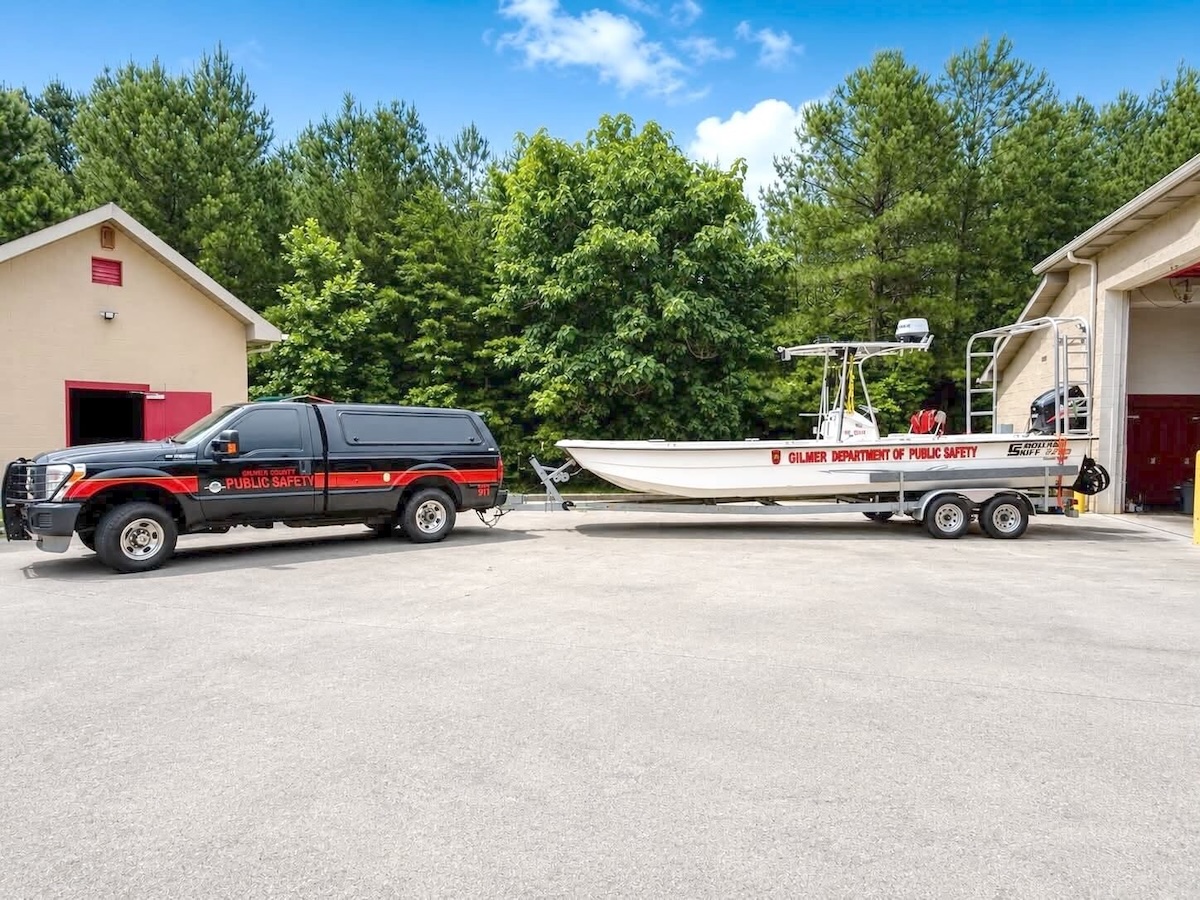
Water brings life and water brings death.
That’s why Gilmer County Fire Rescue (GCFR) has an extensively trained swift water rescue team.
Gilmer’s abundant rivers and lakes mean that water rescues are a common need.
“There’s all different kinds of stuff that can go wrong on the river,” Deputy Chief of Operations Mike Dempsey said.
Several situations can lead to someone getting trapped in fast-moving water. Floods can cut someone off or a river can sweep someone away.
Most of the time, people don’t understand how dangerous water is.
“Water is predictable, but it’s unpredictable,” he said. “You can see what the water’s doing on the surface, but you have no idea what the water’s doing underneath.”
Heavy clothing like fishing waders can quickly drown you if you step wrong.
On land, someone can go missing for days and Emergency Medical Services (EMS) can still find them alive.
In the water, anyone missing for longer than an hour is most likely dead.
It’s likely that calls involving fast-moving water is the GCFR’s most dangerous type of call.
“Floodwater and diving are at the highest risk for something to go wrong,” Dempsey said. “There’s so many unknowns in floodwaters.”
The process of a swift water rescue call begins when GCFR receives a 911 call reporting some kind of water emergency.
These days, many people take their phones even on the river. For this reason, the calls often come from the person in need of help.
“They’ve got the little waterproof bags,” he said. “But it could be a family member calling because the people that are on the river are overdue.”
The best thing you can do in a swift water emergency situation is to have put on a life jacket beforehand.
If you’ve put on a life jacket and helmet, you almost certainly won’t drown.
It can also save your life to research your water route, check the weather before going out and avoid doing things that are beyond your skill level.
“Don’t try and overshoot your skill level,” Dempsey said.
Waterfalls can spin an untrained swimmer and eventually kill them.
“Most people can’t, because they panic,” he said.
On many calls, the GCFR has to pull people out of the river because they have gone far past their exit.
“They end up coming out at Carters Lake,” he said.
Whenever you go on the river, you should tell someone what time you plan to be back in case something goes wrong.
Hydration is also important. Often, people forget to drink water while taking a river day.
“That’ll take you out quicker than anything,” Dempsey said.
In emergencies, it’s good to know water safety.
If you’re being carried by a strong current, don’t try to swim upstream. You should try to avoid obstacles in the water. If water catches you against a tree or vehicle, it can push you under.
“Water will go through a tree. You won’t,” he said. “So avoid those.”
It’s best to keep your feet in front of you as you get swept downstream while trying to reach the shore.
“We train our guys to go down feet first, our rear end up, trying to get as high up on the water as possible,” Dempsey said.
This method helps keep you from getting injured on underwater obstacles.
As you drift downriver, you should try to get to the side.
After getting the call, the GCFR assesses the situation and packs the tools for the job.
Just a few of their options include boats, rafts, kayaks, divers and even a slingshot to launch rescue ropes across the river.
“These guys train religiously,” he said of his team.
After getting equipment and a team together, the GCFR will try to find the best place to deploy into the river from.
Experience is key in helping them know the best spot.
“These guys spend a pretty good bit of time on the river. So a lot of them are familiar with different landmarks,” Dempsey said.
Often, a phone description can be enough for GCFR personnel to pinpoint a location. GPS can also narrow things down.
On the scene, GCFR’s next move depends on the scenario.
Often, the first step is to throw a bag with a rope attached to the person in danger. The victim can then be pulled to shore.
If that doesn’t work, GCFR can put a swimmer in the water to move in and rescue the person in the emergency.
“They have to swim freestyle 500 meters; snorkel, mask and finds for 800 meters; a 100-meter tire diver tow and they’ll tread water for 15 minutes,” Dempsey said. “Swimming in current can be super tough.”
Some common river rescue problems include medical emergencies unrelated to water taking place while on a river, tubing mishaps, flood strandings and broken limbs while in water.
“We’ve had to pick people out of houses and off the tops of cars,” he said.
Depending on the circumstance, the GCFR can bring people back to the hospital or call in a helicopter to evacuate them.
The Department of Natural Resources, the Georgia State Patrol and the U.S. Army base at Camp Merril can all send a helicopter if needed.
“They’ll get to them, and be able to send one of their guys down, hook them up and hoist them out,” he said.
No matter how experienced you are, you shouldn’t underestimate the water.
“I’m a great swimmer,” Dempsey said. “Great swimmers drown too.”