
90-day trial run planned for paramedic vehicle response
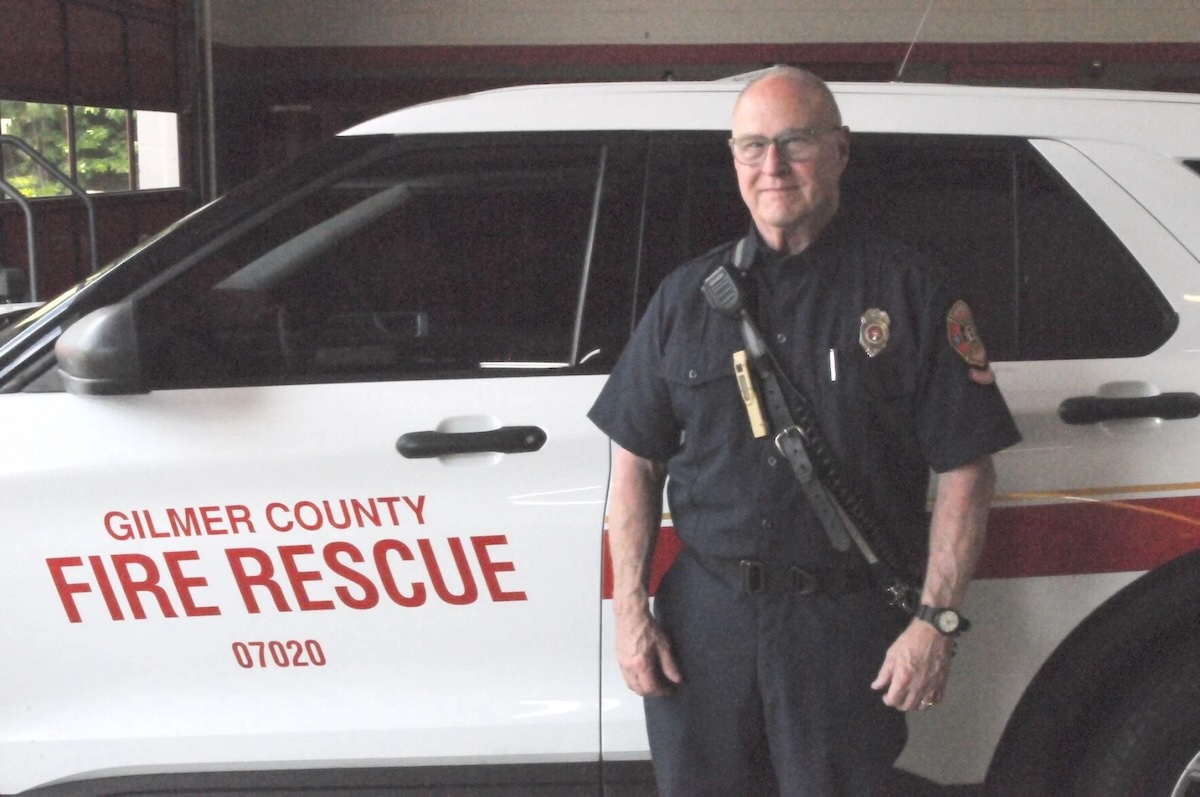
A new paramedic program will hopefully speed up emergency response times and help with fatigue at Gilmer County Fire and Rescue (GCFR).
“This way, we have a paramedic that can help respond to calls quickly,” Emergency Medical Service (EMS) Division Fire Chief Paul Beamon said.
The idea is simple. For the next 90 days, the GCFR will run a Med Com program. In the program, a quick response vehicle with a paramedic to go out on 911 response calls.
The truck will carry blood for emergency transfusions as well as other emergency supplies.
However, it won’t be able to transport a patient.
“These paramedics been trained in how to deal with just about everything, even beyond some of the paramedic skills,” he said.
Paramedics are the most highly trained emergency medical technicians. They can give a wide variety of medical care before a patient arrives at a hospital.
“This is not a reduction in service,” said Fire Chief Sam West. “This is about improving how we use our resources to serve the people of Gilmer County.”
This measure can solve a problem most fire departments face.
Emergencies come in various levels of severity.
Some people call 911 because they feel concerned and want their blood pressure taken. Others call because they have non-life-threatening but serious emergencies, like a fractured bone. Still others could have a life-threatening emergency like a heart attack.
In Gilmer’s current system, there’s only one response for all these things; an ambulance with its crew.
“They’re responding to 100 percent, every single call that’s out there,” Beamon said.
This system means that ambulances are always going on calls, which has several consequences. Sometimes an ambulance is already helping with a non-life-threatening call when a serious call comes up.
No matter what, the EMS personnel on ambulance duty get tired out and the vehicles experience wear and tear.
Ambulances also take longer to load up and prepare for a call.
A new paramedic vehicle program solves this problem, he said.
This vehicle will help save time and resources in emergencies.
“It can get there faster because it’s a smaller vehicle,” Beamon said of the new unit.
A paramedic can show up on the scene first. If an ambulance isn’t needed, the paramedic can help the patient. If not, they can provide extra assistance until an ambulance arrives.
“Ambulances still respond, but this unit will respond to certain calls as well,” he said. “If they’re able to handle it, to where the ambulance can go back into service, the patient doesn’t need to be transported.”
Most emergency medical services use a system like this one. When Beamon was the EMS Director at Atlanta’s Grady Memorial Hospital, his program used a similar system.
This new service will be active 24 hours a day.
“It will respond to all of the major medical and trauma conditions,” Beamon said. “It’s cheaper on gas when it’s responding, it’s safer going down the road and we have more ability to focus on our high-acuity calls.”
If the first 90 days bring good results and increased efficiency, the program will continue.
“That would be our ultimate goal,” he said.