
Flock camera installations change Gilmer County
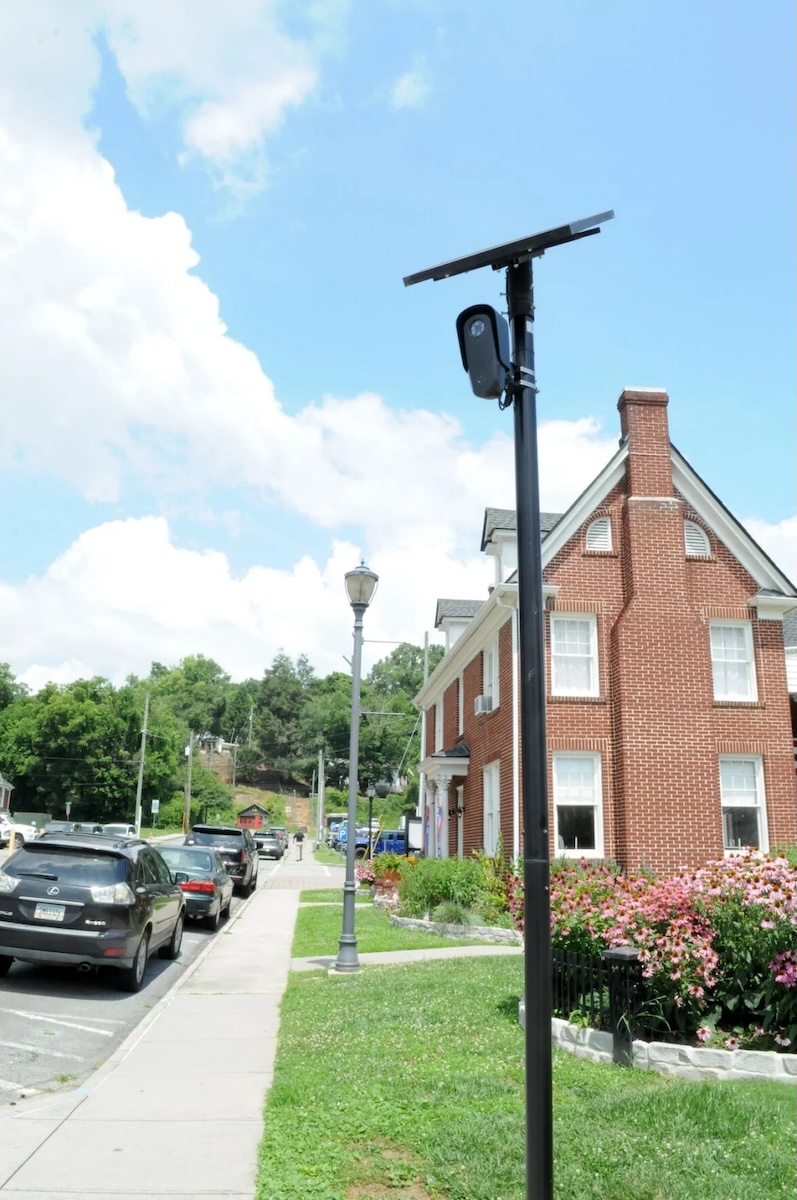
As of late 2025, the Gilmer County Sheriff’s Office (GCSO) has installed and operated Flock cameras.
The Ellijay Police Department and East Ellijay Police Department also use these tools.
These Flock Group Incorporated cameras take high-resolution still photos of passing cars, which then go to a centralized network.
Law enforcement agencies across the country can then search this system while working on investigations.
“They’re just too much of an invaluable tool to disregard,” Sheriff Stacy Nicholson said.
Already, Gilmer’s Flock cameras have proven instrumental in capturing a Murray County rape suspect, finding stolen cars and stopping drug crimes.
But the cameras also raise difficult questions about surveillance and privacy. Nicholson said he values Flock camera use in law enforcement, but that he understands why people would be worried about government misuse of surveillance technology.
“Anyone on the Flock system can access any of these cameras nationwide without a warrant,” Gilmer resident and software engineer Randy Russo said.
He has major concerns about Flock cameras and the potential for misuse of this powerful new technology.
Currently, America has more than 110,000 Flock cameras set up, according to activist website Deflock.org.
Flock technology has two main ways it can be misused, he said.
The first is when law enforcement officers use it to spy on the personal lives of people they know.
Deflock.org lists several incidents where law enforcement officers have used Flock to track an ex, spouse or coworker.
“You’ll find all these stalking cases,” he said.
In Georgia, it’s illegal for officers to search law enforcement camera databases for personal reasons. Officers who do so are arrested and lose their jobs.
Just like other forms of law enforcement misconduct, this crime still happens from time to time.
“The Georgia Crime Information Center is a database that holds all of your criminal history and your car registration data,” Nicholson said. “That system has been in place longer than I’ve been in law enforcement. Can it be misused? Absolutely. Are there mechanisms in place to deal with the misuse up to prosecution and prison time? Yes.”
The other potential misuse case comes from the top. Flock data creates the possibility of mass government surveillance.
Under the Constitution, Americans receive protection from illegal search and seizure under the Fourth Amendment.
Opponents of Flock argue that license plate readers effectively allow the government to constantly track the location of citizens.
Flock cameras don’t simply read license plates. They can detect distinctive features on cars such as bike racks, make, model and even the shapes of dents and scratches.
Flock cameras are far from the only surveillance enterprise Flock Group, Inc. is involved with.
It also has a patent for technology capable of recognizing face, race, height, gender, clothing and weight.
“Flock cameras do not use facial recognition,” a statement on flocksafety.com reads.
In training videos, Flock Condor cameras have been shown to be capable of tracking pedestrians.
“I just don’t trust human beings to be that altruistic and trustworthy and use this system for good,” Russo said. “I don’t want my tax dollars going to that.”
As of now, more than 7,000 law enforcement agencies across America use Flock cameras, according to the American Civil Liberties Union.
These agencies also share data.
“I’m pretty sure that we share with most of the agencies that are on the system,” Nicholson said.
The capacity for sharing information concerns Russo.
“The chances of misuse on a grand scale from the federal government should be concerning everybody, not just Gilmer,” he said.
Knowing that Gilmer residents would be concerned about these issues, the GCSO hesitated to install Flock cameras, Nicholson said.
But Flock is such a useful law enforcement tool that the office can’t avoid using it any longer.
“It was just the right thing to do,” he said. “The tools that they provide to law enforcement are invaluable to solving crimes.”
According to flocksafety.com, Flock’s system doesn’t automatically keep data longer than 30 days.
But Russo says this fact is almost impossible to guarantee.
“It’s easy with a click to back this stuff up and put it to another server somewhere that no one would ever know,” he said.
Mass surveillance requires two main ingredients.
First, a government must set up a system of devices and informants to “see” society.
Then, the government must find a way to sift this vast amount of information for useful data.
A mix of digital technology and artificial intelligence makes this see and sift process easier than ever before.
“You can record a ton of footage, but it’s all looking for a needle in a haystack,” he said. “But now, we have AI to do the grunt work.”
In theory, a presidential administration could use this technology to identify every person with a particular political bumper sticker.
Russo said he wants law enforcement to be capable of tracking criminals. But Flock’s surveillance tech is frighteningly powerful.
“This system is way too powerful with AI,” Russo said. “And when people use it, they’re going to misuse it.”
Flock is far from the only technology that could be used for mass surveillance.
Smartphones can also track location, Internet browsing, the people you contact and more.
And the government is perfectly capable of getting this information without your knowledge or consent.
“I’ve had people come into my office to tell me they don’t like the fact that we’re using the Flock system because they don’t want their movements tracked,” Nicholson said. “And the first thing they do when they sit down is lay their smartphone on the table.”
The same tools used for solving crime can be used for mass surveillance.
When the GCSO got the Murray County rape case call, they didn’t have much to go on. The victim had been attacked by a stranger, who then threw her from his vehicle and left.
She never saw the license plate. But even a few remembered details were enough to help officers catch the suspect with Flock.
“Murray County within a matter of hours was able to identify and track that individual to their residence by the use of Flock,” Nicholson said.
This level of usefulness means that the camera network won’t be going away anytime soon. It’s just too good for catching criminals.
“We don’t have murders and armed robberies on a daily basis in Gilmer,” he said. “Who’s to say that we don’t have one today? In those cases, the Flock system could be invaluable.”
Nicholson said the surveillance issue will likely someday go to the Supreme Court.
Given how widespread and essential the system has become for law enforcement officers, it’s likely that by this point, the momentum will be with keeping the systems.
“I do foresee [Flock cameras] staying,” he said. “But we’ll just have to wait and see what the courts say.”