
County will reap benefits for years to come
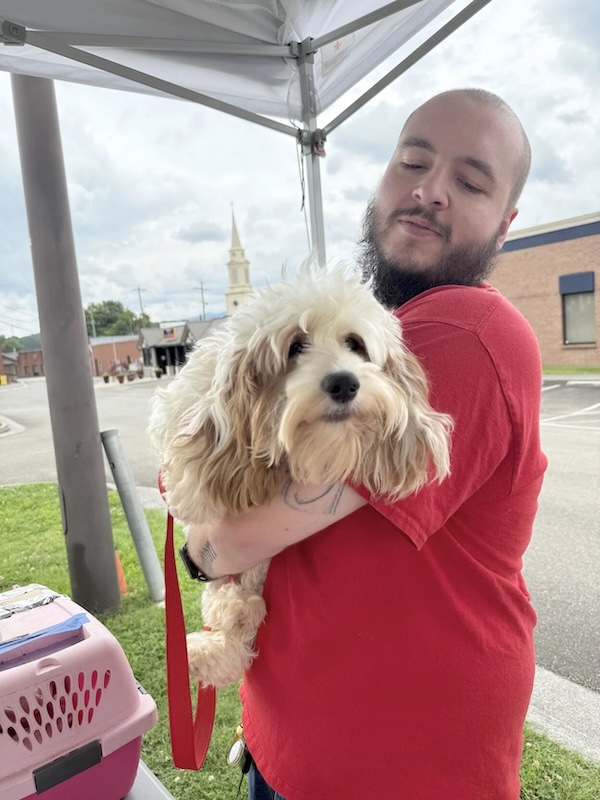
There may not be a noticeable difference now, but in about seven years, Gilmer’s stray pet problem will be much smaller.
“You’re gonna start noticing the difference,” said Sylvia Harris, the President of Friends of Gilmer Animal Shelter (FOGAS) said.
In 2025, FOGAS neutered and spayed a total of 532 cats and dogs. It’s on track to hit a similar number of animals spayed and neutered this year, with more than 200 as of Wednesday, May 27.
“Previously, we were doing 30 certificates every quarter,” she said.
The money to expand operations has come from donor grants, Homeward Bound and grants from Faith, Hope and Charity.
Just 732 animals may not sound like a massive amount.
But the way animals multiply means even small changes can have an enormous effect.
Dogs and cats multiply at a remarkable rate.
With no other factors included, that means a pair of cats can become 420,000 cats in seven years, and a pair of dogs can become 67,000 dogs in six years.
“That’s hundreds of thousands of dogs and cats in just six or seven years that we’re keeping off the streets,” Harris said.
This math shows the importance of spaying and neutering your animals.
It’s almost impossible to know just how big an animal problem Gilmer County has, she said.
There’s no way to keep track of how many abandoned pets or breeding populations of stray animals there are.
In one recent case, a man contacted FOGAS because he was feeding four stray cats. When FOGAS arrived, they discovered there were actually more than 20 cats present.
“People really aren’t great at estimating just how big the animal overpopulation issue is. The pets are from the same litter, and they all look alike,” Harris said.
The good news is that the problem can be controlled.
“Many of the animals that are pregnant and causing this overpopulation are actually animals people own,” she said.
If people are responsible,
In Georgia, it’s against the law to abandon animals.
It’s also illegal in Gilmer County to own more than 10 domestic animals.
Given how quickly animals multiply, spaying or neutering your pets is extremely helpful to guarantee sure you’re following the law.
If you don’t, you could suddenly have to handle getting 16 puppies you weren’t planning on.
“This can happen very fast if you’re not spaying or neutering your pets,” Harris said.
Normally, spaying and neutering your animals costs between $400 and $600.
But FOGAS offers a huge discount. Spaying a dog with them costs $125, neutering a dog costs $100, spaying a cat costs $75 and neutering a cat costs $50.
FOGAS also includes a rabies vaccine in this deal.
Those interested can contact FOGAS to arrange an appointment at fogasnow.com. Donors and volunteers can also get in touch through the website or by emailing fogasnow@etcmail.com.
It’s a misconception that you should only fix your female animals, she said. If there’s just one female in the area, your male animals will find it and have young with it.
“Fixing just the girls doesn’t take care of the problem,” Harris said. “You have to fix the boys too.”
In the long term, an effective spaying and neutering campaign will save money and spare animals from the difficult life of a stray.